How Indianapolis Became America's Second-Largest Air Cargo Hub
Scannell Properties, the Indianapolis-based industrial developer, has continued its spec warehouse activity north of Whitestown along the I-65 corridor, building product without signed tenants. Tha…

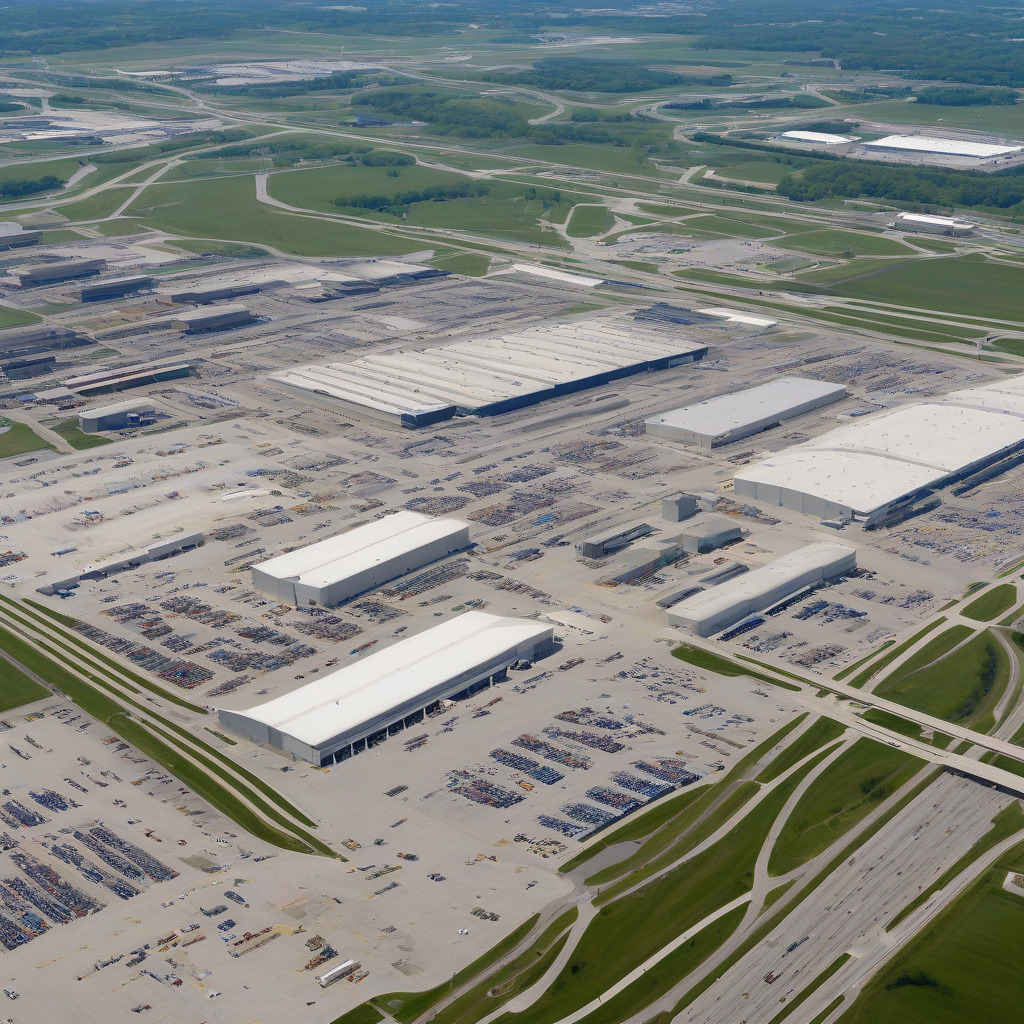
Scannell Properties, the Indianapolis-based industrial developer, has continued its spec warehouse activity north of Whitestown along the I-65 corridor, building product without signed tenants. That level of conviction is worth pausing on. For a mid-sized Midwestern city, pouring concrete before a lease is signed indicates the kind of structural confidence that doesn’t develop overnight—it compounds over years. In 2026, that confidence is still pulling capital and square footage into the market, though the post-pandemic supply wave has introduced real friction into what had been a nearly frictionless bull run.
Indianapolis isn’t a logistics hub because of clever branding. Geography, infrastructure investment, and a generation of strategic corporate decisions explain it. Math, in other words. The city has compounded these advantages into a position that is genuinely hard for competing metros to replicate—and some of them have tried.
Why Indianapolis Is Where It Is
Five major interstate highways converge on Indianapolis. I-65 connects Chicago to Louisville and Nashville. I-70 runs Kansas City to Columbus and the eastern seaboard. I-69 is a NAFTA corridor running toward the Canadian border. I-74 ties Cincinnati to the west. The I-465 beltway loops the entire metro, letting freight operators bypass downtown entirely.
Put those routes together and you can reach approximately 80 percent of the U.S. population within a single day’s truck drive. Not a marketing estimate—an operational fact that shows up in the routing decisions of every major 3PL, every e-commerce operator, every company that replenishes retail stores from a single distribution point. Freight planners use “Crossroads of America” as shorthand for exactly this highway geometry. One of those cases where the state motto is actually doing real descriptive work.
Rail adds a second layer. CSX and Norfolk Southern both run through the region, providing intermodal depth for shippers moving bulk freight or operating at volumes where trucking economics break down. For a company picking a North American distribution center, multimodal access matters enormously. Indianapolis checks that box.
The Airport That Changed Everything
If the interstates explain why Indianapolis attracted traditional distribution, the airport explains why it became something more. The FedEx hub at Indianapolis International ranks second globally among FedEx operations by package volume. The 24-hour sort employs thousands of metro-area workers. UPS runs its own hub at the same facility—smaller than FedEx’s, but significant.
The employment implications extend well beyond badge-holders at either carrier. When two of the world’s largest parcel operators compete for warehouse and package-handler labor in the same metro, starting wages move. Both have driven Indianapolis-area warehouse entry wages substantially higher over the past several years, to levels that smaller regional employers simply can’t match. Good for workers. Complicated for every employer that isn’t FedEx or UPS. That tension is worth keeping in mind as you read the rest of this.
Amazon’s fulfillment and delivery station footprint compounds the pressure. The company operates multiple large facilities across the metro, each drawing from the same workforce pool. When three of the largest logistics employers in the country all recruit in the same geography, smaller 3PLs and regional distributors feel it in their hiring costs and turnover rates. Anyone trying to staff a warehouse on the south side knows exactly what that feels like.
The Submarket Map
Greater Indianapolis industrial space isn’t a single market. It’s three distinct corridors with different supply profiles, tenant mixes, and price points, plus an emerging fourth zone drawing increasing attention.
The Plainfield corridor in Hendricks County—about 15 miles southwest of downtown—is largely built out. The area contains large-format Class A facilities, Amazon operates several significant buildings here, and Hendricks County has been one of Indiana’s most active industrial development counties for the better part of a decade. The result is dense, modern warehouse product with relatively little vacant land left for new greenfield construction at scale. Asking rents for Class A NNN space have moved sharply since 2022, driven by both the national industrial rent cycle and the specific constraint of a submarket that is running out of room.
Whitestown and the I-65 North Corridor in Boone County is where speculative development has been most aggressive. About 20 miles north of downtown, the submarket has more raw land available than Plainfield and faster municipal processing for large industrial projects. Scannell—with perhaps the deepest institutional knowledge of Indianapolis industrial real estate given its hometown roots—has been the most consistent builder of new product here. The spec pipeline has been active enough that Boone County now holds some of the metro’s most modern Class A supply: generous clear heights, large trailer parking ratios, cross-dock layouts. The kind of specs that would have seemed extravagant fifteen years ago and are now table stakes.
The south side presents a different picture. The Southport and Greenwood areas along I-65 South and SR 135 contain more existing mid-generation stock than aggressive new construction. Some newer development has occurred, but this isn’t where most of the spec construction dollars are going in 2026. Tenants needing proximity to the south side residential labor pool still find appeal here; developers, less so.
The eastside story is the one the market is paying increasing attention to. The Mt. Comfort area along I-70 East in Hancock County has developable land, proximity to the airport, and interstate access that mirrors Plainfield’s logic on the opposite side of the city. It’s an earlier-stage corridor—think Plainfield circa 2014—and it’s gaining traction as Plainfield’s available sites thin out further.
Who Is Expanding and Where
Geodis maintains a significant Indianapolis footprint, feeding retail and e-commerce fulfillment across its client base. Ryder System and XPO Logistics both operate here, with Indianapolis serving as a node in each company’s national network. The metro’s labor market—more expensive than five years ago—still pencils better than Chicago or Columbus for many operators, which matters when you’re comparing total occupancy costs across distribution network options.
Scannell deserves specific mention. The firm’s continued spec activity in the Whitestown corridor in 2026, even as some national developers have pulled back their pipelines in response to slower absorption, reflects years of watching this market cycle closely. Its decision to build without signed tenants is, at bottom, a bet—on whether underlying demand will absorb the product within a reasonable lease-up window. A reasonably informed bet, but still a bet.
The County Incentive Layer
Large-format industrial development in the Indianapolis suburbs doesn’t materialize from geography alone. Indiana’s Economic Revitalization Area designation allows counties to offer property tax phase-ins for new industrial investment. Hendricks and Boone counties have both used ERA designations aggressively to attract Class A development, reducing the effective tax burden on new buildings during the years when a project is absorbing its development cost. For a developer financing a speculative 500,000-square-foot building, a multi-year abatement can be the difference between a project that pencils and one that doesn’t.
Marion County, which contains Indianapolis proper, operates under Indiana’s unique Unigov consolidated city-county structure. That creates a different regulatory and incentive environment than the suburban counties—which is a significant part of why you don’t see the same spec construction frenzy inside the city limits. The headline industrial development is happening in Hendricks, Boone, and Hancock. The near-city corridors—Beech Grove, Lawrence, the near-east side—operate under Marion County’s framework and are a different market almost entirely.
The Small Business Squeeze
The transformation of Indianapolis industrial over the past decade has created a largely unacknowledged problem for small businesses that need warehouse or light distribution space. Here’s the uncomfortable truth: the market isn’t built for them, and nobody’s rushing to fix it.
New construction in the Plainfield and Whitestown corridors is almost entirely targeted at tenants requiring 100,000 square feet or more. Land costs, construction costs, sophisticated building specifications—all of it pushes smaller projects out of the economics. When Class A NNN asking rents have moved sharply upward since 2022 and the minimum viable lease size starts well into six figures of square footage, the small manufacturer or e-commerce business needing somewhere between 5,000 and 20,000 square feet gets priced out of the new-construction market. Nobody’s building that product.
What remains is the older industrial and flex stock in Beech Grove, Lawrence, and the near-east side corridors—buildings from earlier decades with lower clear heights, fewer dock doors, less parking, but also meaningfully lower rents and lease terms that small operators can actually negotiate. This stock isn’t growing. In some cases it’s being demolished or converted, which makes the squeeze a little tighter every year. For a broader look at how cost and availability pressures intersect in our business and professional coverage, the dynamics described here show up across multiple sectors.
Sublease space from large tenants who have consolidated has provided some relief—Indianapolis has seen sublease availability tick up as operators work through space accumulated aggressively during the pandemic. But sublease is inherently temporary. You can’t build a business around space you might have to vacate in eighteen months.
Co-warehousing is the other potential answer. The shared infrastructure model lets a single operator provide flexible square footage, dock access, and logistics support to multiple small-business tenants under flexible license agreements. National operators have been slower to build out Indianapolis capacity than in larger coastal markets. Whether operators like Saltbox or local equivalents establish a real presence here in 2026 is genuinely open. The demand-side case is obvious—small businesses need somewhere to go, and the market isn’t building it for them—but obvious demand cases don’t always attract capital fast enough to matter.
The Labor Market Underneath It All
FedEx, UPS, and Amazon together employ a substantial share of the metro’s warehouse and logistics workforce. Their wage-setting behavior has had a ratcheting effect on the entire labor market—one that isn’t going to reverse. Entry-level warehouse wages at those three employers have moved significantly higher since 2020, pushed by national labor dynamics and the specific competition of three large employers recruiting from the same geography at the same time. When Amazon posts starting wages that smaller competitors can’t match without margin pressure, the effect ripples through every other warehouse employer’s retention and recruiting math. There’s no clean way around it.
Eli Lilly’s manufacturing expansion in Lebanon adds a different pressure. About 30 miles north of Indianapolis along I-65, the Lebanon campus represents one of the largest pharmaceutical manufacturing investments in U.S. history. Lilly draws from some of the same technical and production workforce pool that logistics employers compete for—skilled maintenance, operations, and technician roles. It isn’t competing for package handlers, but it is competing for the tier of worker who might otherwise move from a warehouse floor into a specialized logistics or distribution operations role. Indianapolis businesses navigating these workforce pressures may find the EmployIndy workforce programs available to Indianapolis businesses a useful reference for recruitment and training resources.
The net effect is a metro labor market that’s more expensive and more competitive than it was five or six years ago, with no obvious reason to expect relief. For Indianapolis-area 3PLs and smaller distributors, labor cost management is now as consequential as rent in the total cost-of-operations equation. That’s a significant shift for an industry that has historically treated real estate as its primary cost lever.
What the Market Looks Like Heading Into the Second Half of 2026
The structural demand case is intact. Geography, the airport, highway infrastructure, workforce depth—none of this is sensitive to short-term market cycles. Indianapolis will be a major logistics hub in 2030 for the same reasons it is in 2026, and companies building national supply chains don’t make location decisions based on whether vacancy is up a point in a given quarter.
The supply wave that accelerated after 2020 has pushed vacancy modestly higher as deliveries outpace leasing velocity in the near term. Some Class A product in the Whitestown corridor is sitting longer before it leases than it did in 2021 and 2022—when good space was gone before it was finished. Developers are watching absorption carefully. The spec pipeline may moderate in the second half of the year if leasing velocity doesn’t accelerate.
INDOT’s corridor capacity work on I-65 North and I-70 West affects the long-term operating environment for Whitestown and Plainfield. Named logistics sector investments from IEDC could generate new large-block leasing demand. The co-warehousing and small-bay gap might attract local entrepreneurial operators before any national platform gets there—that’s often how these things happen.
The market isn’t retreating. It’s absorbing inventory after a construction cycle that moved faster than any prior one in the region’s history. That’s different from a reversal, even if some people will tell you otherwise.
CityDesk Indianapolis covers the Indianapolis business community. For questions about this story, contact the editorial desk.