Who Made Money from the Indy 500 This Year and Who Got Left Out
Past the press releases and the podium finish, local operators are tallying what race weekend 2026 really delivered — and who the economic engine left behind.

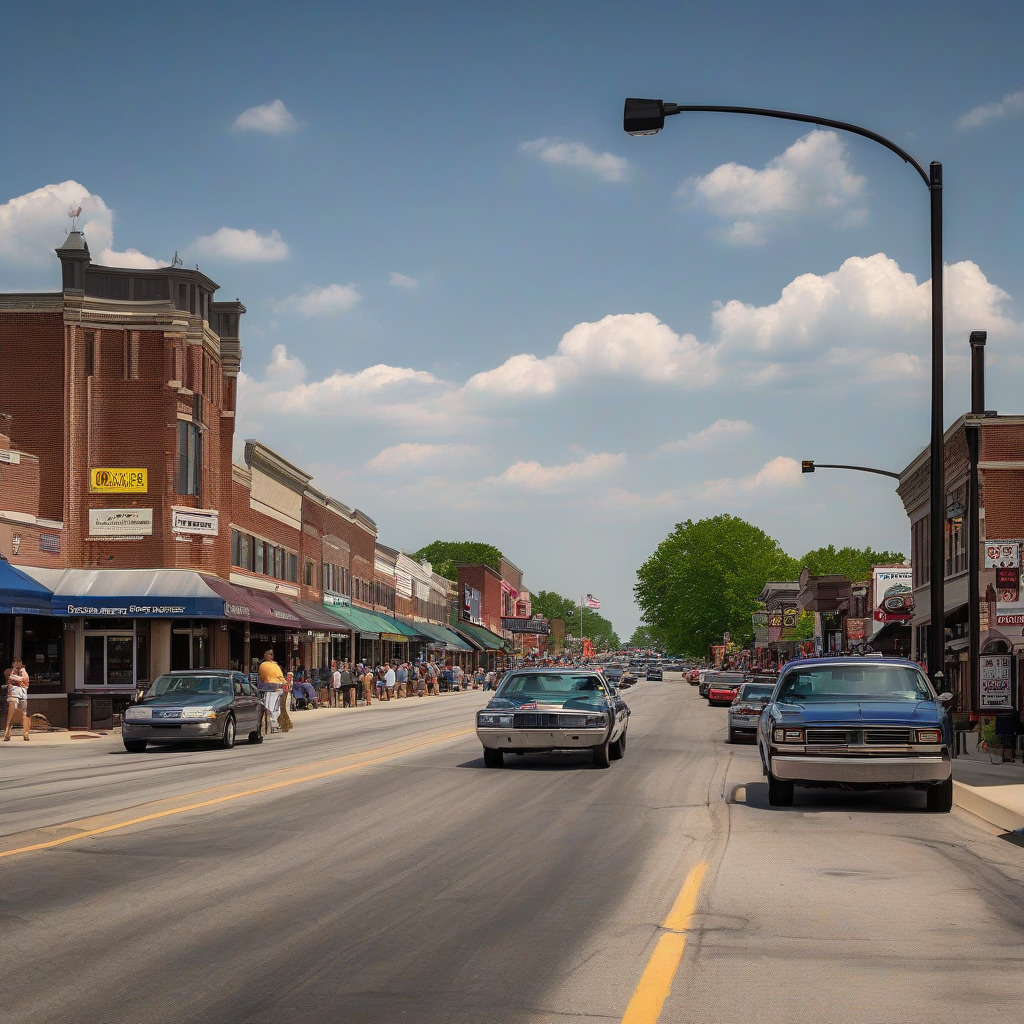
Past the press releases and the podium finish, local operators are tallying what race weekend 2026 really delivered — and who the economic engine left behind.
Visit Indy put the number at $531 million in regional economic impact for the 2026 Indianapolis 500. Released in the days after Memorial Day weekend, it landed in local media exactly the way these numbers always do: as a headline, a validation, and effectively, the end of the conversation.
It shouldn’t be.
A nine-figure estimate distributed across 200,000-plus attendees and a 15-county metro statistical area tells you almost nothing about whether the owner of a Georgetown Road sports bar or a Fountain Square coffee shop saw anything real. The number describes a region. It does almost nothing to describe a business. The methodology counts every hotel dollar, every restaurant tab, every tank of gas filled in Hendricks County. On paper that looks rigorous. In practice it obscures more than it reveals.
So CityDesk Indianapolis spent the weeks after the race doing what the press release doesn’t: following the dollar and mapping where it actually stopped. What we found is more interesting — and more uncomfortable — than the headline suggests.
Downtown Hotels Cashed In, and Mostly Did It Before the Race Ran
The clearest winners of race weekend 2026 were the large-format downtown hotels. According to STR Global data and figures from the Indiana Hotel & Lodging Association, the Mile Square hotel corridor ran at or above 97 percent occupancy across the core Friday-through-Sunday window. Average daily rates came in between $389 and $520 depending on property tier. The JW Marriott, Westin, Hyatt Regency, and Conrad all sold out.
For context: a comparable mid-May weekend without a major event typically produces ADRs in the $160–$190 range at occupancy between 65 and 72 percent. Race weekend nearly triples the rate and eliminates vacancy. Across the downtown corridor, room-night revenue over three days represents a swing of roughly $12–$15 million above baseline, before food and beverage, parking, and ancillary revenue.
Here’s the catch: that revenue was locked months in advance. Most downtown race-weekend inventory was committed through group blocks, repeat corporate accounts, and multi-year packages. The JW Marriott’s race-weekend rooms are substantially controlled by hospitality partners and event sponsors long before any member of the public tries to book an individual night. The hotels capture significant revenue, but the transaction is administrative as much as operational. By race weekend, the hard work is already done.
What does that mean for margins? The hotels were already staffed for this kind of event. An extra $12–$15 million in room revenue translates to much thinner margin growth than the gross number implies. A night audit clerk working 11 p.m. to 7 a.m. earns the same whether occupancy is 72 percent or 97 percent. Variable costs rise. Fixed costs don’t move.
Overflow markets had real volume too. STR data for Carmel, Greenwood, and Plainfield showed occupancy spikes of 20 to 30 percentage points above normal. A Greenwood hotel owner reported scrambling to cover front desk and housekeeping with temp workers. “We booked out,” he said. “But we didn’t make as much per room as you’d think because we had to bring in agency staff to handle the volume.” Strong weekend, complicated math.
Restaurants and Bars Grossed Big Numbers, Then Paid a Lot of Them Back Out
The gross revenue story on Georgetown Road is genuinely impressive. Operators along the commercial strip closest to the Speedway reported weekend revenues in the range of $80,000 to $120,000 over three days. A typical May weekend for a similarly sized full-service place grosses closer to $22,000–$35,000.
Gross is not net. Net is considerably more complicated, and this is where most race-weekend coverage quietly falls apart.
Marcus Delray owns Checkers Bar & Grille on Georgetown Road and has been running it through race weekends for eleven years. He put it plainly: “I’ll do $95,000 this weekend. I’ll spend about $31,000 getting there. After labor, product, and the stuff that breaks, I’m netting maybe 22, 23 percent. That’s a strong weekend, don’t get me wrong. But people hear those gross numbers and think I’m getting rich. It’s not like that.”
His 2026 cost breakdown included roughly $11,000 in temporary and overtime labor, $14,000 in additional inventory purchased at standard cost — not at the race-weekend markup he charges guests — and about $6,000 in miscellaneous costs: extra security, and a new exhaust fan motor that gave out under sustained high-heat operation on Friday afternoon while the kitchen was doing $8,000 in hourly volume. He’d run his numbers three times before the weekend. The fan wasn’t in any of them. It never is.
The labor story is the one competing coverage consistently underplays. IMS concessions, run by Levy Restaurants under a long-term contract with the Speedway, actively recruit hourly workers from the same pool Georgetown Road restaurants depend on. Line cooks who can make $18–$22 an hour working a Levy concession stand inside the track — without the tableside service demands or sustained stress of a full restaurant in overdrive — create a real retention problem for local operators during race week. At least two restaurant owners reported losing trained kitchen staff to IMS concession temp work for the weekend, then backfilling with less experienced workers. Food waste, slower ticket times, table turn problems that snowball. One told me she’d spotted her own prep cook at a Levy station inside the track on Saturday. She wasn’t mad, exactly. But she wasn’t thrilled either.
Sarah Kim operates a bar and kitchen on the near-downtown stretch of Indiana Avenue. Her race weekend grossed $61,000 from Friday through Sunday. “But I was paying three people time-and-a-half for double shifts,” she said. “I bought inventory I didn’t move — I always overbuy, because running out is worse than waste — and I paid a temp staffing agency to cover my floor because two of my regulars called off. Net came out around $13,000 above what I’d normally clear. I’ll take it. But I’m not buying a boat.”
She’s already thinking about 2027. Maybe close on Friday to reset staffing assumptions. Maybe decide that losing a day’s volume to reduce operational stress is actually the right call. She’s not sure yet. Neither am I, but the fact that she’s considering it tells you something about how thin the margin for error actually is.
Inside the Track, Most of the Food and Beverage Money Goes to Chicago
The single largest concentration of food and beverage spending on race weekend happens inside the Indianapolis Motor Speedway. Virtually none of it routes through the local economy in any meaningful way.
IMS concessions are operated by Levy Restaurants, a Chicago-based subsidiary of Compass Group, one of the largest food service corporations in the world. Food and beverage revenue from the estimated 250,000-plus fans inside the Speedway flows to a national operator — not to local restaurant owners, food producers, or distributors except at the margins. That’s not a scandal. It’s just how contracted venue concessions work at this scale. But it’s worth saying clearly, because the Visit Indy figure doesn’t.
Levy does source some local vendors. The Speedway has in recent years highlighted Indiana beer partnerships and a handful of branded local food items at specific premium concession locations. The core inventory, though, moves through Compass Group’s national supply chain. A local craft beverage distributor told me his firm has pitched IMS multiple times over the past five years. The response has been consistent: the procurement decisions are centralized, the volume requirements are high, and the switching costs make it not worth changing for items that sell acceptably through the existing national vendor relationship. A polite door that doesn’t really open.
The Hulman Terrace expansion and IMS’s broader capital investment in premium hospitality matter here in a specific, underreported way: they’ve increased the share of fan spending that happens inside the gates. A fan who can get a credible steak dinner, a full bar, and air-conditioned seating in the premium concourse has fewer reasons to leave and spend money on Georgetown Road. The infrastructure that makes IMS a better experience for fans may, at the margin, shift food and beverage dollars away from local operators toward Levy’s account. I don’t think that’s IMS’s intent. I think it’s the effect.
One Georgetown Road operator who’s been in the business for 25 years said the demographic of his customer base has shifted noticeably. “I’m seeing fewer affluent fans and more working-class folks who aren’t willing to spend or who just want a beer and a place to stand. The customers with money? They’ve got premium seating inside the track now.”
Local food producers who want a path into IMS should know: Levy runs a vendor inquiry process, but sourcing decisions are made at the corporate level. The certification, volume, and liability insurance requirements are calibrated to commercial-scale producers. That’s a wall worth knowing about before you spend six months trying to climb it.
STR Hosts Quietly Had the Best Per-Unit Weekend in Indianapolis
While the hotel corridor was doing its thing downtown, a quieter but highly efficient revenue event was playing out in the 46222 and 46224 zip codes surrounding the Speedway gates.
AirDNA data for race weekend 2026 shows short-term rental occupancy in those zip codes running at approximately 97–98 percent. Nightly rates ranged from $350 for a modest single-family rental to $900 for larger properties with parking marketed specifically to race attendees. A host running one property at $550 per night across a four-night window grosses $2,200. With no front desk, no food and beverage operation, and no payroll, the margins are things that brick-and-mortar hospitality operators cannot match.
The host population in those zip codes is a mix. Individual homeowners rent their primary residence once or twice a year. Then there are the multi-property operators who have built small portfolios specifically around event-driven demand — the 500, the Brickyard, Big Ten weekends, Formula 1 if it comes back to the calendar. That second category has grown noticeably since 2021. One multi-property host with six listings in the Speedway neighborhood described spending about eight hours a week in the off-season on pricing optimization and guest communication. “It’s a business like any other,” she said. “You optimize for what you know is coming.” Hard to argue with that.
Marion County’s innkeeper’s tax registration framework requires STR operators to register with the county and remit the 10 percent innkeeper’s tax on gross receipts. Airbnb remits automatically under its agreement with Indiana, covering most of the volume. VRBO operators and direct-booking hosts have variable compliance rates. The county doesn’t publish STR-specific innkeeper’s tax collection figures. Someone should ask.
One genuine question worth pressing: are STRs taking hotel market share, or serving demand that hotels can’t absorb? For Indianapolis, it’s largely the latter. Downtown hotel capacity is finite and sells out regardless of STR availability. The STR market is primarily serving fans who want to be within walking distance of IMS — geography downtown hotels simply cannot replicate. These are not competing markets in the way they are in, say, a beach town with flexible capacity. They’re serving different customers in different places.
Food Truck Vendors Cleared Real Money If They Could Navigate the Paperwork
Mobile vendors operating outside IMS gates reported race weekend 2026 gross revenues ranging from $8,000 to $20,000 over three days. For small operators, that’s meaningful money — among the best per-event revenue available in Indianapolis’s street vending economy. Getting to the starting line requires running a bureaucratic gauntlet that costs money, time, and expertise that not every small operator has.
The permit stack for a food truck operating near IMS during race weekend includes: a Marion County Health Department mobile food establishment license, Town of Speedway business registration, an Indiana Alcohol and Tobacco Commission temporary permit if serving alcohol, and coordination with Indianapolis DPW for any street closure or right-of-way use outside the Speedway’s immediate footprint. Operators near the IMS perimeter on Speedway’s side deal with Speedway’s rules. Those on Indianapolis’s side deal with Indianapolis’s code enforcement and DPW. The jurisdictional split creates confusion that new vendors run into every year and experienced ones have just learned to route around.
Tony Reyes has operated his birria truck near the Georgetown Road entrance for three years. His 2026 weekend gross came in just under $17,000. “My first year, I lost money,” he said. “Not because business was bad — business was incredible. I lost money because I didn’t know about the Speedway registration, got a fine, and had to close for half a day on Saturday. That was maybe $4,000 I didn’t make. Now I keep a checklist. But nobody hands you the checklist.”
He spent his first winter after that calling the Speedway and various city offices, gradually assembling the actual requirements. “It’s like finding a combination,” he said. “You get one number wrong and the whole thing doesn’t open.” That’s a pretty good description of how this city treats small operators sometimes.
Another vendor, who asked not to be named, completed her permit stack for 2026 at a total cost of about $1,400 in fees and roughly 12 hours of administrative work spread over six weeks. “If you know how to do it, it’s annoying but manageable. If you’re figuring it out fresh, it can feel impossible. And the county doesn’t make it easy to find all the pieces in one place.” She operates one truck. She’s not a business lawyer. When the Speedway told her she needed a “special events vendor agreement” but didn’t define what that entailed, she spent two weeks sending emails trying to figure it out. Two weeks. For a single document that should be findable in five minutes.
The practical result: operators who’ve run previous race weekends carry a compliance knowledge advantage that amounts to a real competitive edge. First-timers pay tuition. Sometimes literally. Operators who want to understand the broader licensing framework before race week can find guidance in our coverage of how to get a food truck business license in Indianapolis.
The Revenue Gradient Gets Steep Fast Once You Leave the Corridor
The economic benefit of the Indianapolis 500 is real in some places and essentially nonexistent in others. The line between those categories is sharper than the $531 million figure suggests.
Broad Ripple, the north-side entertainment district roughly nine miles from IMS, may actually see softer traffic during race weekend than a comparable non-race late-May Saturday. Locals who might normally populate its bars and restaurants either go to the race, leave town to avoid the traffic, or stay home and watch on TV. The tourist population doesn’t journey to Broad Ripple when they’re already navigating race-weekend logistics closer to the track. At least three Broad Ripple bar operators described race weekend as net-neutral to slightly negative. One owner who’s been in the district 18 years said flatly: “The 500 is the worst weekend for us. People aren’t coming. Locals are gone. It’s just dead.” That quote does not appear in any Visit Indy publication.
Mass Ave and Fountain Square tell a modestly different story. Both capture some portion of the fan population looking for a different experience than the Speedway scrum. Fans who booked downtown hotels and want a real dinner without fighting Georgetown Road traffic drift there. But the volume is incremental. A Mass Ave restaurant owner described race weekend as “maybe 15 to 20 percent above a normal Saturday night — nothing like what you’d get from a sold-out Pacers series or a big convention.” She was grateful for it. It wasn’t reshaping her year.
Within a mile of the Speedway gates, operators have real volume. Georgetown Road sees the largest benefit of any non-IMS commercial area. The downtown Mile Square captures a significant hotel and evening dining lift. Past those zones, impact drops fast. Southside neighborhoods two miles from the track, the Irvington corridor, the near-east side — all functionally identical to any other weekend in May. The 500 is a massive local event, but its economic footprint is geographically smaller than most people assume and smaller than the regional aggregate implies.
Indianapolis Provides the Infrastructure. Speedway Captures the Tax Revenue.
Here’s the jurisdictional fact at the center of race weekend economics that almost never gets discussed: the Indianapolis Motor Speedway sits in the Town of Speedway, a legally and fiscally independent municipality entirely surrounded by Indianapolis-Marion County. The track’s address is Speedway, Indiana. Its tax revenue is Speedway’s tax revenue.
Sales tax on commercial transactions inside Speedway’s borders flows through Indiana’s tax structure, with the local option piece going to Speedway’s TIF and general fund. Innkeeper’s tax on properties within Speedway’s limits accrues to Speedway’s budget. Local income tax attributed to activity in Speedway goes to Speedway. For a town of approximately 29,000 residents that hosts one of the most commercially intense events in American motorsport, the fiscal arithmetic is very favorable. That’s not a criticism of Speedway — that’s just how municipal boundaries work. But it’s worth sitting with.
Indianapolis-Marion County funds and manages the infrastructure that makes race weekend function at scale: the interstate access, the road network along the Georgetown Road corridor, expanded INDYGO service, the emergency management and public safety coordination that covers both jurisdictions. The city absorbs the cost of managing increased traffic and the wear on city-maintained roads.
A Marion County transportation official estimated the county’s direct public safety and traffic management costs for 500 weekend at roughly $2–3 million annually. Police overtime, additional transit service, road repairs. The figure doesn’t appear in any public accounting. I asked several times in several directions and got essentially the same answer: nobody has totaled it up in a way that’s been published.
The Town of Speedway’s finance office confirmed that race-related tax receipts represent a material portion of the town’s annual general fund revenue, but race-attributable figures aren’t broken out in published municipal budgets. Marion County’s fiscal records don’t itemize what race weekend infrastructure costs the consolidated city on an annual basis. A clean cost-benefit comparison is difficult to construct. That difficulty is itself worth noting. The fiscal benefits of having the Speedway in your town accrue to Speedway; the infrastructure costs of getting 250,000 people to and from that town are distributed more broadly. That arithmetic shapes every conversation about public investment in race-supporting infrastructure, whether city officials say so explicitly or not.
The Operators Who Got Priced Out of the Weekend Entirely
Not every small business that wanted to participate in race weekend 2026 did so profitably. Some didn’t participate at all — and their absence doesn’t register anywhere in the economic impact study.
The upfront capital requirements for meaningful race-weekend participation are real. A restaurant planning for a $90,000 weekend needs to pre-purchase significantly more inventory than normal, carry it for days before the event, staff up with premium-wage temporary labor, and potentially invest in temporary infrastructure: outdoor seating, signage, security. For an operator with thin liquidity, the risk-adjusted calculus simply doesn’t work. And the math gets worse if you factor in a broken exhaust fan.
One small operator on the west side put it bluntly: “The race is a $20,000 opportunity if everything goes right. But if I’m wrong about demand or something breaks, I’m taking a $15,000 hit. I can’t do that.” She’s not being irrational. She’s being honest about her cushion.
Several small food and retail operators in near-west side neighborhoods adjacent to Speedway made deliberate decisions to close or scale back during race weekend. Not because they didn’t want the business, but because chasing it didn’t pencil out. “I can’t compete with what the big bars are doing,” said one small grocery and prepared-foods operator on West 16th Street. “I don’t have the staff, I don’t have the parking, and my customers aren’t race fans. I just close Friday and Saturday and let it pass.”
She’d considered staying open for the 2025 race, ran the numbers, and concluded she’d lose money. Better to close and save the labor costs. It’s a pragmatic decision and also a small defeat — the neighborhood is right there, the event is enormous, and she gets nothing from it.
In the vendor market, permitting costs and compliance complexity function as a soft barrier that consolidates opportunity toward experienced operators. The multi-property STR hosts in 46222 and 46224 who’ve optimized their listings for race-weekend demand extract more per-unit value than first-time hosts. The food truck operators who’ve already run the gauntlet earn more because they’ve paid the tuition of getting it wrong. Existing operators accumulate advantages that make entry harder for newcomers. This pattern isn’t unique to Indianapolis. It also isn’t invisible when you talk to people trying to participate for the first time.
What the 2026 Numbers Actually Tell the City
Visit Indy’s $531 million figure for 2026 is higher than the $498 million estimate for 2025. Both are above pre-pandemic 2019 baselines when adjusted for inflation. By that measure, the race’s economic footprint is growing. The Indy Chamber points to race weekend as proof of the city’s capacity to host world-scale events — an argument relevant to ongoing conversations about convention investment, Big Ten infrastructure, and Formula 1 urban race ambitions.
Those frames are legitimate. A lot of people had genuinely good weekends and made real money. But the distribution question is hardening with each race cycle in ways the aggregate number doesn’t capture, a pattern we track across our business & professional coverage.
The STR market is maturing and consolidating, capturing an increasing share of the accommodation economy in the neighborhoods closest to IMS. Improvements to IMS’s internal hospitality infrastructure are incrementally shifting food and beverage spending inside the gates, where Levy Restaurants collects it. And the permitting complexity of street-level participation is quietly consolidating the mobile and pop-up vendor market toward experienced repeat operators.
The long-term implication is straightforward: race weekend becomes increasingly capital-intensive and expertise-intensive. Businesses that can absorb upfront costs, navigate regulatory complexity, and operate at scale benefit significantly. Everyone else benefits at the margins or opts out.
The race still produces real revenue for hundreds of local businesses. Georgetown Road operators, downtown hotels, and near-west side STR hosts had strong weekends. But it’s not the kind of broadly distributed economic boost that the headline figures suggest — and the gap between who benefits and who doesn’t is widening, not shrinking. Small operators looking to build a financial cushion for high-stakes event weekends should also understand what Indianapolis small business owners should know about SBA loans in 2026 — access to working capital is often what separates operators who can chase race-weekend revenue from those who can’t.
Whether Indianapolis has any policy interest in changing that is a political question. Vendor support programs that help first-time operators navigate the permit stack. Purchasing preferences that give local food producers a path into IMS concessions. A more honest public accounting of what the Speedway-Indianapolis fiscal split actually costs the consolidated city every year. These are all things the city could choose to address.
The $531 million press release isn’t going to raise any of them.