What Broad Ripple Homes Are Selling For in Summer 2026
Inventory is tight, trail-adjacent properties are commanding real premiums, and school-deadline buyers are compressing the decision window. Here's what the closed-sales numbers say.

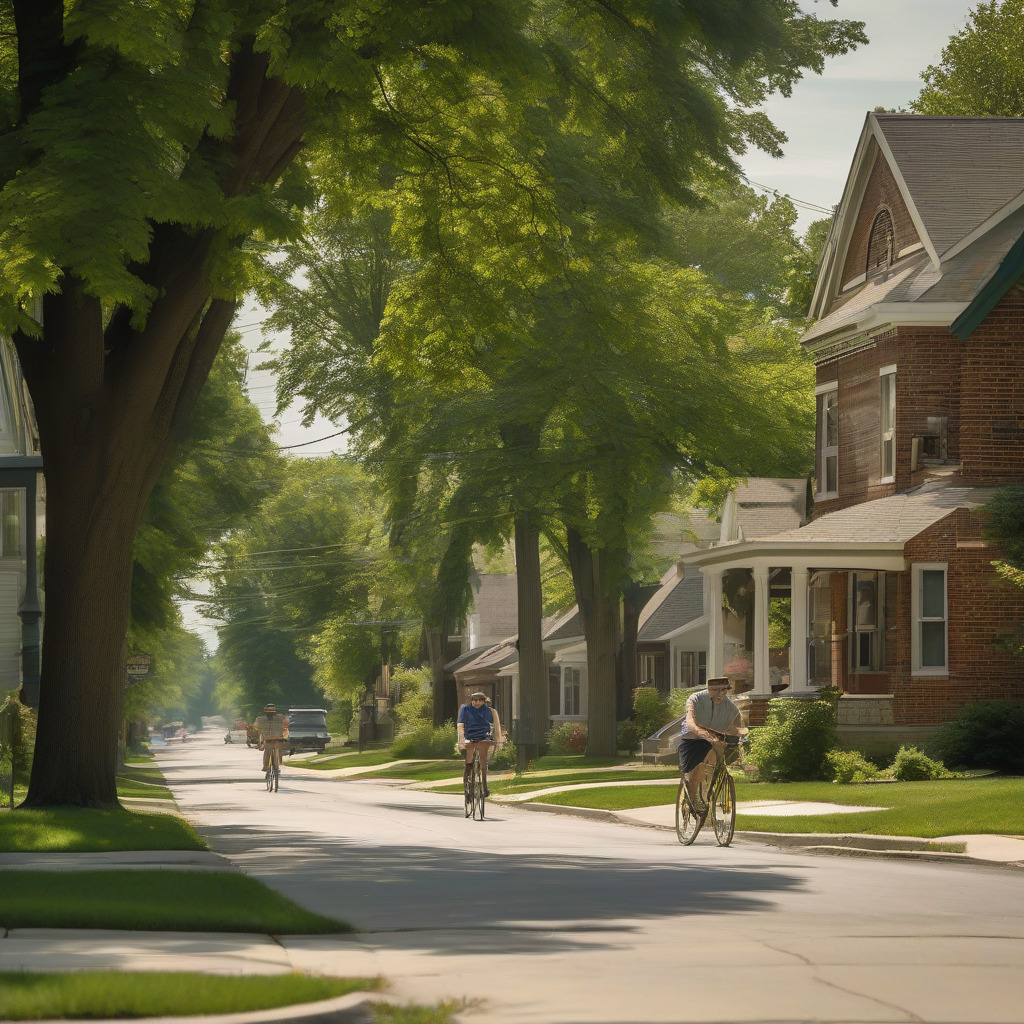
Inventory is tight, trail-adjacent properties are commanding real premiums, and school-deadline buyers are compressing the decision window. Here’s what the closed-sales numbers say.
The short answer for anyone shopping 46220 right now: sellers are winning, but not by a runaway margin.
The longer answer lives in the closed-sale data from April through June 2026.
According to MIBOR Broker Listing Cooperative figures, the median closed sale price for residential properties in 46220 in Q2 2026 landed at $318,500 — up roughly 6.4 percent from the Q2 2025 median of $299,400. Median days on market dropped to nine, compared to fourteen in the same quarter last year. The list-to-sale ratio came in at 101.2 percent, meaning the average closed transaction settled above asking price, essentially flat with Q2 2025’s 101.0 percent.
This market didn’t suddenly heat up this summer. It stayed hot.
Those three figures together describe a neighborhood where qualified buyers are competing for supply that refuses to grow fast enough to meet them. If you came in expecting negotiating room on the offer side, the data is going to disappoint you.
What You’re Actually Buying in Broad Ripple
Before any price figure means anything, understand what the housing stock in 46220 actually looks like. The zip code is not uniform — and I mean that more seriously than the usual boilerplate warning.
The dominant inventory is the postwar and interwar single-family home. Residential streets — College Avenue north of 54th, Guilford, Carrollton, Westfield Boulevard — are lined with 1920s through 1950s bungalows and Craftsman houses. These typically run 900 to 1,800 square feet, two or three bedrooms, detached garages, lots averaging roughly 5,000 to 6,500 square feet. Well-loved, well-worn. Original hardwood floors and vintage tile baths are selling points here; so are the mature tree canopies and walkable blocks. What you often trade away is square footage and storage. Many of these homes sit under 1,200 square feet of finished space, and kitchen and bath updates can add meaningfully to price. If you’ve ever tried to fit a modern household into a 1940s closet situation, you know exactly what that means in practice.
The second tier is infill construction — homes that replaced teardowns over the past decade and a half, particularly in the blocks closest to the Village and along the Monon corridor. Newer builds typically run 2,000 to 2,800 square feet and list between $475,000 and $650,000. They attract households prioritizing modern layouts and primary suites without the renovation work that older stock requires.
Then there’s the condo and townhome product concentrated near the Village core and along the canal. One-bedroom units in the $175,000 to $230,000 range do turn over here, though inventory is genuinely thin — and thin is doing a lot of work in that sentence.
Price per square foot in Q2 2026 ranged from roughly $195 to $240 for older single-family stock in move-in condition. Updated infill homes reached $265 to $295. If a listing’s price per square foot runs well above $250, you’re looking at recent renovation, trail proximity, new construction, or some combination of all three.
Does the Monon Premium Actually Show Up in Closed Comps?
The Monon Trail Premium is something agents have discussed informally for years. Whether it shows up in a disciplined read of closed comps is a different question — and honestly, I was skeptical until I looked at the Q2 numbers.
For summer 2026, the answer is yes. Roughly 6 to 10 percent, when comps are sufficiently controlled.
Two closed sales from May and June on Guilford Avenue north of 54th Street tell the story. Both were 1940s bungalows of similar square footage and condition. The Guilford Avenue home, sitting two blocks west of the Monon trailhead, closed at $348,000. A comparable bungalow of similar vintage and footprint on Evanston Avenue — roughly six blocks east of the trail, without the same walkable access — closed at $319,000 during the same window. Lot size, bedroom count, and square footage were within 5 percent of each other. That’s a $29,000 gap, or 8.9 percent, for the ability to walk to brunch without getting in your car.
A second pairing on Carrollton Avenue versus a comparable home on College Avenue showed a gap closer to 6.5 percent in favor of the Carrollton property. “The trail access is not subtle in the comps,” said one listing agent active in 46220 who requested anonymity ahead of a pending transaction on the street. “Buyers touring a Guilford or Carrollton home in July can walk to the trail, walk to the Village, walk to brunch. That lifestyle math shows up when offers come in.”
The caveat is real: paired comps in a neighborhood with this much housing variety are imprecise. Two bungalows are never identical. But when the differential appears consistently across multiple pairs and multiple agent accounts, the pattern becomes hard to dismiss. A 6 to 10 percent premium for trail-adjacent properties in 46220 is a defensible working estimate, not a marketing line.
Bidding Wars or Buyer Leverage? Reading the Offer Data
The 101.2 percent list-to-sale ratio is the headline number, but it doesn’t answer the question most buyers actually have: how do I structure an offer to win without overpaying?
Agents working buyer clients in 46220 this summer describe a market that’s competitive but not irrational. Properties priced correctly and in good condition are drawing three to five offers within the first weekend. Overpriced listings sit and occasionally come back with price reductions. “We’re not in the frantic waiver-of-everything environment of 2021 and 2022,” said Marcus Chen, a buyer’s agent at Encore Sotheby’s International Realty who has worked with buyers in Broad Ripple and Meridian-Kessler for the past four years. “But buyers who come in at ask with a standard inspection and a financing contingency on a well-priced home in the 300s are often losing. You have to read the individual property.”
The competitive offer structure in 46220 this summer typically includes at least one of the following: an escalation clause with a ceiling clearly above list, a shortened inspection period of seven to ten days rather than the standard fourteen, or a modest earnest money increase to signal seriousness. Full inspection waivers still appear on the most competitive listings — something I find genuinely uncomfortable to recommend. Increasingly, though, agents are advising buyers to negotiate a pre-inspection with seller permission rather than waiving outright. That protects the buyer while keeping the offer clean. It’s a more sensible middle ground.
Seller concessions appear on the longer-sitting inventory. Rate buydowns, closing cost credits, and repair allowances are all active tools on homes that have been on market more than three weeks. If a listing in 46220 has crossed the 21-day mark, a buyer asking for a 1-0 rate buydown or a $5,000 repair credit isn’t out of bounds. A renovated bungalow two blocks from the Monon is not a negotiating environment. A dated ranch on the east end of the zip with deferred maintenance is an entirely different conversation.
Inventory: What’s Available and Why There Isn’t More
Active residential listings in 46220 tallied 37 properties at the close of Q2 2026, down from 44 at the same point in 2025 per MIBOR data. That includes everything from the condo product near the Village to six-figure teardown candidates. Subtract the outliers, and the supply of genuinely move-in-ready single-family homes available to a typical buyer in any given week numbers in the low teens.
The structural reasons are familiar to anyone who’s followed Broad Ripple for a decade. Lot sizes in the neighborhood’s core are small, which limits teardown economics for larger infill projects. The BRVA’s active advocacy for design standards constrains what replacement construction can look like. There is no large undeveloped parcel sitting near the Village waiting to be subdivided. That’s not a flaw — it’s why the neighborhood looks the way it does — but it means the supply constraints aren’t going away.
Marion County permitting records through May 2026 show two new single-family residential permits issued for addresses within 46220 year-to-date, both on lots where demolitions occurred in late 2025. Neither project is expected to come to market before Q4 2026 at the earliest. DevelopIndy has no publicly active projects within the Village footprint that would add residential supply in the near term. A small mixed-use project on the Broad Ripple Avenue commercial corridor that had been rumored in planning discussions doesn’t appear to have reached a formal petition stage as of this writing. Buyers waiting for more choices are likely to keep waiting.
Summer Is the Season, and Here’s Why That’s Not Just a Saying
Real estate has seasonal rhythms everywhere. In Broad Ripple they run deeper because of specific neighborhood characteristics, and the gap between summer and off-season here is more pronounced than almost anywhere else on the northside.
The school-calendar effect is the most quantifiable. Families with children in Washington Township schools — which serve much of 46220 — face a hard deadline: close before the end of July if you want to enroll in your new district for fall without complication. That deadline compresses buyer decision-making into a ten-week window between May and mid-July. It also means serious family buyers are less likely to let a strong property slip over minor negotiating friction. If you’ve bought in this neighborhood with kids in tow, you already know the particular stress of that July clock.
The trail itself becomes visible in summer. Buyers touring a home on Carrollton Avenue in July can see and feel the Monon’s activity in real time — joggers, cyclists, families with strollers. That same buyer touring in November is looking at bare trees and a quiet path and has to evaluate the lifestyle trade-off without actually experiencing it. Sellers and their agents know this. Listing a trail-adjacent home in June is not an accident.
The third factor is Broad Ripple Avenue itself. The restaurant and entertainment density along the corridor — Liter House, Broad Ripple Brew Pub, The Vanguard, the Saturday farmers market running through September — is fully apparent in summer. Buyers cross-shopping between Broad Ripple and a quieter northside neighborhood often choose Broad Ripple after a summer afternoon spent in the Village. The neighborhood is, bluntly, at its most persuasive when it’s 78 degrees and the patio at the Brew Pub has a line.
How Broad Ripple Stacks Up Against the Northside
Buyers comparing 46220 to adjacent neighborhoods are usually making a specific trade, and it’s worth being direct about what each one involves.
Meridian-Kessler (46208, portions of 46205) runs comparable median pricing to Broad Ripple, occasionally higher on larger lots in the 60th Street corridor. The housing stock skews slightly larger and older — more Tudor and Colonial Revival alongside the bungalows. Walkability is strong but different; MK buyers are closer to Monon access via Broad Ripple’s south end, and the commercial corridor is less dense. School district math overlaps for much of MK. Buyers who end up there and want more square footage in a similar price band rarely regret the choice.
Butler-Tarkington (46208 south, 46205) offers a lower entry point — median closed prices running $40,000 to $70,000 below Broad Ripple in comparable-condition homes, depending on the block. The meaningful trade-off: Butler-Tarkington is in IPS rather than Washington Township, which matters substantially to buyers with school-age children. For buyers without that constraint, BT has strong architectural character, proximity to Butler University, and a neighborhood that’s absorbed real investment over the past five years. It’s underrated.
Nora and the Far Northside (46240, 46250) offer larger homes, newer construction, and more predictable inventory. Median prices in Nora can match or exceed Broad Ripple’s for homes offering 2,500-plus square feet and two-car attached garages. What buyers give up is walkability. These are car-dependent neighborhoods by design, and the Village’s density of dining and entertainment simply doesn’t exist there.
The BRVA Factor: What Neighborhood Governance Means for Buyers
The Broad Ripple Village Association is not a typical homeowners association. It holds no covenants over private property and collects no dues from homeowners. But it functions as a consequential civic body — one that shows up at Metropolitan Development Commission hearings, files formal positions on zoning petitions, and maintains ongoing relationships with the City-County Council. That’s worth understanding before you close.
For buyers, the BRVA’s most practically significant activity in 2025 and 2026 has centered on short-term rental policy and commercial corridor zoning.
On STRs, the BRVA advocated for stricter owner-occupancy requirements for short-term rentals within the Village core during 2025 Marion County STR ordinance discussions. This is consistent with its long-standing preference for owner-occupied residential density over investor-dominated rental blocks. Marion County’s STR ordinance framework was still being refined as of Q2 2026, and the BRVA confirmed it remains engaged in the process. For buyers, the practical implication is straightforward: this is a neighborhood where the organized residential community is actively pushing back against wholesale conversion of housing stock to short-term rentals. That’s a stabilizing force. Whether you want to run an Airbnb here is a separate question with a likely unsatisfying answer.
On commercial corridor zoning, the BRVA commented formally on at least two variance petitions in the first half of 2026, both related to the eastern end of the commercial corridor, covering building height, parking, and ground-floor commercial use requirements in new mixed-use proposals. The BRVA is not a veto player on development. But buyers who care whether the neighborhood in five years looks roughly like the neighborhood today should understand that there’s an organized civic body here that shows up and fights for a particular vision of what Broad Ripple should be. That’s genuinely unusual in Indianapolis. It’s also part of what makes the place worth paying up for.
What to Watch in the Second Half of 2026
Three variables will determine whether summer’s conditions extend into fall or start to shift.
Mortgage rates in Q2 2026 hovered in the high-6-percent range on a 30-year conventional — high enough to meaningfully constrain purchasing power for buyers at the lower end of the 46220 price band. A sustained quarter-point decline in Q3 could pull additional buyers into the market and push competition higher. A rate increase would likely slow buyer volume and give remaining buyers more room. We’ve been saying “watch rates” for two years. It remains true and remains unresolved.
The two permitted infill starts tracked through May are a small addition. If additional teardown transactions close over the summer and permits follow, new inventory could arrive in late Q4 — not enough to move the needle on overall supply in any significant way, but worth tracking for buyers who want new construction in the neighborhood.
The school-deadline surge that drives June and July closes typically softens in August. Whether fall 2026 maintains competitive conditions or gives buyers more room will depend partly on how many buyers were priced out this summer and remain active, and partly on where rates settle.
What’s not going to change: trail access, walkability, entertainment density, limited supply, and a civic body with strong opinions about what gets built. Buyers understand this and are pricing accordingly. The summer 2026 data confirms it. The question for any individual buyer isn’t whether Broad Ripple is worth it as a neighborhood. It’s whether a specific house, at a specific price, on a specific street, pencils out against the alternatives — and whether the offer is built for the competitive environment that actually exists rather than the one you might have hoped to find. For a fuller picture of how this neighborhood fits into citywide trends, our Indianapolis housing market coverage for mid-2026 puts those numbers in broader context.
CityDesk Indianapolis covers the Home & Property Desk on a quarterly basis. Q3 2026 closed sales data for 46220 will be reported when MIBOR figures are released in October. Tips and corrections to the Home desk.