What Indianapolis Homeowners Are Actually Paying for HVAC Replacement in 2026
If you've spent any time searching for HVAC replacement costs online, you've probably landed on a page claiming the "national average" is somewhere between $5,000 and $12,000. Usually sourced from …

If you’ve spent any time searching for HVAC replacement costs online, you’ve probably landed on a page claiming the “national average” is somewhere between $5,000 and $12,000. Usually sourced from a survey two or three years old. Padded with advice that applies equally to Phoenix and Indianapolis. That’s not what this is.
What follows is reported pricing from Indianapolis-area contractors, collected in 2026, broken down by system type, home vintage, and neighborhood. We’ve checked the current utility rebate programs from AES Indiana (formerly IPL) and CenterPoint Energy, and verified the federal tax credit figures for installations made this year. The goal is to give you enough real information to evaluate a quote intelligently — not just accept or reject it on instinct.
What Replacement Really Costs in Indianapolis: A Reference Table by System Type
These are installed prices — equipment, labor, and standard permit — for a typical 1,500–2,200 square-foot single-story home with accessible existing ductwork in reasonable condition. Homes with ductwork complications, non-standard configurations, or multi-story layouts will run higher. The ranges reflect real variation in equipment tier and contractor pricing.
| System Type | Installed Range | What Drives the Spread |
|---|---|---|
| Gas furnace only (80% AFUE) | $2,800 – $4,500 | Equipment tier; furnace size (BTU); brand |
| Gas furnace, high-efficiency (96–98% AFUE) | $3,500 – $6,000 | Concentric venting requirements; PVC flue runs |
| Central AC only (standard SEER2) | $3,200 – $5,500 | Tonnage; brand; condenser placement |
| Full split system—furnace + AC | $6,500 – $12,000 | Combined equipment tier; full-system labor |
| Standard air-source heat pump | $5,000 – $9,000 | Tonnage; backup heat source requirements |
| Cold-climate heat pump (rated to -13°F or lower) | $8,000 – $14,000 | Premium equipment cost; electrical service upgrades |
Pricing reflects figures confirmed by Indianapolis-area contractors and should be used as a budgeting reference, not a guaranteed quote. Verify against your specific home and current contractor pricing.
Labor versus Equipment: Where Your Money Goes
On a standard Indianapolis installation with no unusual complications, labor runs roughly 40–50 percent of your total bill. The rest is equipment: the furnace or air handler, the condenser, the thermostat, the refrigerant line set if it’s being replaced. Local technicians are billing $85–$140 per hour for installation labor, depending on whether the crew is in-house or subcontracted.
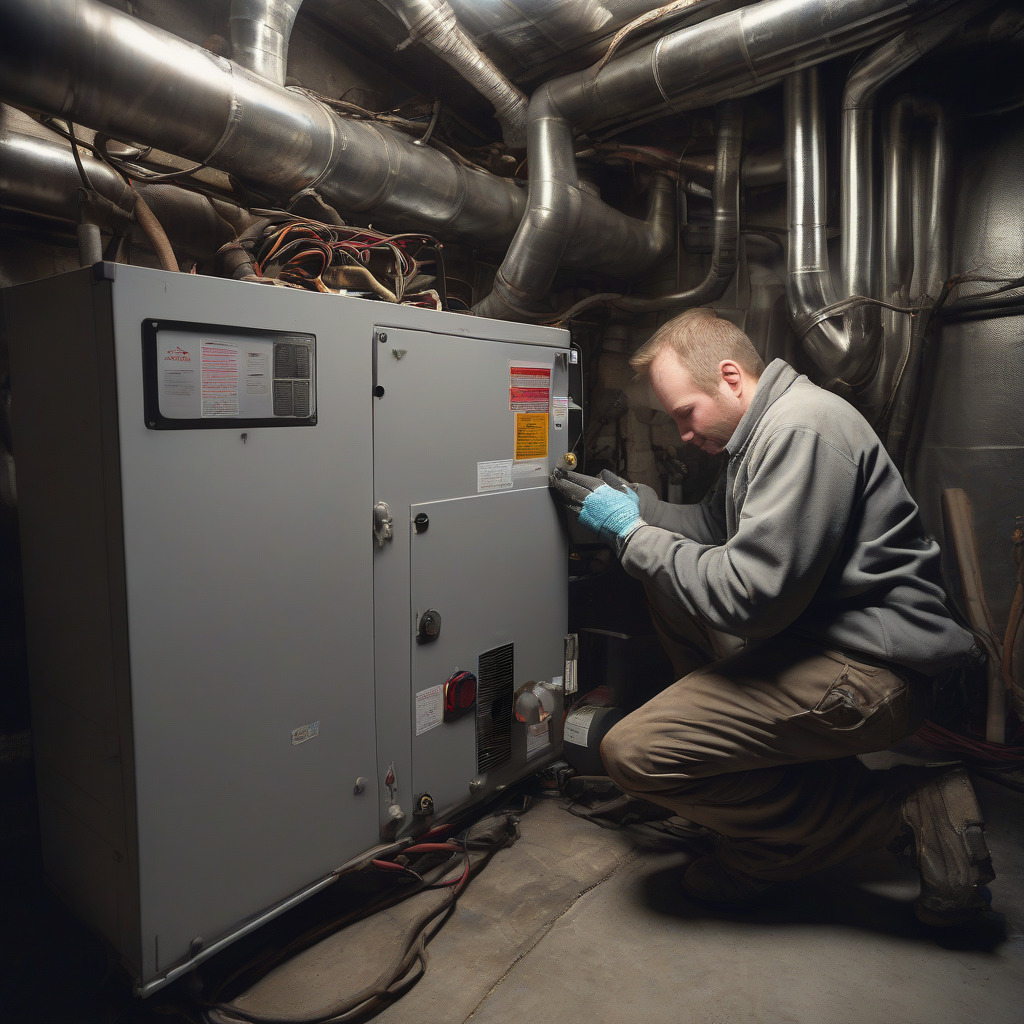
That ratio shifts in certain situations. Cramped mechanical rooms, equipment in finished basements with no exterior access, difficult-entry configurations — all of these add labor hours. On complex jobs involving ductwork replacement or genuinely awkward access, labor can hit 55–60 percent of the total.
Crawl-space installations are common in older Perry Township and Decatur Township homes, and they add time. Expect a labor surcharge of $300–$800 depending on depth and condition of the space.
This is exactly why an itemized quote matters. A single bottom-line number — “system and installation, $9,200” — tells you nothing about whether you’re paying for premium equipment and modest labor or entry-level equipment and inflated labor. Ask every contractor to break it out. Any reputable company will do this without complaint.
The Old-Home Penalty: What Irvington, Fountain Square, and Broad Ripple Homeowners Need to Know
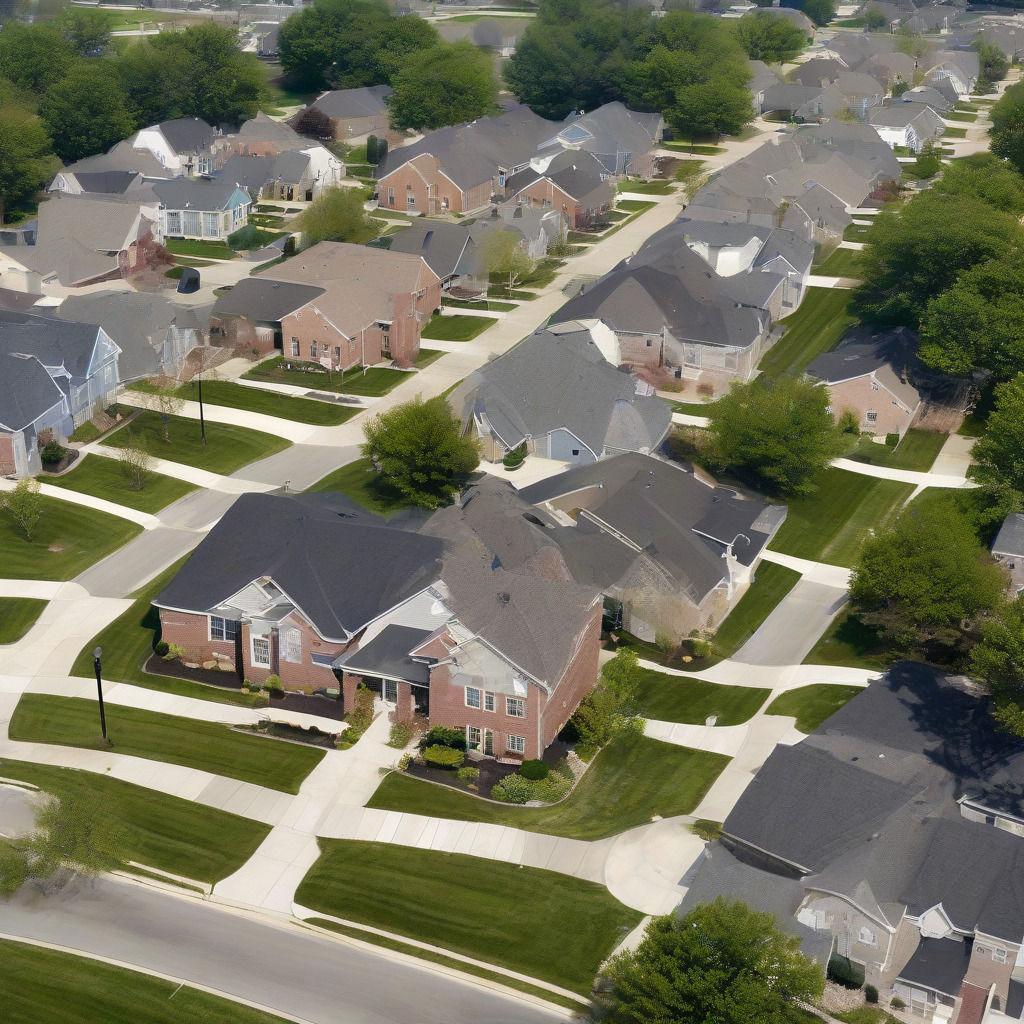
Indianapolis has a substantial stock of pre-1950s housing, concentrated in Irvington, Fountain Square, Herron-Morton Place, Woodruff Place, Old Northside, and the older sections of Broad Ripple. If you own one of these homes, the base price in the table above is almost certainly not your real number. Any contractor who doesn’t flag this early in the conversation is either inexperienced or not paying attention.
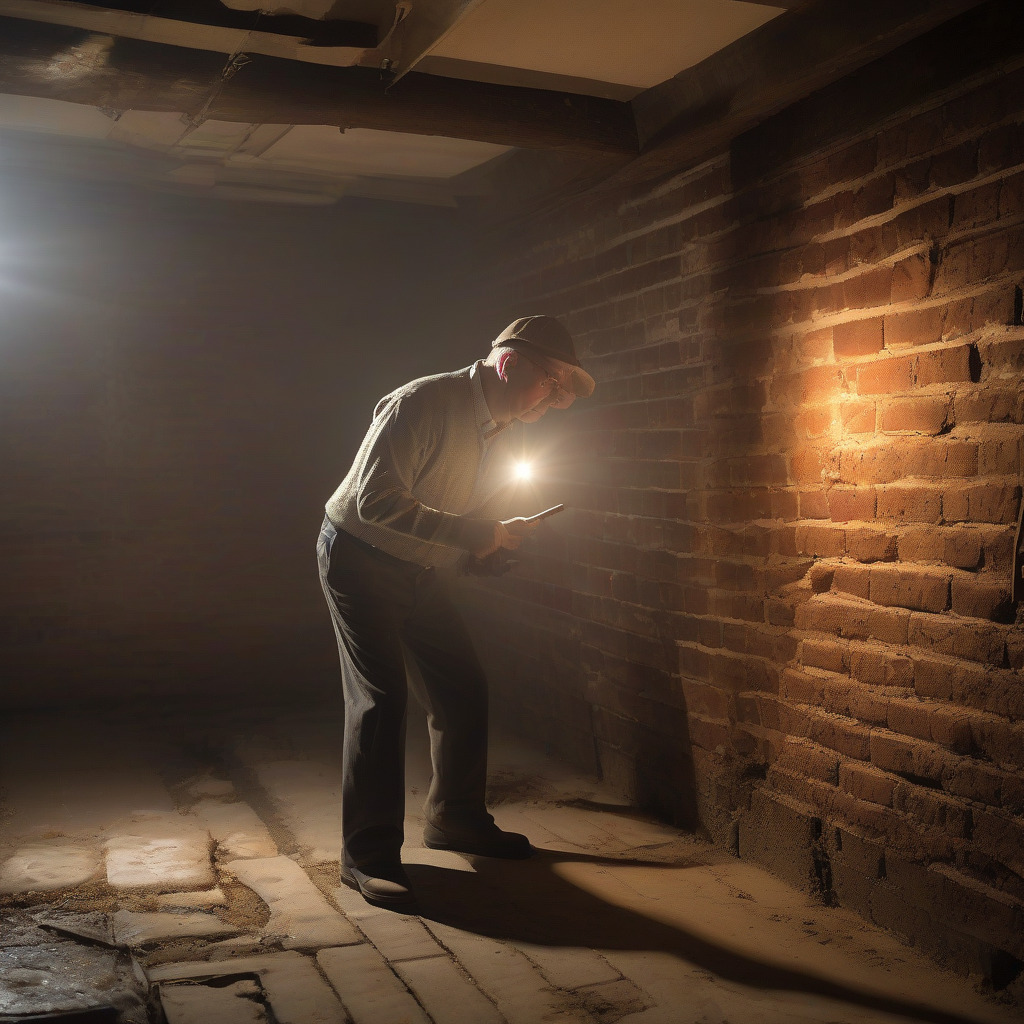
Homes built before 1960 frequently have duct systems designed for gravity furnaces, not forced-air. Those ducts are often undersized and run through unconditioned spaces with no insulation or sealing. Getting ductwork to a condition where modern equipment performs as rated can add $2,000–$6,000 to a project. Full-house duct replacement as a standalone scope runs $3,000–$8,000.
Woodruff Place and portions of Herron-Morton Place frequently still have original two-pipe steam or hot-water radiator systems. Converting to forced air means installing new ductwork, supply and return registers, and a lot of labor. Some homeowners in these neighborhoods skip the conversion entirely — they keep the radiator system for heat and add a ductless mini-split for cooling and supplemental heat. That trades a lower upfront cost against the efficiency limits of a heat pump in an Indiana winter. Neither path is obviously wrong. It depends on how long you’re staying and how much you want to spend now versus later. But make that decision deliberately, not because a contractor steered you away from a more expensive scope. This kind of project-level decision-making is exactly what we cover in our home & property coverage.
Older electrical infrastructure occasionally complicates things too, particularly for heat pumps that require a dedicated 240-volt circuit. If the panel is undersized, an electrical upgrade may be required before installation can proceed. And if you’ve never seen an octopus gravity furnace — picture a cast-iron mushroom cloud occupying most of your basement — removing one through a narrow stairway and installing modern equipment in its place adds meaningful labor time that won’t show up in any national pricing guide.
Heat Pump versus Gas Furnace in Indianapolis: The Climate Reality
National HVAC content tends to present the heat pump decision as a simple efficiency calculation: heat pumps move heat rather than generate it, so they use less energy than gas combustion. What those guides typically gloss over is that standard air-source heat pumps lose heating capacity as outdoor temperatures drop. Indianapolis winters regularly put lows in the single digits. A standard unit struggling at 5°F will lean heavily on its backup resistance heat strip — which is essentially an expensive electric space heater running all night.
The relevant product for Indianapolis is the cold-climate heat pump, specifically units rated to maintain meaningful heating output at -13°F or lower. These cost more. Installed prices run $8,000–$14,000, compared to $6,500–$12,000 for a standard furnace-plus-AC split system. But they actually work when Indianapolis is at its coldest, which matters here in a way it doesn’t in Charlotte.
Whether that premium makes financial sense depends on your specific situation, and I’d be skeptical of anyone who tells you the math is obvious either way — in either direction. If you heat primarily with natural gas at current CenterPoint rates and your home is moderately insulated, a high-efficiency gas furnace paired with a new central AC will likely cost less to operate than an all-electric heat pump on current AES Indiana rates. If your existing furnace is old and inefficient, your home is well-insulated, or you’re planning a solar installation, the equation shifts toward the heat pump. The federal 25C tax credit changes the upfront math meaningfully but doesn’t touch the operating cost comparison.
Heat pumps work well in Indianapolis. Plenty of homeowners are installing them successfully, and some are very happy with the results. The point is to run this math with your actual utility rates and your actual home — not a generic national calculator calibrated to Georgia weather.
Rebates, Tax Credits, and How to Stack Them
The federal Inflation Reduction Act Section 25C Tax Credit remains active for 2026: 30 percent of qualifying equipment and installation costs, capped at $2,000 per year for heat pumps and heat pump water heaters, and $600 each for qualifying air conditioners and furnaces (combined non-heat-pump cap of $1,200). This is a tax credit — it reduces your federal tax liability dollar for dollar. Not a rebate, not a check in the mail. You claim it on IRS Form 5695 with your 2026 return. Your contractor should be able to confirm which specific models qualify.
On a $12,000 cold-climate heat pump installation, the 25C credit yields $2,000 (capped there regardless of the 30 percent math). On a $5,000 high-efficiency furnace upgrade, a homeowner could claim up to $600.
AES Indiana offers residential rebates through its energy efficiency program. Current reported amounts include $100–$300 for central air conditioners rated at 16+ SEER2, $200–$500 for qualifying air-source heat pumps, and $50–$75 for smart thermostats (stackable with HVAC rebates through a separate program). Modest relative to the federal credit, but these require no tax liability to claim — which matters if your tax situation is complicated. Verify current amounts at aesindianaenergysense.com before your installation; program funding can shift mid-year.
CenterPoint Energy offers rebates on high-efficiency gas equipment: $100–$200 for furnaces rated at 96%+ AFUE, and $50 for qualifying smart thermostats. Verify at centerpointenergy.com/saveenergy.
Here’s what stacking looks like in practice. A Lawrence homeowner replaces a failing split system with a cold-climate heat pump. Installed cost: $11,500. Federal 25C credit: $2,000. AES Indiana heat pump rebate: approximately $300. Total incentive: roughly $2,300. Effective out-of-pocket: roughly $9,200.
The same homeowner chooses a high-efficiency gas furnace plus new central AC instead. Installed cost: $9,000. Federal 25C furnace credit: $600. AES Indiana AC rebate: approximately $150. CenterPoint rebate: approximately $100. Total incentive: roughly $850. Effective out-of-pocket: roughly $8,150.
The gap narrows but doesn’t close. Whether operating costs over the system’s life change the picture depends on where gas and electricity prices go over the next fifteen years. Nobody knows that, and anyone who claims to is selling something.
When to Replace and How Timing Affects Price and Lead Time
Indianapolis contractors are candid about seasonal demand, and the numbers are significant enough to matter if you have any scheduling flexibility at all.
During peak cooling season — Memorial Day through mid-July — and again when the first hard freezes start furnace calls in October, wait times at most Indianapolis companies run two to four weeks for non-emergency installations, sometimes longer if a heat wave or cold snap floods the schedule with emergency calls. Same-day emergency replacements are available but carry a premium.
In off-peak windows — February through March and the September shoulder — lead times compress to within the same week for a standard scheduled installation. Some companies offer pricing flexibility for jobs booked during slow periods. Worth asking directly.
If your system is aging or showing signs of trouble — uneven temperatures, higher utility bills, more frequent service calls — schedule proactively in March or October. You avoid emergency premiums and have time to collect multiple quotes instead of signing with whoever can show up today. Signing under pressure with a failed system in July is exactly the situation contractors count on.
Permits and Why They Matter More Than Contractors Let On
Marion County requires a mechanical permit for any HVAC replacement. Not optional, not something a licensed contractor should ever suggest skipping. A residential mechanical permit currently runs approximately $75–$150 depending on the scope of work. Verify the current fee schedule directly with the city before your installation.
The permit triggers an inspection by a city mechanical inspector, who confirms that the installation meets Indiana Mechanical Code requirements: venting, refrigerant line sizing, combustion air requirements for gas equipment. Basic consumer protection. Worth the administrative inconvenience.
An unpermitted system can give your homeowner’s insurance company grounds to complicate or deny a related claim. Unpermitted work discovered during a buyer’s home inspection becomes leverage against you and can delay or kill a sale closing. The permit also creates a paper trail — documented evidence of what was installed, by whom, and whether it passed inspection — that matters if something goes wrong years later.
Any contractor who discourages you from pulling a permit, for any reason, is a contractor you should not hire.
How to Get a Fair Quote: The Questions That Matter
When collecting estimates, the goal isn’t to find the lowest number. It’s to get quotes that are actually comparable. A $7,500 quote that includes duct sealing, a new thermostat, and rebate paperwork handling can be a better deal than a $7,200 quote that includes none of those things. That math isn’t obvious until you ask.
First: is the permit included? It should be. If not, ask them to add it and requote.
Second: ask for an itemized breakdown of equipment cost versus labor. If one contractor quotes premium equipment with modest labor and another does the reverse, you can have an informed conversation about what you’re actually buying rather than guessing at a lump sum.
Get the SEER2 and AFUE ratings on the specific equipment in writing, on the proposal. “High-efficiency” is not a standard — it means different things to different contractors. A 96% AFUE furnace is high-efficiency; an 80% AFUE is not. Ask whether the contractor handles rebate paperwork on your behalf or leaves that to you.
Equipment warranties are standard. Labor warranties vary — one year is common, two years signals some confidence in the installation.
Red flags: a quote delivered as a single lump sum with no itemization, no mention of a permit, same-day pressure to sign, or a price 25 percent below every other quote you’ve received. That last one almost always means something is missing — inferior equipment, an unpermitted installation, or corners being cut somewhere in the process. This isn’t cynicism. It’s just how this category works.
Reporting Methodology and Verification Notes
Pricing ranges reflect figures reported by Indianapolis-area HVAC contractors active in the 2026 market, confirmed against regional market data. Obtain multiple on-record quotes from licensed Indianapolis contractors before making purchasing decisions. Established companies operating in this market include Peterman Brothers, Godby Heating & Plumbing, Mister Quik Home Services, Recker & Boerger, and Freedom Heating & Cooling, among others. Verify current operations, licensing, and pricing directly.
Utility rebate figures for AES Indiana and CenterPoint Energy reflect program information reported for 2026. These programs change as annual funding allocations shift. Verify current amounts at aesindianaenergysense.com and centerpointenergy.com/saveenergy before making purchasing decisions.
Federal 25C tax credit figures are drawn from IRS guidance and U.S. Department of Energy published program parameters under the Inflation Reduction Act. Confirm equipment eligibility with your contractor and your specific tax situation with a tax professional. Marion County permit requirements and fee ranges were reported as of publication; verify current amounts directly with the city. Climate data reflects ASHRAE 169-2020 and NOAA climate normals for Indianapolis International Airport.
CityDesk Indianapolis is an independent local business publication. We do not accept payment for editorial coverage. No HVAC contractor mentioned in this article sponsored or reviewed this piece prior to publication.