Indiana EV Incentives in Plain English for Indianapolis Buyers in 2026
Indiana has no state EV tax credit. But the federal money and utility rebates are real, stackable, and easier to claim than they used to be. Here's how to actually use them.

Indiana has no state EV tax credit. But the federal money and utility rebates are real, stackable, and easier to claim than they used to be. Here’s how to actually use them.
If you’ve been shopping for an electric vehicle in Indianapolis and hit a wall trying to figure out what incentives you qualify for, you’re not imagining the confusion. Generic “EV incentives by state” roundups populate every search result. They routinely list Indiana in their tables without noting that the state offers no consumer tax credit whatsoever. Spend an hour clicking through those guides and you come away thinking a state credit exists somewhere that you’re missing. There isn’t one. I’ve done that hour. It’s not productive.
What does exist for Indianapolis buyers is meaningful. It requires knowing where to look, how to qualify, and—critically in 2026—how to verify that the federal program is still intact before you sign anything. This guide covers all of it.
Indiana Has No State EV Tax Credit
Indiana does not offer a consumer income tax credit for purchasing an electric vehicle. There’s no program through the Indiana Economic Development Corporation, the Indiana Department of Environmental Management, or any other state agency that puts money back in a private buyer’s pocket at tax time.
When you see IEDC mentioned in EV coverage, it’s almost always manufacturing context. The Stellantis and Samsung SDI joint venture battery plant in Kokomo is the most prominent example—a multi-billion-dollar project that reshaped Indiana’s narrative around the EV transition. That’s an economic development story, not a consumer rebate story. The distinction keeps you from chasing a credit that doesn’t exist.
Indiana has chosen to stay out of the consumer incentive space and let federal policy carry that weight. Other states have built layered consumer programs; Indiana has not. For Indiana buyers, that means federal policy matters enormously—and the risks around that policy in 2026 deserve serious attention.
What the Federal Clean Vehicle Credit Actually Pays
Two federal credits under the Inflation Reduction Act remain the primary financial incentive available to Indianapolis buyers. They work on entirely different terms depending on whether you’re buying new or used.
New vehicles—Section 30D: Up to $7,500. The phrase “up to” matters more than most buyers realize. The credit splits into two $3,750 halves, each tied to battery sourcing requirements: one for critical mineral content, one for battery component assembly. Some vehicles qualify for both. Others earn one tier. A handful qualify for nothing because of final assembly or supply chain restrictions. The IRS maintains a current list at IRS.gov. Certain Tesla configurations and Rivian models have tripped the sourcing requirements at various points—verify before you assume a specific trim qualifies.
MSRP caps are where Indianapolis buyers frequently get surprised in the finance office. Sedans and smaller vehicles: $55,000. SUVs, vans, and pickups: $80,000. A Tesla Model 3 Performance trim and certain Rivian configurations can push against or past these thresholds depending on options. The cap applies to the manufacturer’s suggested retail price including options and destination—not what you negotiate. Check the specific VIN against the applicable cap before you configure your order.
Used vehicles—Section 25E: Up to $4,000, calculated as 30 percent of the sale price. The vehicle must be priced at $25,000 or less and at least two model years old at time of sale. A three-year-old Model 3 at $22,000 qualifies. A two-year-old Rivian at $26,500 does not.
Income Caps in Plain English
Both credits have adjusted gross income limits. Used vehicles are tighter.
New vehicle: $150,000 single, $225,000 head of household, $300,000 married filing jointly. Used vehicle: $75,000 single, $112,500 head of household, $150,000 married filing jointly.
You can use either your current-year or prior-year AGI, whichever is lower. If your income fluctuated—you left a job, had a year with unusual capital gains, started a business—that flexibility is real. Self-certification at point of sale is based on your attestation. Accuracy is your legal responsibility. Misrepresenting income to claim the credit is a federal tax issue. Worth saying plainly.
The used-vehicle cap creates a counterintuitive result for a lot of Indianapolis households. In a dual-income household earning $160,000 filing jointly—not unusual for two working professionals—the family qualifies for the $7,500 new vehicle credit but is completely shut out of the $4,000 used vehicle credit. That gap pushes some households toward new purchases they might not otherwise make. Whether that’s a feature or a bug probably depends on who you ask. It surprised me when I first worked through the math, and it surprises most people when they realize it. For a broader look at how Indiana tax policy affects residents’ take-home calculations, see what Indiana’s 2026 income tax rates mean for Indianapolis workers and self-employed residents.
How the Point-of-Sale Transfer Works and What to Ask Your Indy Dealer
Starting January 1, 2024, the federal credit shifted from a filing-season benefit to a point-of-sale mechanism. Instead of waiting until April to claim your $7,500, you transfer the credit to a registered dealer at purchase. The dealer applies it as a direct reduction to your purchase price. You walk out having paid $7,500 less. The dealer gets reimbursed by the IRS.
This works in practice. It eliminates the cash-flow problem that previously disadvantaged buyers waiting months to recoup a credit. It simplifies the transaction for buyers whose tax situations are straightforward.
The mechanism only works if the dealer is enrolled in the IRS Energy Credits Online portal. Not every dealer has completed this registration—or kept it current. Before visiting, contact the major Indianapolis-area dealer groups—Tom Wood Automotive, Andy Mohr Automotive, Ray Skillman Automotive Group, and Dreyer & Reinbold—directly to ask about portal registration status and whether they’ve processed a point-of-sale transfer recently. Dealer enrollment can lapse, and a salesperson may not know whether it has.
Tesla operates differently. Its Indianapolis-area delivery center in the Keystone corridor is a direct-sale facility, not a franchised dealership. Tesla handles the point-of-sale transfer through its own delivery workflow. If you’re buying a qualifying Tesla configuration, confirm at time of order—not at pickup—that the specific vehicle and trim qualifies.
Ask this before you’re sitting across from a finance manager: “Are you registered in IRS Energy Credits Online, and have you processed a point-of-sale transfer recently?” A dealer who pauses too long or can’t answer clearly has actually told you something useful. If the dealership can’t confirm enrollment, you’ll claim the credit on your tax return instead—paying full price at signing and waiting several months for the IRS to return your money. That’s a real difference on the day you buy the car.
AES Indiana Rebates—What’s Available and How to Apply
AES Indiana, operating under the former IPL branding, serves most of Marion County and parts of surrounding counties. The company has offered residential EV charging rebates as part of its demand-side management programs—historically covering Level 2 home charger equipment and installation, plus time-of-use rate enrollment incentives designed to shift charging to overnight hours, which also cuts your monthly electric bill.
Before acting on any specific dollar amount, call AES Indiana directly or check aesindiana.com. Utility rebate programs open, pause, exhaust their annual funding, or change terms without much fanfare—sometimes mid-quarter. In past program years, AES Indiana has offered between $50 and $500 for Level 2 EVSE equipment and installation, with managed charging or time-of-use enrollment as either a condition or a separate incentive. Income eligibility requirements have varied by year. Applications have generally required proof of purchase and installation by a licensed electrician. Whether a 2026 program exists at these terms requires a phone call—don’t assume last year’s numbers still apply.
If your electric bill doesn’t say AES Indiana, you’re served by someone else. Duke Energy Indiana covers portions of Hendricks and Boone County suburbs with its own rebate programs, different in structure and timing from AES Indiana’s. Hendricks Power Cooperative and Northeastern REMC serve cooperative members in the outer suburbs; neither has had confirmed consumer EV rebate programs in recent program years, but cooperative programs can be added quietly, so call your co-op directly. The fastest way to find your utility is to look at the logo on your electric bill—not the address on your mortgage.
Stacking the Incentives—A Real Dollar Scenario
A 2026 Chevrolet Equinox EV. Verify its current qualification status and MSRP against IRS.gov and the $55,000 sedan cap before purchase—this is an example, not a guarantee.
The buyer: a married couple with AGI of $210,000. Above the used-vehicle threshold, well within the $300,000 new-vehicle threshold. Buying new.
At the dealership, they’ve confirmed in advance that the dealer is enrolled in IRS Energy Credits Online. At signing, they complete the required IRS attestation, self-certifying AGI eligibility. The $7,500 comes off the purchase price. They don’t wait for April.
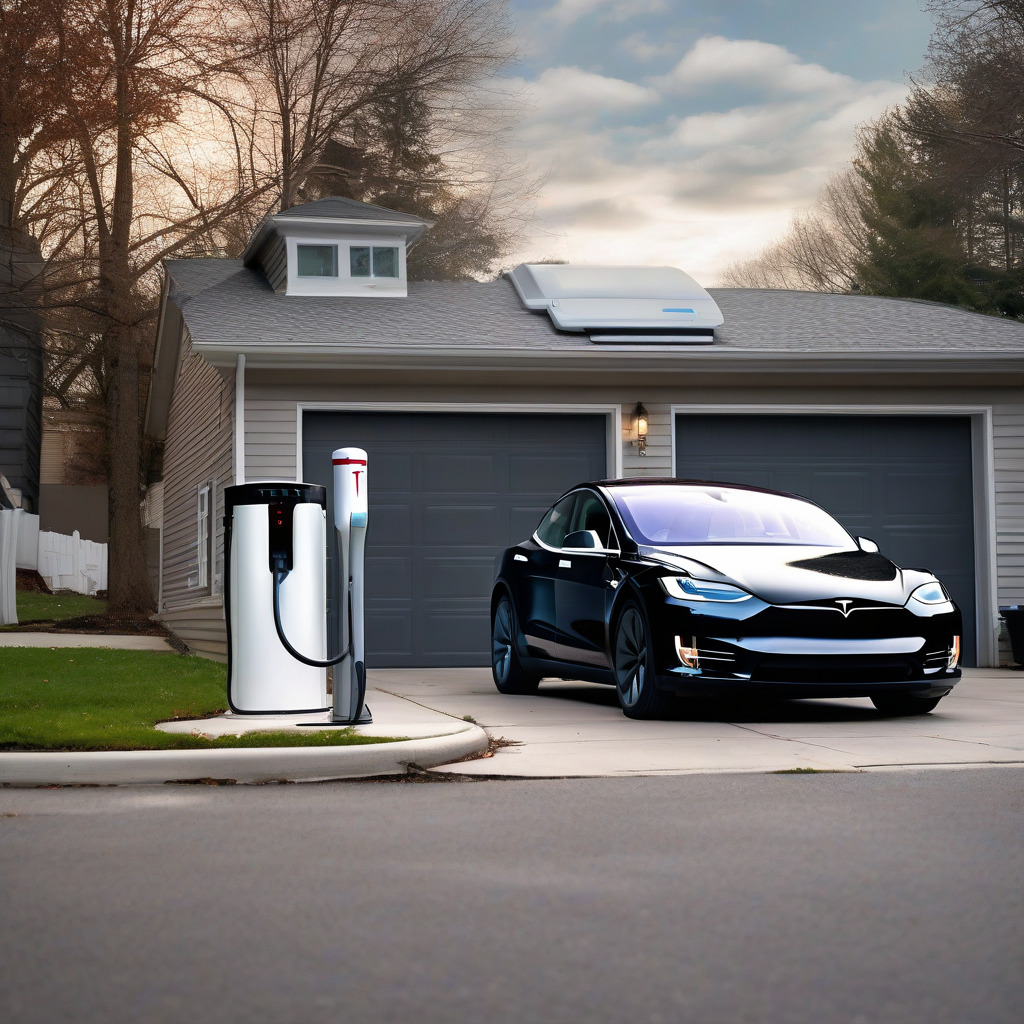
At home, they’re in Carmel with a two-car garage. They hire a licensed electrician, buy a qualifying EVSE unit, and apply to AES Indiana for the equipment and installation rebate. If the program is open and the equipment qualifies, they recoup additional money on the charging setup—handled separately through the utility, after installation, with no conflict with the federal credit.
Total: up to $7,500 federal plus utility rebates. Two entirely separate programs, two separate channels, no interaction. Both legal, both stackable.
What the buyer needs at the dealership: their most recent federal tax return or a clean calculation of prior-year AGI; the vehicle’s VIN for the IRS transfer form; and confirmation of the dealer’s IRS portal registration—asked before sitting down with a finance manager, not during. That last part is the one people skip and then regret.
The Costs Most Indianapolis Buyers Don’t See Coming
Every incentive guide tells you what you can save. This section covers what you’ll spend that you didn’t budget for.
The Indiana EV registration surcharge. Indiana charges BEV owners $150 per year at BMV registration renewal; PHEV owners pay $50. These figures were established under HEA 1002 (2017) and adjusted subsequently—verify the current amounts at the Indiana BMV fee schedule, since the legislature has discussed further changes. This is a flat fee collected in lieu of gasoline tax revenue the state doesn’t see from EV drivers. Over five years: $750 for a BEV owner, $250 for a PHEV owner. Not a deal-breaker, but real money that out-of-state incentive calculators consistently ignore.
Home charging infrastructure. A Level 2 charger needs a 240V circuit, installed by a licensed electrician. A straightforward garage installation in a post-2000 home might run $900 to $1,400. Older homes or those needing a panel upgrade can push well past $2,000. Get a quote for your specific house—ballpark figures from the internet have a way of bearing no resemblance to the actual invoice.
This matters by neighborhood. A buyer in Broad Ripple or Meridian-Kessler who owns a home with a garage and a reasonably modern electrical panel is in a fundamentally different situation than a renter in a Near Eastside apartment. Downtown public charging—ChargePoint and Blink stations in surface lots and garages—exists. But using public Level 2 stations as your daily charging plan is a genuine logistical constraint. Level 3 fast chargers are for road trips. They’re not a practical substitute for a home setup on a Tuesday morning when you’re already late.
Indianapolis winters. January lows average in the low 20s°F, and lithium-ion batteries lose meaningful range in cold weather. The EPA estimate on the window sticker won’t fully capture that. For buyers whose daily commutes push close to a vehicle’s rated range, real-world winter performance is worth researching before you buy—not after the first morning in January when the estimated range looks different than it did in October. A PHEV eliminates range anxiety at the cost of the higher registration surcharge and a more complex drivetrain. That’s a real trade-off worth thinking through honestly.
The 2026 Uncertainty Warning
This may be the most important section here, and it’s getting the least attention in most EV coverage.
Congressional Republicans and the Trump administration have proposed eliminating or significantly curtailing the federal Clean Vehicle Credit as part of broader changes to the Inflation Reduction Act. The legislative timeline has been fluid. Various reconciliation proposals have included ending the credit for new vehicles, tightening sourcing requirements, or eliminating the credit entirely as a budget offset.
What is confirmed law as of publication: the Section 30D new vehicle credit and Section 25E used vehicle credit remain in effect. The point-of-sale transfer is active. Income and MSRP caps remain as described above.
What is under active legislative debate: whether any of that survives, and when a change would take effect. I can’t tell you how this resolves—nobody can, and anyone claiming confidence is guessing. Before you complete a purchase, check the current status of the federal Clean Vehicle Credit at IRS.gov. The IRS maintains current guidance on both Section 30D and Section 25E. If the credit has been modified or eliminated by the time you’re in the finance office, a salesperson’s assurance is not a hedge against what the IRS will actually process. Check it yourself. Check it fresh.
As part of our automotive coverage, CityDesk Indianapolis will continue tracking how any federal legislative changes affect local buyers and dealer practices in the metro area.
Your Pre-Purchase Checklist
Confirm dealer IRS portal registration before you’re in the finance office. “Are you registered in IRS Energy Credits Online, and have you processed a point-of-sale transfer recently?” If the answer is unclear, plan to claim the credit on your tax return instead—which changes your cash-flow math at signing.
Check the vehicle’s MSRP against the cap before you configure your order. Sedan or hatchback: $55,000. SUV, truck, or van: $80,000. Price the specific VIN with options. Don’t discover the problem across from a finance manager.
Calculate your AGI before assuming you qualify. Use the lower of current-year or prior-year. New vehicle, joint filers: under $300,000. Used vehicle, joint filers: under $150,000. Dual-income households often clear the used-vehicle threshold without realizing it.
Call your utility before the purchase, not after. Confirm whether the residential EV charging rebate is currently open, what equipment qualifies, and whether income requirements apply. The number is on your electric bill. It takes ten minutes.
Factor the annual BMV surcharge into your five-year cost estimate. $150 per year for a full BEV; $50 for a PHEV. Verify the current figure at the Indiana BMV fee schedule.
Be honest about your home charging situation. If you own a home with a garage and a modern panel, the infrastructure question is manageable. If you’re in an apartment or older urban housing stock, work out what charging will actually look like day-to-day before you commit. This is the one where people talk themselves into optimism they’ll regret.
Verify the federal credit’s current status at IRS.gov before signing. Not a third-party summary. Not the dealer’s word. The IRS website, checked fresh.
The incentive picture for Indianapolis EV buyers in 2026 adds up to real money—potentially $7,500 off at the dealership, plus utility rebates on top. Indiana won’t help you at the state level; that’s just the deal here. What actually helps is understanding the federal program precisely, confirming your dealer’s registration status, calling your utility before you buy, and checking IRS.gov before you sign. None of that is complicated. It’s just work you have to do yourself.