Where to Get a Pre-Purchase Used Car Inspection in Indianapolis
Independent shops, what they check, how long it takes, and what to do when a seller says no

Independent shops, what they check, how long it takes, and what to do when a seller says no
Indiana does not require a safety inspection before a used car changes hands. The BMV processes the title transfer whether the car’s brake lines are solid or rotted through, whether the frame is clean or has been in three accidents, whether the odometer reflects genuine mileage or has been tampered with. State law presumes you know what you’re buying, and once you sign the title, whatever’s wrong with that car belongs to you.
That’s the legal reality for any used-car purchase in Marion County and the surrounding collar counties. Indiana has no used-car lemon law. The lemon law on the books under IC 24-5-13 covers new vehicles only. The “as-is” sale format is standard practice on every independent lot and in virtually every private-party transaction. The seller’s written or verbal representations carry limited legal weight once the title transfers.
The only meaningful protection a buyer has is the inspection they arrange themselves, before signing anything. This guide tells you exactly where to get that inspection in Indianapolis, what it should cost, how long it should take, and what to do if a seller tries to prevent you from getting one.
Why the Washington Street and Shadeland Avenue Corridors Deserve Extra Caution
Indianapolis’s highest-density used-car retail environment runs along East Washington Street and up and down Shadeland Avenue on the east side. This stretch concentrates a large number of independent buy-here-pay-here lots and smaller franchised operations where inventory turnover is fast, reconditioning depth varies widely, and the in-house financing model sometimes creates pressure to close deals quickly.
None of that makes every car on those lots a bad buy. But buyers working those corridors face the same as-is exposure as anyone else, and a pre-purchase inspection isn’t optional in that environment.
The Shops: Who Will Actually Inspect a Car You’re Thinking of Buying
The shops below are independent repair operations or regional chains — not dealership service departments inspecting their own inventory — that will conduct a pre-purchase inspection on a vehicle you bring in, regardless of whether you’re an existing customer. Call ahead to confirm availability and pricing before you show up; lead times and fees shift.
One editorial note before the list: if you already have a mechanic you trust anywhere in Indianapolis, call them first. A shop that knows your history and has no financial stake in the vehicle being sold is the best possible inspector. The list below is for everyone else.
Christian Brothers Automotive — Fishers, Lawrence, Greenwood, Carmel
CBA is probably the strongest option on this list for buyers who want a documented, photograph-backed report they can actually use in a negotiation. Their inspections include digital photos of findings, which matters: a verbal “yeah there’s some rust” doesn’t move a seller’s asking price. A photograph does. The franchise model means consistent scope across locations. Expect an OBD-II scan, a road test, and a written report.
The downside is lead time. Busier locations can run one to three business days for an appointment. If you’re in a time-sensitive transaction, call early in the week and ask directly how soon they can fit you in.
Roberts Tire & Auto — Indianapolis-Area Locations
Roberts has been in this market long enough to have a real track record, and they’ll take pre-purchase inspections from non-customers. Their bread-and-butter is maintenance and repair, not PPI work, which means the inspection quality can depend more on which tech you get than at a chain with standardized PPI protocols.
Worth calling if CBA or Firestone is backed up. Ask specifically whether the inspection includes lift time, an OBD-II scan, a road test, and a written report. A shop that delivers only a verbal summary at the end isn’t giving you anything you can use.
AAA Hoosier Motor Club–Approved Repair Facilities
AAA Hoosier maintains an Approved Auto Repair network in the Indianapolis area. The practical advantage here isn’t the inspection quality itself — it’s accountability. If there’s a dispute about service, AAA’s complaint process is available to members, which is more than most shops offer. Use the AAA facility locator to find an approved shop near wherever the car is located. Members may get a discount on inspection fees.
Midas — East, North, and South Side Indianapolis Locations
Midas shops will do pre-purchase inspections, and their diagnostic depth on brakes, exhaust, and suspension is genuine — that’s where they do most of their repair volume. OBD-II scan and road test availability vary by location, so ask when you call. Confirm you’ll receive something written, not just a verbal rundown at the counter.
Firestone Complete Auto Care — Marion County and Collar County Locations
Firestone’s PPI offering is the most standardized on this list: consistent scope across locations, written report, OBD-II scan included. The inspection covers engine, transmission, brakes, suspension, steering, tires, battery and electrical, HVAC, lights, and undercarriage. For buyers who want predictability and a report format they can hand to a seller, Firestone is a reliable choice. Call your nearest location to confirm scheduling.
What this list deliberately excludes: dealership service departments inspecting cars from their own inventory. The inspector and the seller are the same economic entity. That’s not an inspection.
Mobile Inspectors: When the Car Can’t Come to a Shop
For private-party transactions, the seller may not be willing or able to drive to a shop. Mobile inspection services send an inspector to wherever the car is.
Lemon Squad covers the Indianapolis metropolitan area. An inspector travels to the seller’s address, conducts the inspection on-site, and delivers a digital report, typically within a few hours. Inspections include a visual and operational check of major systems, an OBD-II scan, and undercarriage assessment at ground level. Call to confirm current Indianapolis coverage and pricing before you schedule.
CARCHEX provides a similar service in Indianapolis, using a network of contracted inspectors and tiered packages. Their written reports are detailed enough to use in negotiation or as documentation of pre-purchase condition.
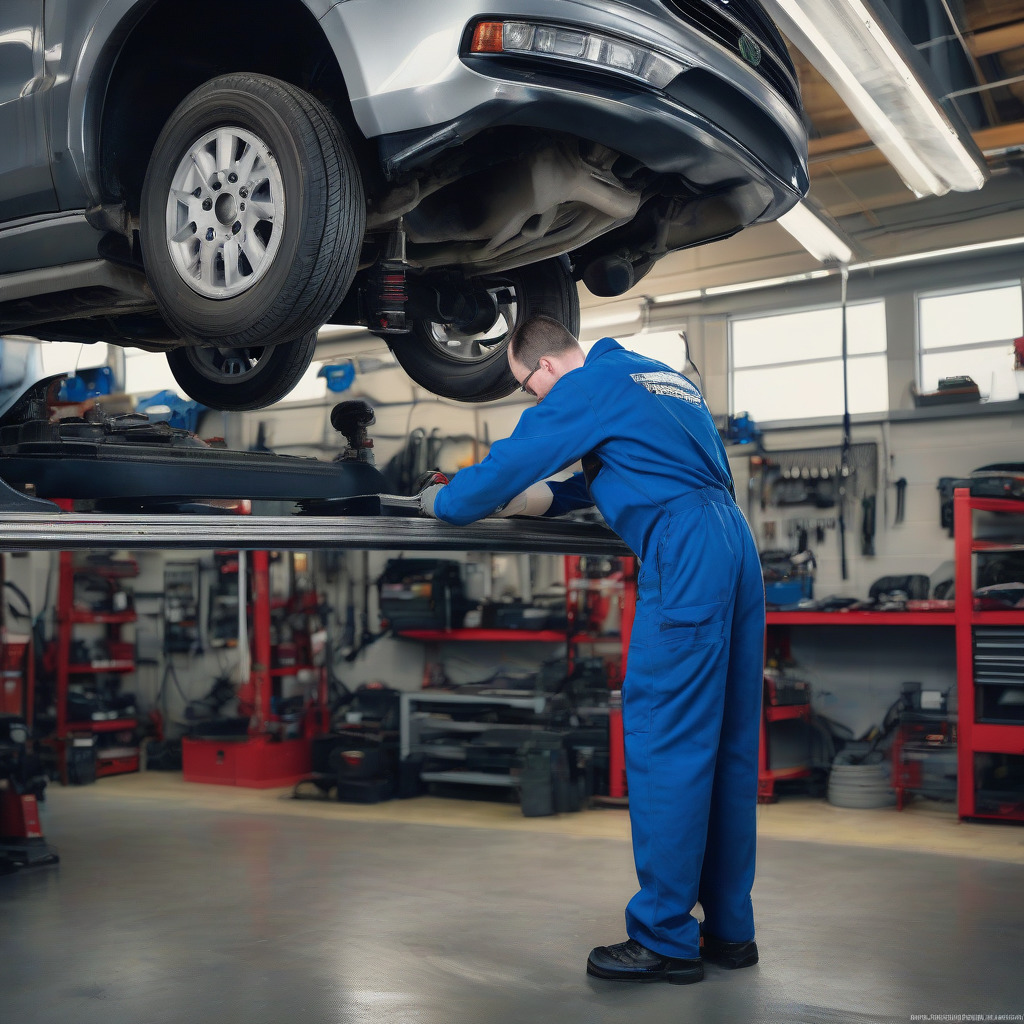
Here’s the critical limitation, and it matters: a mobile inspector working without a lift cannot assess the undercarriage with the same depth as a shop inspection. Given that undercarriage rust is one of the two most consequential findings on any Indianapolis-area used car, a mobile inspection is better than nothing — but a lift inspection at an independent shop is better than a mobile inspection when you can get it. If a seller refuses to bring a car to a shop but will accept a mobile inspector coming to them, that’s a workable compromise. Take it.
What a Real Pre-Purchase Inspection Covers
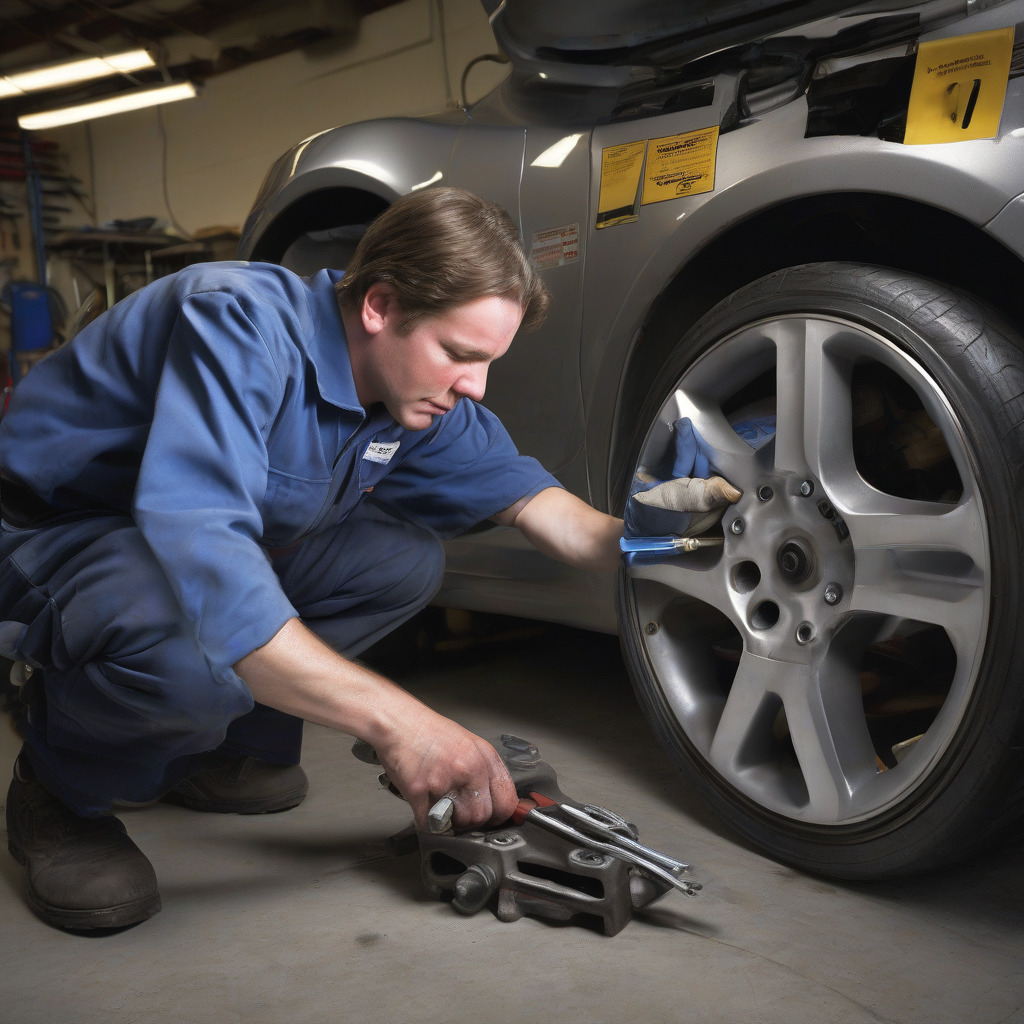
A legitimate pre-purchase inspection takes one to two hours. Any shop telling you they can complete a real PPI in 30 minutes is doing a visual walk-around, not a diagnostic inspection.
Structural and Frame Assessment. Prior accident damage doesn’t always appear in a VIN history report if the repair was cash-pay. A physical inspection should check for signs of collision repair: uneven panel gaps, mismatched paint texture, evidence of welding or filler work on structural components.
Engine. Compression, oil condition, coolant condition, belts and hoses, signs of leaks, valve cover gaskets, head gasket integrity. A recently steam-cleaned engine is worth noting in the report — not necessarily a red flag, but worth a note.
Transmission. Fluid condition and level, shift behavior on the road test, unusual noises or hesitation in gear changes.
Brakes. Pad thickness, rotor condition, caliper function, brake fluid condition. In Indianapolis specifically, brake line condition is a critical item — more on that below.
Suspension and Steering. Shock absorber condition, control arm bushings, tie rod ends, ball joints. Worn suspension components are expensive to replace and affect safety directly.
Tires. Tread depth and wear pattern. Uneven wear tells you about alignment and suspension health.
Electrical. Battery load test, alternator output, all lights functional, power window and lock function, instrument cluster accuracy.
HVAC. Both heat and air conditioning — not just that they turn on.
Undercarriage. Frame rails, floor pan, suspension mounting points, exhaust system integrity.
OBD-II Scan. Pulls stored and pending diagnostic trouble codes. Confirms whether the check-engine light has been cleared recently without resolving the underlying condition.
Road Test. Cold starts, highway speed, braking from speed, turning radius, and transmission behavior through all gears. The car has to move.
Two items deserve specific attention on Indianapolis vehicles.
INDOT applies road salt heavily on I-465, I-65, and I-70 through Indianapolis every winter, and the residue collects under anything driven those corridors daily. Indianapolis averages more than 30 inches of snow annually. The cumulative salt exposure on local vehicles is real and measurable. Brake line corrosion failure is a genuine safety event, not a repair-and-drive situation. It’s common enough on higher-mileage vehicles here that every inspection report should include a specific brake line condition finding — not just “brakes inspected.” Ask the shop to note brake line condition explicitly and to photograph what they find under the car. If they push back on that request, find a different shop.
What It Costs
National benchmarks for pre-purchase inspection pricing:
Visual inspection only: Not recommended for any purchase decision. This is a walk-around.
Standard PPI with lift inspection, OBD scan, and written report: Typically $100–$150. The right choice for most transactions.
Comprehensive PPI with road test and detailed written report: Typically $150–$200. Worth paying when you’re buying above $15,000 or when the vehicle has known complexity.
Mobile inspection services: Call each service directly for current Indianapolis pricing.
A $150 inspection on a $25,000 car is six-tenths of one percent of the purchase price. A single missed transmission issue or corroded brake lines will cost you more than that before the end of the year. Almost certainly well before.
On free multi-point inspections: some shops and dealerships offer them. They’re almost always visual-only walk-arounds with no lift time and no diagnostic equipment. If a shop tells you their PPI is free, ask whether it includes lift time, an OBD-II scan, a road test, and a written report. The answer tells you what you’re actually getting.
The Seasonal Factor
Indianapolis buyers face a genuine seasonal dimension that affects both what to look for and when to buy.
February through April is when undercarriage salt accumulation peaks on Marion County vehicles. Cars driven through a full Indianapolis winter are carrying the season’s full corrosion load by the time the weather breaks. This is also when sellers are often most motivated — tax refunds arrive, private-party listings spike, and buyers who’ve been holding off all winter start moving. The combination means early spring purchases sometimes offer real negotiating leverage, but they also carry the highest undercarriage risk. If you’re buying in this window, the undercarriage inspection and brake line check aren’t items to skim past. They’re the inspection.
Summer purchases require a confirmed, fully functional air conditioning check. Indianapolis July high temperatures average 84°F, with heat index values regularly pushing higher. An A/C system that “sort of works” in May will fail completely by August. Confirm that the A/C pulls down to expected vent temperatures under load — not just that the compressor engages and cold air comes out for thirty seconds.
In either season, ask for undercarriage photographs in the written report. They’re useful immediately for negotiation and useful later as a baseline if a dispute arises after purchase.
If the Seller Says No
Private sellers have no legal obligation to allow an independent inspection. They can refuse. The question is what that refusal tells you.
A seller who’s confident in their car’s condition has no rational reason to block an inspection that would confirm what they’re already telling you. Sellers who refuse — particularly when they cite “I just don’t have time” or “the car is fine, I know it well” — are communicating something with that refusal. They may not be hiding anything consciously. They may genuinely not know the car has problems. But the effect is the same: you’re being asked to make a large financial commitment without the information you need. Indiana’s as-is law means the moment you sign the title, you own whatever the car has wrong with it. Every bit of it.
If a seller won’t allow an inspection, you have options.
Walk away. This is always available to you and is frequently the correct answer. The Indianapolis used-car market is large. There will be another car.
Request a mobile inspector. You pay, the inspector comes to wherever the car is, and the seller doesn’t have to transport the vehicle anywhere. If a seller refuses even this — refuses to allow any independent assessment at their location while you pay for it and they’re standing right there — treat that as a definitive answer about the car.
Negotiate a price reduction. If the seller won’t allow an inspection, price the unknown into the transaction. This doesn’t eliminate the risk; it compensates you for assuming it.
Run your own OBD-II scan at minimum. Bluetooth OBD-II dongles cost around $30, and free apps on iOS and Android will read basic trouble codes. Not a substitute for a professional inspection, but it takes five minutes and will surface stored or pending codes the seller may be hoping you miss. Sellers who’ve recently cleared codes generally don’t mention it.
For licensed Indiana dealers, the dynamic is different. A reputable licensed dealer has reputational risk, regulatory exposure, and a business relationship with the community that a private seller doesn’t. Any dealer on Washington Street or anywhere else who flat-out refuses to let you bring in an independent inspector or take the car to a shop is not a dealer confident in their reconditioning program. Dealers may set reasonable conditions — requiring the inspection happen at their location or during business hours is fair. A flat refusal isn’t. Find a different dealer. There are plenty.
Before You Book the Inspection: Do These Two Things First
A pre-purchase inspection is the most important protection you have in an Indiana used-car transaction, but it’s the third step, not the first.
Step One: Run an Indiana BMV title check. Before you pay for an inspection, confirm the vehicle’s title is clean. You’re specifically looking for a salvage brand or rebuilt title. Either designation materially changes the car’s value, insurability, and safety picture — and should change whether you purchase it at all. Confirm clean title before paying for an inspection. Don’t spend $150 on a car you’d reject anyway.
Step Two: Pull a VIN history report. CARFAX and AutoCheck both provide VIN-based histories covering reported accidents, title transfers, odometer readings at each registration, and reported service events. Neither captures what wasn’t reported. Cash-pay accident repairs, unreported odometer rollbacks, and private transactions that never ran through the system are invisible to a VIN report. That’s exactly why a physical inspection follows rather than replaces this step. What the VIN report gives you is confirmed accident history and confirmation that the odometer reading is at least consistent with what’s been reported at prior registrations.
Step Three: Schedule the pre-purchase inspection. With clean title confirmed and VIN history in hand, you know the car’s reported history. The inspection tells you its actual physical condition. For buyers navigating the paperwork side of ownership change, our out-of-state car registration coverage for Indianapolis is worth bookmarking if you’re relocating here and buying locally.
Then negotiate or walk.
The used-car market in Indianapolis moves fast, and there’s always pressure to decide before someone else does. That pressure is real. It also shouldn’t override the cost of an inspection that stands between you and buying someone else’s problem. Indiana law has already made its choice about protecting used-car buyers: it decided buyers protect themselves. The inspection is how you do it.
For more local coverage, explore our Automotive section.