What Your Car Needs Before a Summer Road Trip According to Indianapolis Mechanics
Named local shops, real prices, and specific booking windows — because a breakdown outside Terre Haute isn't how you want the trip to start.

Named local shops, real prices, and specific booking windows — because a breakdown outside Terre Haute isn’t how you want the trip to start.
It’s a Saturday morning in July. You loaded the car the night before: cooler in the trunk, kids in the back, GPS set for the Lake of the Ozarks. You’re 40 miles west of Indianapolis on I-70, somewhere past Plainfield, when the temperature gauge needle starts climbing. You pull onto the shoulder. The nearest exit with a real shop is past Terre Haute. Your trip hasn’t started. It just ended.
The part that makes Indianapolis mechanics wince when they tell versions of this story: it’s almost always preventable. A lower radiator hose that had been soft for months. A battery that showed weak in March but was still starting the car fine in June. Brake pads glazed from a winter of Indy stop-and-go. None of it invisible. All of it findable with an hour on a lift before you left town.
If you’re planning a summer road trip out of Indianapolis — Chicago on I-65, Cincinnati or Louisville on I-74 and I-65 south, St. Louis on I-70 — here’s what local mechanics say you actually need to know before you go.
What Indianapolis Mechanics Most Often Find Wrong Before a Long Trip
The shops handling pre-trip prep see the same patterns every summer. At independent shops like Schroeder’s Automotive in the Nora neighborhood on the north side, the bays stay full from late May through the Fourth of July weekend without interruption.
Cooling system problems top the list. Specifically: hoses that feel pliable enough at idle but collapse under highway load. A lower radiator hose heat-cycled through several Indiana winters develops internal cracking you can’t see from the outside. Squeeze it with the engine cold. If it doesn’t spring back firmly, or feels soft anywhere along its length, it’s warning you. Most drivers never squeeze their hoses. Most mechanics who see a July breakdown can point to a hose within five minutes of the tow-in.
Battery failures rank second — though not the way most people expect. Batteries die in winter cold, that part’s widely understood. What’s less appreciated: a battery that was marginal in February and still starting the car through April has been living on borrowed time. Summer heat accelerates the damage. Internal fluid evaporates. Sulfation builds. A battery that was already weakened in February may drop below the cranking threshold on a hot afternoon after sitting in a parking lot in Effingham, Illinois. Indianapolis mechanics have a phrase for it: “the winter killed it, the summer proves it.” A battery load test — different from a simple voltage check, don’t let a shop substitute one for the other — is the only way to catch this before the car strands you.
A/C refrigerant loss is the one people most consistently underestimate. A system blowing cold on a 68-degree April afternoon may not be blowing cold when the cabin is saturated with heat and you’ve been on the highway for two hours. Small refrigerant leaks are invisible in mild weather and become obvious under sustained thermal load. The time to find this is not on I-70 in July.
Tire pressure and tread surprise people because the failure mode is gradual. Tires lose pressure naturally over time. A tire never rechecked after winter may be running meaningfully low going into summer. Underinflated tires run hotter on highway pavement, and hot pavement in July already runs hotter than normal. Add a slow leak from a nail that’s been self-sealing for three months, and you’ve got a blowout candidate. It’s an easy thing to miss until it isn’t.
Brake wear consistently shows up on vehicles driven primarily in urban Indy. The Franklin Road corridor. The Keystone construction zones. The Michigan Road merge-and-brake rhythm. City driving glazes pads differently than highway driving. A car with marginal pad remaining may handle a downtown commute for months but cannot safely manage the hard braking a highway emergency requires. A brake measurement takes 10 minutes. There’s no good reason to skip it.
Serpentine belts are the most underappreciated failure point on higher-mileage vehicles. Degradation is gradual and quiet until the belt snaps — at which point the alternator, power steering pump, and water pump all go with it, depending on configuration. That’s not a limp-to-the-next-exit situation. One minute everything’s fine, the next you’re coasting to a stop.
Why Central Indiana Heat Makes These Problems Worse Than You’d Expect
Indianapolis is not Phoenix. Not Houston. But that comparison actually works against local drivers: because the heat here is intermittent rather than sustained year-round, cars experience the worst of two seasonal extremes without ever fully adapting to either one. You get a hard January where cold-cranking amps are taxed, rubber contracts, and battery chemistry stresses. Then comes a humid July where heat indices routinely hit 95 to 105 degrees.
Indianapolis’s average July high is around 84°F. That’s exactly the problem. Because it doesn’t sound extreme, people don’t treat it seriously. But combine 84 degrees with high humidity, a dark asphalt road surface baking in direct sun, and two hours at 75 mph with a full load — you’re testing your vehicle under conditions that have nothing to do with a 30-minute suburban commute. Cooling systems are sized for typical use, not for sustained highway load on a hot afternoon in week three of summer.
Indiana also doesn’t require annual vehicle safety inspections. That shifts responsibility entirely onto the driver. Most drivers don’t pick up that responsibility until something goes wrong, which is understandable. It just means deciding to be the exception before you’re 60 miles west of Indy with nowhere to pull off.
The I-65 and I-70 Factor
Indianapolis sits at the junction of two of the Midwest’s busiest interstate corridors, which is what makes it an economic hub and also what gives its residents a specific breakdown problem.
Heading to Chicago means I-65 north with a meaningful stretch where exits thin out. St. Louis on I-70 west clears Terre Haute and enters a long, low-service corridor through Marshall and Effingham, Illinois, where a breakdown means a lengthy tow to a small-town shop that may not have your parts in stock. Cincinnati via I-74 is a shorter run but crosses the Ohio border with limited breakdown options. Louisville on I-65 south includes a stretch through Seymour and Scottsburg where exits are sparse and wait times for roadside assistance routinely exceed 90 minutes during peak summer travel.
Ninety minutes on a highway shoulder in July with kids in the car. That’s what skipping the inspection actually costs.
What a Pre-Trip Inspection Costs at Indianapolis Shops
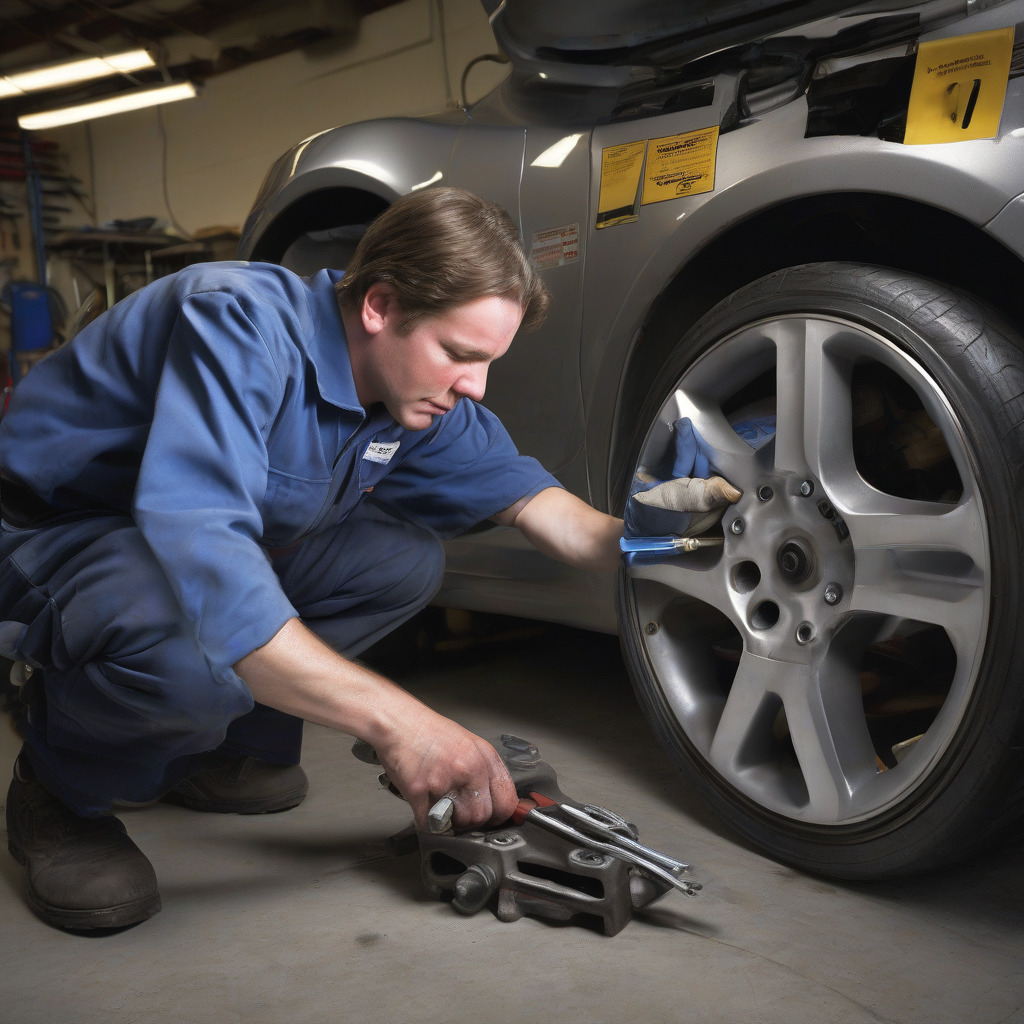
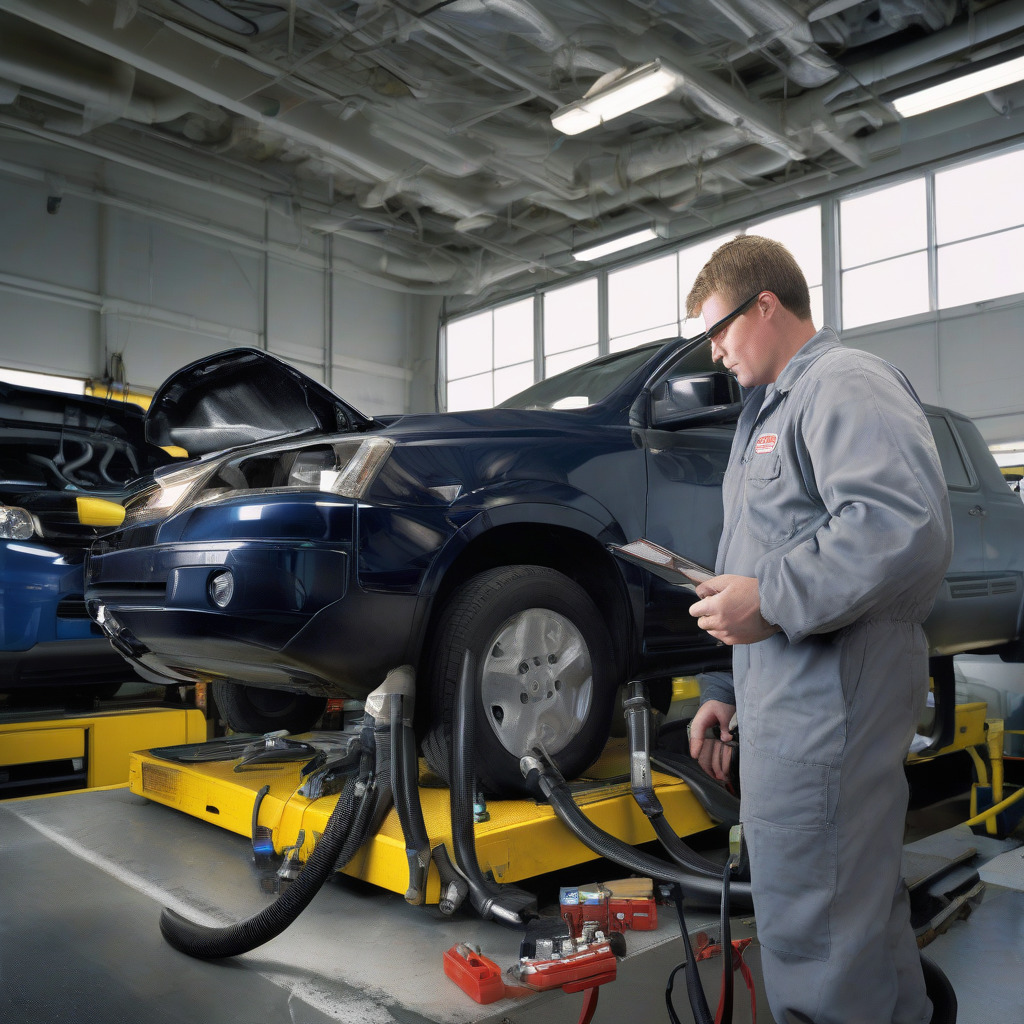
At independent shops in Indianapolis — including Greg’s Automotive, Schroeder’s, and shops along the Broad Ripple and Fountain Square corridors — a bundled pre-trip inspection runs $75 to $150. That covers a full fluid check (coolant, brake fluid, power steering, transmission, oil), visual inspection of belts and hoses, battery load test, brake pad measurement and rotor condition, tire pressure and tread depth, A/C performance check, and a lights walkthrough. Confirm current pricing directly with each shop before publication.
Most Indianapolis independents will credit the inspection fee toward any repair performed as a result of what they find. You come in for a $99 inspection, they find the serpentine belt needs replacing, and the inspection fee disappears into the service total. Worth asking about when you book — it’s common enough that you shouldn’t be embarrassed to mention it.
Christian Brothers Automotive franchise locations in Avon and Fishers offer comparable bundled inspections, though pricing varies by franchise. Confirm directly before publication.
National chains are a different story. Firestone, Midas, Jiffy Lube, and Valvoline locations typically offer free to $30 inspections, but the scope is correspondingly limited. A free multi-point inspection at the Jiffy Lube on 86th Street gives you a quick fluid-and-tire check. That’s not the same as a technician spending an hour on a lift examining your cooling system components individually. Chains have their place — particularly if you’ve missed the booking window at independents and need same-day service on basics. They’re just not a substitute for a thorough inspection on an older or high-mileage vehicle.
Additional benchmarks for the Indianapolis market, pending shop verification: A/C recharge runs $100–$200 depending on refrigerant type. Coolant flush averages $80–$150. Battery replacement runs $150–$250 installed (load test is typically free). Tire rotation runs $20–$50.
Dealership service centers are appropriate for brand-specific diagnostics, especially vehicles within warranty or with known model-specific failure patterns. For general pre-trip prep on an older vehicle, an established independent is the more practical call — faster, usually cheaper, and you’re more likely to actually talk to whoever worked on the car.
Independent Shops vs. Chains vs. Dealerships: A Direct Take
The independent shops concentrated in Broad Ripple, Fountain Square, and Speedway tend to be owner-operated, with long-tenured technicians who know specific cars and can have an actual conversation about what’s likely to fail next. That’s not a small thing. For a pre-trip inspection on a car with significant mileage, a known issue you’ve been deferring, or a make with model-specific weaknesses, this is where you want to be.
Chain shops along 86th Street, Castleton, and Washington Street offer walk-in availability and consistent pricing. They’re the right call for a same-day oil change and tire pressure check, or if your car is relatively new and the trip is short. Don’t expect independent-level depth. Don’t dismiss them for basics, either — especially in the final week before departure when independents are fully booked.
Dealerships know their own products cold. Software updates, recall items, model-specific cooling problems that appear every season — these are dealership strengths. For general pre-trip prep on most makes and ages, they’re slower and more expensive than a good independent. Worth it in specific situations. Not the default.
How Far in Advance to Book
This is the part that catches people every year.
Memorial Day through mid-July is the sustained high-pressure period at Indianapolis shops. School lets out, the travel calendar opens, and independent shops fill out roughly 5 to 10 business days in advance by mid-June. If you’re calling Schroeder’s or Greg’s in the third week of June for a Fourth of July departure, you may already be behind the window.
Book by June 1 if you’re leaving late June or Fourth of July weekend. If you’ve missed that window, Jiffy Lube on 86th Street, the Valvoline on Washington Street, and Firestone in Castleton can handle oil changes, tire pressure, and basic fluid checks without an appointment. Not a replacement for a thorough inspection, but better than leaving town with nothing checked.
AAA Indiana members have an option that’s easy to overlook. AAA’s approved repair network includes Indianapolis-area shops with member discounts, and AAA Indiana’s member services line can direct you to available appointments. If you’re a member and haven’t called for a referral, do that before deciding you’ve run out of options.
What You Can Check Yourself Before Calling a Shop
This isn’t a substitute for professional inspection. It’s triage — the things a non-mechanic can realistically assess in a home driveway that will either give you peace of mind or help you have a more specific conversation when you call.
Tire pressure: Check with tires cold, before you’ve driven more than a mile. Your target PSI is on the sticker inside the driver’s door jamb, not on the tire sidewall. The sidewall number is the maximum, not the recommended pressure — an easy thing to confuse and a surprisingly common mistake.
Tread depth: Worn or uneven tread is a real concern on a highway trip in summer rain. Indiana gets thunderstorms that appear in 20 minutes. You don’t want to find out your rear tires are bald at 70 mph.
Coolant level: With the engine cold, find the translucent plastic reservoir connected to the radiator. There will be MIN and MAX lines. At or below MIN means you need coolant. Do not open the radiator cap on a warm engine.
Windshield washer fluid: Sounds trivial. At highway speed behind a semi that just hit a mud puddle, a dry reservoir becomes a visibility problem in about four seconds.
A/C: Start the car after it’s sat overnight and run the A/C at max cold and high fan. It should produce cold air from the center vents within a few minutes — not cool, cold. Those feel like the same thing in April. They don’t feel like the same thing when it’s 94 degrees outside Effingham.
Lights and brake lights: Walk around the car with a friend or use a garage door reflection. Burned-out brake lights are invisible to you and a genuine hazard for whoever’s behind you at highway speed.
Source Box
The following shops are included because they were reported for this piece. No paid placement.
Schroeder’s Automotive — Nora neighborhood, north Indianapolis. Established independent known to north-side residents for inspections and mechanic continuity. Book 5–10 business days out in peak summer. (Verify current phone, hours, and pricing before publication.)
Greg’s Automotive — Broad Ripple corridor. Long-tenured independent with strong local reputation. Offers bundled pre-trip inspection packages; fee typically credited toward any services performed. (Verify current phone, hours, and pricing before publication.)
Christian Brothers Automotive — Avon and Fishers locations. Franchise shops offering bundled inspections. (Verify current package pricing and phone before publication.)
Jiffy Lube / Valvoline locations — 86th Street, Washington Street, Keystone. Walk-in availability for same-day oil, fluid, and tire pressure checks. Limited inspection scope; useful for readers who missed the independent booking window.
AAA Indiana — Members can access AAA-approved repair shops in the Indianapolis network and request inspection referrals. (Verify current member services contact number before publication.)
Reporter note: Confirm all phone numbers, current pricing, and appointment lead times with named shops directly before filing.