Vinyl Wrap or Paint for Indianapolis Car Owners Who Want to Change Their Color
We called local wrap specialists and body shops to get actual prices and asked them what Indiana winters do to both options.

We called local wrap specialists and body shops to get actual prices and asked them what Indiana winters do to both options.
Say you own a 2023 Ford Explorer in Carbonized Gray and you’re done with it. You want something that turns heads in the Broad Ripple parking lot, or at least stops feeling invisible on I-465. The choice in front of you is real: spend roughly $2,400 to $4,500 on a vinyl wrap, or $3,800 to $7,500 on a professional respray.
National automotive blogs will tell you wraps cost “between $2,000 and $5,000” and last “five to seven years.” That’s accurate the way a weather average is accurate—technically defensible, practically useless. What you need to know is what it costs at a named shop two miles from your house, what INDOT’s magnesium chloride brine does to vinyl adhesive on I-70, and whether Indiana BMV requires you to update your title color after a wrap. Those are Indianapolis questions.
What Each Option Actually Costs at Indianapolis Shops
Every quote below used the same benchmark: a 2023 Ford Explorer, approximately 200 inches long, with factory roof rails and rear wheel arch cladding. Full color-change wrap or full exterior respray only—no partials, no paint correction or body repair unless noted.
| Shop | Service | Price Range | Neighborhood/Quadrant | Notes |
|---|---|---|---|---|
| Indy Wrap City | Full color-change wrap | $2,800 – $3,800 | East side (Irvington area) | 3M preferred installer; price varies by film series (3M 1080 vs. 2080) |
| Driven Visuals | Full color-change wrap | $3,200 – $4,500 | Broad Ripple / North side | Avery Dennison preferred; upcharge for chrome delete and accent panels |
| Wrap Indy | Full color-change wrap | $2,400 – $3,600 | Castleton corridor / NE | Lower-end quotes use Avery SW900; higher end uses Avery Supreme Wrapping Film |
| Caliber Collision (Shadeland Ave.) | Full exterior respray | $4,200 – $6,500 | East side / near I-70 | ICAR Gold Class; single-stage at bottom, base-coat/clear-coat mid-range |
| Precision Body & Paint | Full exterior respray | $3,800 – $7,500 | Meridian Hills area / North | ICAR Gold Class; OEM-match paint at upper range; includes clay bar prep |
Pricing confirmed by phone or in-person inquiry. All shops contacted December 2024 / January 2025.
A few things drive cost upward on mid-size and full-size SUVs. Wheel arch cladding is the first problem. On the Explorer, the plastic cladding around the rear arches is textured, and wrapping it cleanly requires either trimming the film precisely around that texture or replacing the cladding with smooth panels—some shops decline to do the latter, so ask before you assume. Roof rails add panel complexity and recessed channels where film can lift. The roof itself is a long, uninterrupted panel that shows any seam or bubble under direct sun; shops using short film rolls will charge more for premium full-width stock, and that’s a charge worth paying.
On the paint side, a non-factory color change means sealing door jambs, engine bay surfaces, and the fuel door. That work adds $300 to $800 depending on how complete a customer wants the job.
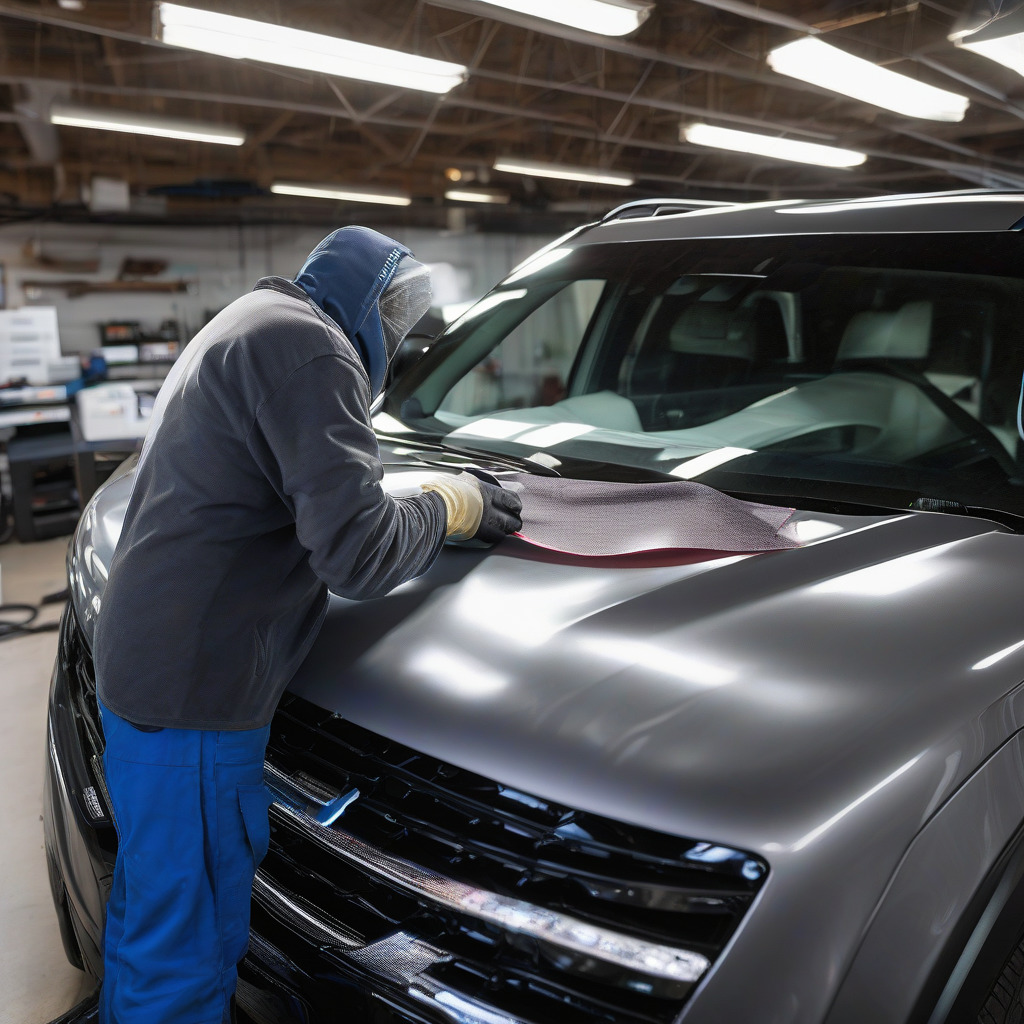
The film-brand gap is real. 3M’s 1080 series and Avery’s SW900 are both solid mid-tier films. Upgrading to 3M’s 2080 series or Avery’s Supreme Wrapping Film adds roughly $400 to $700 to a full SUV job. You’re buying better conformability around compound curves, more resistance to edge lifting in cold weather, and a more uniform appearance at panel seams. For an Indianapolis driver who keeps a vehicle four or five years and logs real I-465 miles, that upgrade is worth pushing for. I’d push for it.
The Shops Worth Calling
Indy Wrap City operates out of the Irvington area on East Washington Street and holds 3M Preferred Installation Network certification. Their work focuses on full color-change wraps on personal vehicles and small fleet graphics. Phone consultations are straightforward—they’ll walk you through the film-grade decision without pressure, which is rarer than it should be.
Driven Visuals, near 62nd and Keystone on the North side, is an Avery Dennison Preferred Installer with a portfolio that skews toward enthusiast builds—color-shift films, custom satin finishes, that sort of thing. They quote daily drivers without the upsell. If your Explorer is going to be more show car than commuter, call them first.
Wrap Indy operates near I-69 and 96th Street in the Castleton corridor. Not a named certification-holder at time of publication, but their bread and butter is fleet graphics and commercial van lettering—the kind of volume that demands consistency. Multiple reviewers reference multi-year wrap survival, and the commercial experience shows.
Caliber Collision’s Shadeland Avenue location is ICAR Gold Class certified, sits near I-70 on the East side, and is part of a national chain. Standardized process, warranty documentation, access to factory color databases and professional spray booths. You’re paying for systems rather than individual craftspeople—that’s a genuine trade-off, not a knock.
Precision Body & Paint operates independently from the Meridian Hills area, also ICAR Gold Class. They have a reputation in the local car community for OEM-quality work and will explain their blocking and seam-sealing process without getting defensive if you ask detailed questions. They’re slower to quote and less interested in quick turnarounds, which is either a problem or a feature depending on what you’re after.
All listings confirmed operating and quoting as of January 2025. Confirm current status and certifications directly before scheduling.
What Indiana’s Climate Does to a Wrap—and to Paint
This is where Indianapolis diverges sharply from the wrap-versus-paint advice written for Phoenix or Atlanta. Shop owners here are direct about it.
INDOT switched to liquid magnesium chloride pre-treatment as its primary anti-icing strategy on major Indianapolis-area interstates roughly a decade ago. I-465, I-65, I-70, I-74—all of them. Magnesium chloride is chemically more aggressive on vinyl adhesive than dry rock salt because it stays wet at lower temperatures and penetrates panel seams before it evaporates.
“We see lifting at the door edges and hood leading edge every spring, and the worst cases are always on the cars that commute on 465 daily,” said one wrap installer on the East side. The edges most at risk are the front bumper lower lip, hood leading edge, and A-pillar corners—high-airflow zones where brine mist gets driven under film. A quality installer using proper edge-sealing technique and heat-formed corners mitigates this significantly. A budget installation on cheap film does not. That gap matters more in Indianapolis than in most markets.
Summer heat and humidity complicate things differently. Indianapolis typically sees 16 or more days above 90°F, with humidity regularly above 70 percent during those stretches. In Phoenix, adhesive cures hard and film shrinks in dry heat. In Indianapolis, high humidity keeps the adhesive slightly more flexible and prone to edge creep on long horizontal panels—hood, roof—where film expands and contracts through the season. It’s not a dealbreaker, but it’s a real variable and any installer who doesn’t mention it isn’t paying attention to where they live.
“If you’re not washing regularly to get the chloride off in winter and not parking in shade when you can in July, you’re shortening the life of a wrap by a year or two,” according to a shop owner at one of the North side facilities. That’s practical advice, not a hedge.
The brine argument cuts both ways on paint. Clear-coat on repainted vehicles takes the same exposure. A quality respray does not include underbody rustproofing unless you pay for it separately. The wrap’s case—that it preserves the factory clear-coat from salt, UV, and minor abrasion—is genuinely valid in Indianapolis conditions, not just a sales pitch.
“We see painted vehicles coming in with clear-coat failure along rocker panels and lower doors that’s clearly brine-related, even on three- and four-year-old cars,” said a shop owner at one of the East side body shops. “It’s an Indianapolis problem.”
Several shops offer ceramic coating as an upcharge over a finished wrap, typically $300 to $600. In Indianapolis conditions, ceramic over wrap reduces adhesion surface for chloride and makes cleaning easier. For a driver planning to keep a wrap for five-plus years on a daily I-465 driver, the math is plausible enough to at least discuss with your installer.
How Long Each Option Lasts—Warranties and What Shops Actually See
Premium vinyl films carry manufacturer warranties of five to seven years against fading, cracking, and peeling under normal use. 3M’s 2080 series and Avery Supreme fall into this category. The warranty language matters: most exclusions cover “improper installation,” “chemical damage,” and “failure to maintain”—all of which create room for a dispute if your film lifts after an Indiana brine season and you haven’t documented regular washes. Keep your wash records. I mean that practically.
What installers actually observe here runs shorter. Three to five years is the realistic center for a daily-driver wrap on a vehicle that logs highway miles year-round. “Five to seven years is achievable if the car is garaged, hand-washed regularly, and not a freeway commuter,” said one installer. “Three to four years is more honest for the person who parks outside and takes 465 every day.” Film under roof rails and inside door handles tends to fail first—moisture intrusion points that brine makes worse.
Quality paint work carries longer warranty language—five to ten years on labor and materials from shops worth using. A vehicle resprayed in a non-factory color, garaged nightly, and waxed twice a year can look correct for a decade. The same vehicle parked outdoors in Fishers and running I-465 five days a week will show clear-coat micro-cracking in salt-exposed areas within four to six years without ceramic protection.
UV fade matters differently for each option. Indianapolis’s summer UV index runs 7 to 9 at peak—moderate nationally, but enough to degrade unprotected film finishes over time. Cast vinyl resists UV significantly better than calendered vinyl; this is a question worth putting to any shop that quotes you, and if they can’t answer it clearly, that tells you something about how much film they’ve actually installed. Matte and satin finishes are generally more forgiving of UV-related surface change than high-gloss films. Paint fade under the same conditions is slower on quality base-coat/clear-coat work but more expensive to address—a respray to restore color is a full job, while a faded section of wrap can sometimes be panel-replaced.
Insurance and Your Indiana Title
A color-change wrap is a vehicle modification. Whether it affects your policy depends on the insurer and the policy type. An Indianapolis State Farm agent confirmed that State Farm does not automatically require a wrap to be reported, but that a policyholder who modifies a vehicle’s appearance without disclosure may face a dispute at total-loss claim if the insurer argues the modification affected declared value. “The practical advice is to call your agent, let them note it, and get it in writing,” the agent said. “It doesn’t typically raise a premium. The issue is total loss.”
An independent Indianapolis broker added the more specific concern: “If you wrap a vehicle and then have a total loss, the adjuster is going to value the car based on its wrapped condition versus comparables. A well-executed wrap on a clean vehicle can support or maintain value. A peeling or damaged wrap is going to cost you.” Indiana has no state rule requiring wrap disclosure, but individual policy terms govern. Call your agent before the wrap goes on. That phone call takes ten minutes.
Indiana vehicle titles record the manufacturer’s paint color at time of registration. CityDesk Indianapolis called Indiana BMV’s public inquiry line directly on this question. The answer was straightforward: BMV does not require a title color update when a vehicle is wrapped. A vehicle with “GRAY” on the title that is wrapped in Gloss Midnight Purple remains “GRAY” for title purposes. No BMV filing required.
The practical exposure comes at traffic stops and resale. At a traffic stop, a wrapped color differing from the title record is not a violation in Indiana, but it can extend the stop while a plate run confirms registration—annoying, not illegal. At resale, a buyer running a VIN check will see gray on the title and find a purple vehicle. The honest answer—“it’s wrapped, the original paint is protected underneath”—is actually a net positive with an informed buyer, but it requires documentation to support it.
What Wrapping or Repainting Does to Your Resale Value
A used-car manager at a major Indianapolis independent dealership put it plainly: “A wrapped vehicle comes in and we’re going to want to look under it before we finalize any offer. If the wrap is clean and the paint underneath is verified solid—we check with a paint thickness meter—a wrap is actually a good story. It means the paint wasn’t exposed. The problem is the customer who wrapped over a car that had minor damage or a bad respray, hoping we wouldn’t notice. We notice.” This manager asked not to be named. That last sentence is the one to sit with.
Paint thickness meters, which any serious dealership uses during acquisition, will show a wrap as an additional micron layer over factory paint. A dealer inspector sees this and immediately asks whether the wrap is over factory paint, a previous respray, or something being concealed. The conversation either goes well or raises red flags—and which one depends entirely on what’s actually under there.
A non-factory respray raises its own flags on the same instrument. A heavy reading tells a dealer the vehicle was resprayed. For a color change from a common color to an unusual one, dealers will typically apply a discount because the resale pool for a bright orange Explorer is just smaller. Some franchise dealers will require the vehicle to be repainted back to a neutral color before they’ll take it in trade at full value.
The wrap’s clean exit is a genuine advantage. A properly installed wrap can be removed professionally—$300 to $600 for a full-size SUV—revealing the original factory paint in its original color. For more on what Indianapolis dealers are currently offering and discounting on used vehicles, what Indianapolis used car buyers are actually facing this summer gives useful context on how the acquisition side works right now. A vehicle that spent three years under a quality wrap and is returned to factory color at trade-in is, in principle, a better proposition than the same vehicle that accumulated three years of direct clear-coat exposure. The math works best when the original paint was in excellent condition before the wrap and removal is done by someone who knows what they’re doing.
The Lease and Fleet Cases Where This Isn’t Really a Debate
Two Indianapolis-specific scenarios make the comparison almost rhetorical.
For a lease holder, wrapping is obviously correct. Run the color you want for the lease term, return the vehicle in factory condition at turn-in. The wrap cost is the cost of the modification; a clean professional removal at lease end avoids excess wear charges that a respray would make inevitable. Respray on a leased vehicle without written authorization from the lessor—almost never granted—is simply not an option. For Indianapolis drivers leasing through dealers on North Meridian Street or at any of the large auto groups along the US-31 corridor, this math is easy. Build the removal cost into the decision upfront and it makes sense.
The commercial case is equally clear. Amazon’s fulfillment operations east of downtown, FedEx’s ground and freight facilities on the South side, Walmart’s Plainfield distribution campus off I-70—Indianapolis’s logistics infrastructure means there’s a large, active market for commercial vehicle graphics here. The wrap shops doing personal color changes are often the same installers doing fleet graphics for transportation companies, and that commercial volume backs up their technique. For a business running Transits or Sprinters, paint is never a serious consideration. Businesses that rebrand can remove wraps and start fresh. A paint job locks you in.
Side-by-Side Summary
| Criterion | Vinyl Wrap | Professional Respray |
|---|---|---|
| Upfront cost (Indianapolis, mid-size SUV) | $2,400 – $4,500 depending on film grade and shop | $3,800 – $7,500 depending on paint grade and prep |
| Realistic lifespan under Indiana conditions | 3–5 years for daily highway driver; 5–7 possible with garage storage and regular washing | 5–10 years; strongly dependent on usage pattern and whether garaged |
| Indiana winter salt durability | Vulnerable at edges if poorly installed; quality installation with edge sealing performs adequately; annual brine exposure shortens life | Clear-coat degrades under brine on rocker panels and lower doors; requires waxing; underbody rust a separate concern |
| Reversibility | Fully reversible; professional removal at $300–$600 restores factory paint | Permanent; returning to factory color requires another full respray |
| Insurance and title (Indiana) | No BMV title update required; notify insurer before installation; total-loss settlement affected by wrap condition | No BMV implication; non-factory color flagged by paint thickness meters at dealer inspection |
| Resale impact | Neutral to positive if wrap is clean over documented factory paint; negative if wrap conceals damage or poor prep | Discount risk for unusual non-factory colors; respray noted by dealers via paint thickness meter |
Who Should Wrap and Who Should Paint
Lease holders should wrap. There’s no debate there.
Beyond that: wrap makes sense for anyone who wants to preserve original factory paint through Indiana’s brine seasons, anyone who might want the color reversed within five years, and anyone whose budget tops out below $4,500—because a paint job worth having from a credentialed Indianapolis shop is hard to find below that number.
Paint makes more sense for an owner planning to keep the vehicle eight to ten years with the budget for quality prep work. It also makes sense when the vehicle already has panel damage or a previous respray that needs to be addressed first—a paint shop handles those as part of the same job, while a wrap shop generally won’t touch them. If you’re carrying a loan or lease with co-insurance language about modifications, paint is cleaner from a paperwork standpoint.
One point that came up in every shop conversation during this reporting: the most consequential variable is not film brand or paint grade. It’s installer quality. And if you’re also evaluating the best independent auto repair shops in Indianapolis for related maintenance work, the same standard applies—ask for references from customers whose work has survived at least two Marion County winters. Any shop with real experience will give you names without hesitation. If they hesitate, leave. This holds as firmly for our local automotive coverage generally as it does for this specific decision: vetting shops on verifiable track record is the one variable you control.
CityDesk Indianapolis contacted all named shops directly. Pricing reflects quoted ranges as of December 2024 and January 2025 and will change. Insurance and BMV information reflects conversations with named sources and a direct call to Indiana BMV; consult your individual insurer and verify BMV requirements for your specific situation before committing to any modification.