What It Actually Takes to Sell at an Indianapolis Farmers Market or Pop-Up Event
Every spring, a new wave of Indy entrepreneurs discovers the same thing: getting into a farmers market is not the same as getting legal to sell at one. The two processes run on different tracks, an…

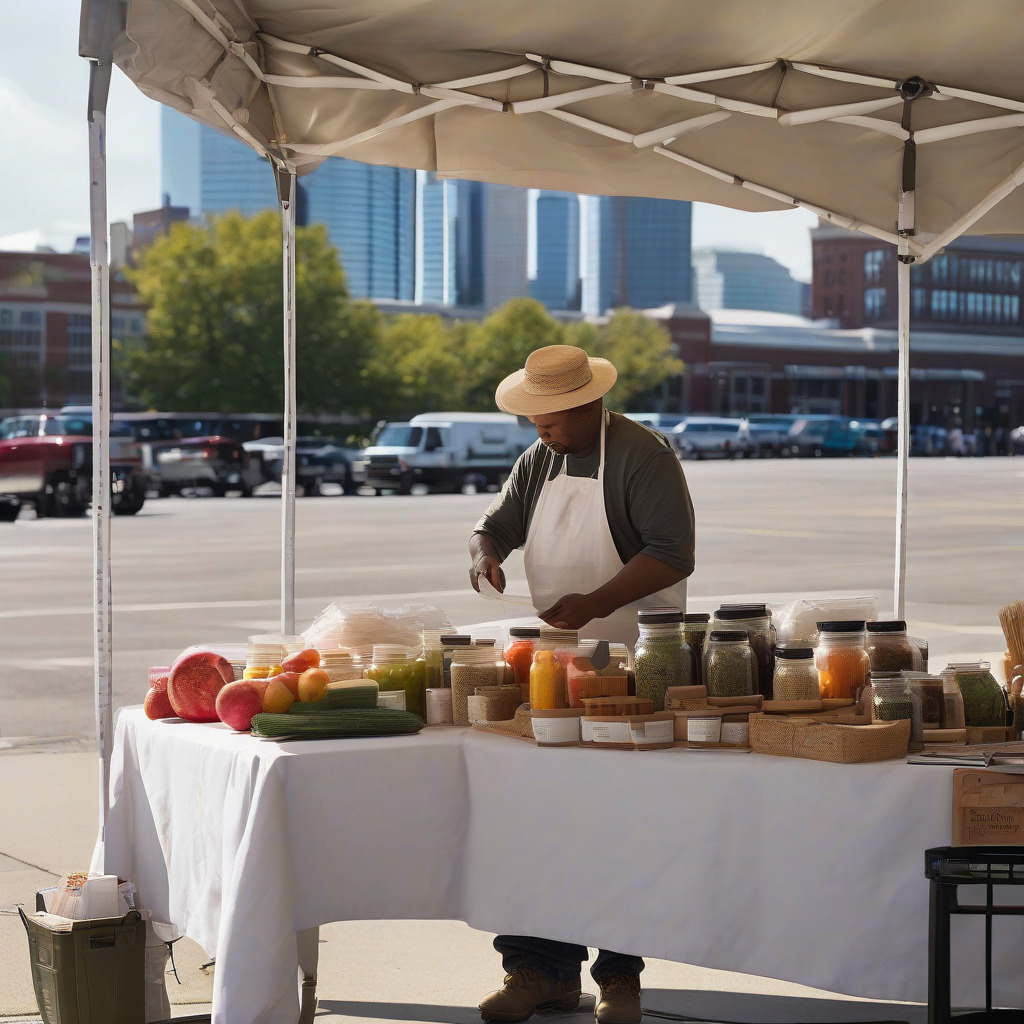
Every spring, a new wave of Indy entrepreneurs discovers the same thing: getting into a farmers market is not the same as getting legal to sell at one. The two processes run on different tracks, answer to different agencies, and have different deadlines. Miss one, and the other doesn’t save you.
This guide covers anyone planning to sell goods — food or otherwise — at a Broad Ripple Farmers Market stall, an Indy Winter Farmers Market booth, a City Market vendor spot, a sidewalk pop-up on Mass Ave, or any outdoor event in Indianapolis and Marion County. It walks through every layer of approval you’ll need, what each one costs, and when to start.
This Is Not a Standard Business License Situation
If you’ve started a brick-and-mortar business in Indianapolis, you know the basic path: register with the Indiana Secretary of State, get your EIN, register with the Indiana Department of Revenue for sales tax, pull whatever zoning or building permits your space needs. Manageable.
Temporary and seasonal retail doesn’t work that way. There’s no single “temporary vendor license” you can pull from the City of Indianapolis that covers everything. Instead, you’re looking at a layered process drawing from at least four separate authorities: the market organization itself, the City of Indianapolis through the Department of Metropolitan Development, the Indiana Department of Revenue, and the Marion County Public Health Department if you’re selling food. Each layer is independent. Each has its own application, timeline, and fee. Finishing one does nothing to move the others along.
This is where first-time vendors get tripped up. Someone applies to Broad Ripple Farmers Market, gets accepted, pays their stall deposit, and shows up on opening day having never registered with the Indiana DOR or obtained a Marion County health permit. The market doesn’t check those credentials. They manage vendor selection. State and county compliance is your problem.
These systems run in parallel, not in sequence. That’s the single most important thing to understand before you start filling out forms.
The Four Permits That Can Apply to a Single Vendor
Not every vendor needs every permit.
Market permit or vendor agreement. Every managed market — Broad Ripple, Indy Winter, City Market, private event markets — requires this. It’s a private contract between you and the market operator, not a government document. It also doesn’t substitute for any government document.
City of Indianapolis Temporary Use Permit (TUP). Required if you’re operating on public property outside a managed market — a sidewalk, a public plaza, a parking lot you’ve rented independently. If you’re inside a market that has already secured its own event permit for the site, you generally don’t need your own TUP. Setting up solo on a public sidewalk or city-owned lot? You do.
Indiana DOR Retail Merchant’s Certificate or Temporary Vendor Registration. Everyone making retail sales in Indiana needs this. Food vendor, craft vendor, jewelry seller, candle maker. No exceptions for event type or market affiliation. None.
Marion County Temporary Food Establishment Permit. If you’re preparing or serving food, you need it — ready-to-eat items, baked goods sold cut or sampled, anything cooked or assembled at the booth. Raw, whole-produce sellers — a farm moving uncut vegetables and fruit — fall under different categories through Indiana cottage food and farm exemptions. Once you’re cooking or serving, you’re subject to health permitting.
For a non-food vendor selling handmade goods at Broad Ripple Farmers Market, the list is short: market vendor agreement plus Indiana DOR registration. Two items.
For a prepared-food vendor running an independent pop-up on a public downtown plaza, you’re looking at all four: event operator agreement if applicable, City TUP, Indiana DOR registration, and Marion County health permit. Potentially five if you’re forming an LLC, which you probably should. It adds up faster than most people expect.
Getting Into the Market — Broad Ripple, Indy Winter, and City Market
Broad Ripple Farmers Market (BRVA) opens applications in January for the outdoor season, which typically runs early May through late September on Saturday mornings at 6350 Guilford Ave. The market is juried — applications are reviewed for product fit, quality, and category balance. BRVA isn’t first-come, first-served, and their categories carry a producer-only rule: vendors must produce what they sell. Fees are charged per market day; get current rates directly from BRVA at brva.org, since they adjust annually. The application requires product and booth photos, a description of your production process, and applicable licenses. What BRVA is evaluating is your fit for their market. Government compliance is on you.
Indy Winter Farmers Market runs November through April at the Indiana State Fairgrounds Exposition Hall, 1202 E. 38th St. It’s one of the few genuine year-round indoor options in Indianapolis, and the customer base is serious — these aren’t casual browsers killing time on a Saturday. That makes vendor slots genuinely competitive. Don’t assume a summer market acceptance carries any weight here. Applications for the winter season typically open in late summer, which means a vendor wrapping up their outdoor season needs to have winter applications moving before outdoor season is even over. Several vendors work both circuits — BRVA in summer, Indy Winter from fall through spring — and for the right product, that’s a real business. Verify current operational status and management directly before applying; the market has had organizational changes in recent years.
Indianapolis City Market, at 222 E. Market St. downtown, operates differently from either. It’s a year-round public market with a fixed vendor hall and rotating pop-up programming. Permanent stalls require a lease and a longer-term commitment. For pop-up vendors, City Market runs its own temporary programming periodically — contact them directly for current availability. Because it’s a city-affiliated entity operating in a controlled indoor facility, the permit requirements inside their managed space differ from outdoor markets. City Market staff can tell you what government permits they require vendors to hold independently.
In all three cases: their acceptance letter does not substitute for, notify, or satisfy any government agency. That sentence is worth reading twice.
The City Permit Layer — Temporary Use Permits Through DMD
The Indianapolis Department of Metropolitan Development handles Temporary Use Permits for activity falling outside standard land use. That includes pop-up retail on public property or anywhere not covered by a managed event’s existing permit.
Setting up on a public sidewalk, on Georgia Street, in a surface lot you’ve rented on your own, or on any publicly accessible site outside a managed market’s permitted footprint? You need a TUP from DMD. The application requires a site plan showing your booth’s location and dimensions, a description of the activity, proposed dates and hours, proof of liability insurance naming the City of Indianapolis as an additional insured (typically $1 million per occurrence minimum — confirm whether your specific venue requires more), and the application fee.
TUP fees for temporary retail generally run $75–$200 depending on duration and scope. Check with DMD directly for the current schedule. For a first-time applicant, budget four to six weeks. DMD reviews applications for zoning compatibility, pedestrian and traffic impact, and compliance with special area plans — the Mass Ave corridor and similar districts may require additional review.
Don’t apply two weeks before your planned opening date.
One other thing worth saying plainly: DMD does not coordinate with the state DOR or the county health department on your behalf. Approval from one agency does nothing to move the others along.
Indiana Sales Tax Registration — The Step Most Vendors Skip
Indiana requires anyone making retail sales in the state to hold a Retail Merchant’s Certificate from the Indiana Department of Revenue. For vendors operating across a full market season, registering as a standard retail merchant — rather than as a temporary event vendor — is the right move. Registration is free through the INBiz portal, and it sets you up to file ongoing sales tax returns without re-registering for each event.
For genuinely one-time vendors, the DOR offers temporary event vendor registration tied to specific events, sometimes obtained through the event organizer. But if you’re running a full season at Broad Ripple, don’t rely on that. Standard registration is cleaner.
Indiana’s sales tax rate is 7%. Here’s where food vendors need to pay attention: unprepared food — raw produce, whole uncooked products — is generally exempt. Prepared and ready-to-eat food — baked goods, cooked items, hot food, cut fruit assembled into a product — is taxable. A farm selling whole vegetables and jarred salsa has to track and tax those separately. I’ve talked to vendors who didn’t figure this out until they were filing amended returns halfway through the year.
The penalty for operating without a Retail Merchant’s Certificate isn’t theoretical. Indiana DOR can assess back taxes, a 10% penalty, and interest on all unregistered sales. Vendors at major markets are visible — events with hundreds of customers and cash transactions don’t go unnoticed. Register before your first market day.
Marion County Health Permits — Who Needs One and What It Requires
The Marion County Public Health Department issues Temporary Food Establishment (TFE) permits for vendors preparing or serving food at temporary events. If your booth involves food handling — cooking, portioning, assembling, sampling, serving ready-to-eat food — you need a TFE permit.
Raw agricultural producers operate under different rules. A farm selling whole uncut vegetables, fresh eggs, or unprocessed honey directly from their own farm may qualify for exemptions under Indiana cottage food laws or farm direct sale provisions. But the moment you hand a customer a cooked brat, a piece of pie, a cup of soup, or a jar of house-made salsa, you’re a Temporary Food Establishment under Marion County’s framework. The line is clearer than it sounds once you actually read it.
TFE applications require your menu or product list, food handling procedures, equipment setup documentation (including how you’ll maintain proper food temperatures and how you’ll handle handwashing — a standalone handwashing station is typically required for vendors doing food prep), proof of commissary kitchen arrangement if you’re producing food off-site, and the application fee. Marion County TFE fees vary by permit type; per-event permits have historically run $35–$75. Call Marion County Public Health directly at (317) 221-2222 for current fees and to ask about seasonal permit options for a full outdoor season. Submit at least four to six weeks before your first event date.
One thing that catches vendors off guard regularly: Marion County permits don’t extend to Hamilton County (Carmel, Fishers, Noblesville) or Hendricks County (Avon, Brownsburg) markets. If you’re vending at Carmel’s Farmers Market or a Hendricks County pop-up, you need separate health permits from those county health departments. Budget for it.
What It Will Cost — A Season-Long Budget
Most market guides don’t run these numbers. Here’s an attempt. All figures are approximate; verify current fees directly before budgeting.
Non-food vendor, full outdoor season at Broad Ripple Farmers Market
| Cost Item | Estimated Range | Notes |
|---|---|---|
| BRVA stall fees (approx. 18 market dates) | $450–$720 | Historical $25–$40/day; verify with BRVA |
| Indiana DOR Retail Merchant’s Certificate | $0 | Free |
| General liability insurance (annual policy) | $300–$600 | Required by most venues |
| LLC formation, Indiana SOS (optional but advisable) | $95 one-time | |
| Estimated total | $845–$1,415 | Excluding product and equipment |
Prepared-food vendor, full outdoor season at BRVA plus independent pop-up dates
| Cost Item | Estimated Range | Notes |
|---|---|---|
| BRVA stall fees (approx. 18 market dates) | $450–$720 | Historical $25–$40/day; verify with BRVA |
| Marion County TFE permit | $35–$150 | Varies by type; ask about seasonal options |
| Indiana DOR Retail Merchant’s Certificate | $0 | Free |
| City TUP (2–3 applications) | $150–$600 | Per permit period; verify DMD fee schedule |
| General liability insurance | $300–$600 | Food vendors often land toward the higher end |
| LLC formation (optional but advisable) | $95 one-time | |
| Estimated total | $1,030–$2,165 | Excluding product, equipment, commissary |
These figures exclude product cost, packaging, booth equipment, generator rental, signage, payment processing fees, and state income tax on net profit. They also exclude Indy Winter Farmers Market fees if you’re extending into the fall and winter season. None of this is prohibitive — but it’s real money, and you should know it going in before you’ve already committed to a season’s worth of stall deposits.
The Seasonal Calendar — When to Do What
Vendors who want to be open on the first Saturday of May at Broad Ripple need to be moving on applications in January. Not April.
January: BRVA applications open. Pull them together fast — product photos, business description, existing licenses. Juried markets fill categories, and waiting costs you a slot. At the same time, register with Indiana DOR through INBiz. Free, and the certificate usually arrives within a week or two.
February: Finalize entity formation if you’re setting up an LLC. Draft your City TUP application if you’re planning independent pop-up dates — you’ll need final site details before submitting, but get the paperwork framework ready.
February–March: Food vendors, get your Marion County TFE application moving. Finalize your equipment list, commissary kitchen arrangement, and menu documentation. Four to six weeks before your first market date means late February or early March for a May opening. This is the step people delay longest and regret most.
March: Secure general liability insurance. Most insurers writing event policies can bind coverage in a week. Don’t wait — markets may require proof of insurance before confirming your vendor agreement.
March–April: Market acceptance notifications arrive. Pay stall deposits. Confirm DMD TUP status if applicable.
May–September: Outdoor season. Weather cancellations are real — BRVA and most outdoor Indianapolis markets cancel for severe weather, and stall fees typically aren’t refunded. If you’ve watched a line of thunderstorms come in from the west on a Saturday morning at Guilford Ave, you know exactly how fast your revenue projection for the day evaporates. Factor lost dates into your numbers before the season starts, not after.
Late summer, August–September: Indy Winter Farmers Market applications typically open for the November–April season. Apply before your outdoor season ends. This is also the window to track Christkindlmarkt at Military Park, which typically runs late November through December, runs its own vendor selection process, and draws serious foot traffic for artisan and specialty food vendors. It’s a longer shot for new vendors, but worth knowing about. If you’re building a full-year vendor business, our coverage of Indianapolis small business financing and operations tracks the structural decisions — entity type, tax setup, financing — that determine whether a seasonal side hustle scales into something sustainable.
Key Contacts
Verify all fees and application status directly. These change.
Indianapolis Department of Metropolitan Development (Temporary Use Permits) indy.gov — TUP fees currently $75–$200 depending on scope; verify with DMD
Marion County Public Health Department (Temporary Food Establishment Permits) marionhealth.org — (317) 221-2222 — Environmental Health Division
Indiana Department of Revenue (Retail Merchant’s Certificate) inbiz.in.gov — (317) 232-2240 — Sales tax rate: 7%
Broad Ripple Farmers Market (BRVA) brva.org — Applications open January; season May–September, Saturdays at 6350 Guilford Ave
Indy Winter Farmers Market Season November–April, Indiana State Fairgrounds, 1202 E. 38th St. Verify current operational status before applying.
Indianapolis City Market indycm.com — (317) 634-9266 — Contact for pop-up programming and permanent stall availability
Christkindlmarkt at Military Park Vendor applications typically open late summer. Verify current process and website directly.
The compliance side is genuinely manageable. What it isn’t is fast — and it doesn’t wait for you to feel ready. Start in January, treat each permit layer as its own separate task, and don’t assume that getting into a market means you’re cleared to sell. The season is short. Every date you’re fully legal and open matters.