How to Look Up Any Indianapolis Restaurant's Health Inspection Record Before You Book
Marion County posts inspection data online, searchable by restaurant name. Most Indianapolis diners don't know the database exists. Here's exactly how to use it before you commit to a venue.

Marion County posts inspection data online, searchable by restaurant name. Most Indianapolis diners don’t know the database exists. Here’s exactly how to use it before you commit to a venue.
The holiday party season in Indianapolis is already underway. Corporate event planners are touring private dining rooms on Mass Ave and in Broad Ripple. Families are making Thanksgiving reservations at places they’ve researched, while office managers put deposits down on buyouts at Fountain Square restaurants they’ve visited maybe twice. Almost none of them have looked at a health inspection report first. Not because they don’t care, but because they have no idea where to find one or what it would tell them if they did.
That information is public. Marion County posts it online, updated regularly, searchable by restaurant name. The database is maintained through the Indiana Department of Health’s Food Protection Program and covers every permitted food establishment in Marion County—from downtown hotel ballrooms to the carry-out window on the eastside. Here’s how to use it, what you’ll find when you do, and what the violations actually mean.
Where the Database Lives and How to Pull Up Any Restaurant
The inspection records for Marion County food establishments are accessible through the Indiana Department of Health’s Food Protection Program. Search “Indiana IDOH Food Protection establishment search” to locate the current public-facing search interface. The direct URL has changed as IDOH has updated its system, so navigating from the IDOH Food Protection Program page at in.gov/health/eph/food-protection/ is the most reliable path. If you’re searching from the City of Indianapolis side, the portal at ai.indygov.org may redirect you to the same state system.
When the search screen loads, confirm you are filtering for Marion County before running any search. The system covers all Indiana counties; without a county filter, results will include establishments from across the state. Set it to Marion County first. (This sounds obvious, but it’s the step most people skip, then wonder why they’re getting results from Elkhart.)
For searching by restaurant, the establishment name field is the most reliable starting point. Use partial names—searching “Shapiro’s” will return results; searching the full formal permit name may not match exactly. If a name search returns nothing, try the address. Results come back as individual establishment listings. Click through to see the actual inspection reports, which download as PDFs.
You won’t find a letter grade. No score out of 100. What you get instead is a report—sometimes several, representing multiple inspection visits—listing violations by category and date. If you’re coming from a state that posts A/B/C window grades, reset that expectation before you start. The absence of a letter grade isn’t an oversight; Indiana just made a different choice about how to present this information, and it takes a few extra minutes to read.
One geographic detail that trips people up: if the restaurant you’re researching is in Fishers, Carmel, or anywhere else in Hamilton County, it will not appear in this database. Hamilton County operates its own health department with a separate inspection program. The Marion County Health Department database covers Marion County, including municipalities such as Lawrence, Speedway, and Beech Grove, though the jurisdictional boundaries for some smaller municipalities should be verified directly with MCHD. Some may maintain their own programs. If you’re booking a venue outside Marion County, contact that county’s health department directly.
Indiana Doesn’t Grade Restaurants the Way Other States Do
This deserves its own section because the confusion is nearly universal among Indianapolis diners who’ve eaten elsewhere.
New York City posts letter grades in restaurant windows. Los Angeles uses a score-based system. California requires grade cards to be displayed prominently. Indianapolis does none of this. Indiana has no restaurant letter grade, no posted score, no public-facing summary that lets you walk past a window and know a restaurant’s standing. What Indiana produces is an inspection report—a list of violations observed on a specific date, categorized by risk level, sometimes accompanied by notes on whether the violation was corrected during the inspection visit itself.
I’ll be honest: the first time you look at one of these reports, it’s not intuitive. There’s no green checkmark, no grade, no simple signal. Reading that report is the whole skill. The system is internally logical once you understand the three categories—and once you do, a letter grade starts to feel like it leaves out too much anyway.
For broader context on what’s happening in Indianapolis restaurants beyond compliance records, our food & hospitality coverage tracks openings, chef moves, and dining trends across the city.
The Three Violation Categories, Translated
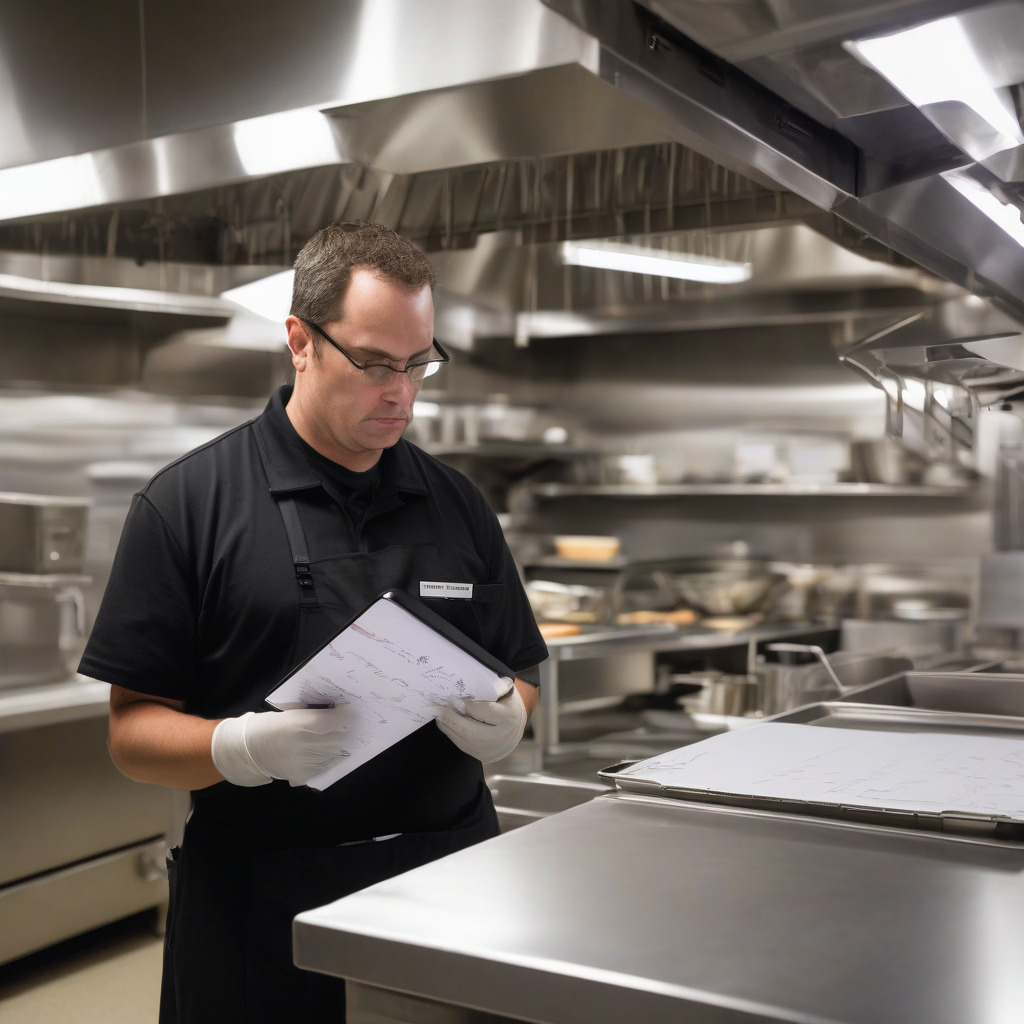
Indiana’s Food Protection inspection framework divides every possible violation into one of three tiers. MCHD inspectors use these categories exactly as the state defines them, and they appear on every report in the database.
Priority Violations are the ones directly tied to foodborne illness. Temperature failures are the most common: chicken held at the wrong temperature, a walk-in cooler running too warm, cold-held deli meat left in the danger zone during a lunch rush. Cross-contamination is another pathway—raw beef stored above ready-to-eat vegetables in a reach-in cooler, cutting boards used for raw protein and immediately reused for produce without washing. Handwashing failures are Priority violations: no soap at a hand sink, employees observed not washing after handling raw meat, hand sinks blocked by equipment. These violations matter because they represent the conditions under which someone actually gets sick. A Priority violation is the only category that should directly influence a dining or booking decision.
Priority Foundation Violations are one tier down. They’re not trivial, but they’re indirect. They reflect the systems that prevent Priority violations from occurring. A restaurant operating without a written food safety management plan is a Priority Foundation violation. So is a broken or absent food thermometer—if you can’t measure temperature, you can’t catch a Priority temperature failure before it happens—or sanitizer solution mixed at the wrong concentration, or a certified food protection manager credential that has lapsed. These don’t mean food is currently unsafe. They mean the infrastructure that catches unsafe conditions is impaired.
Core Violations are housekeeping and maintenance. A broken floor tile near the prep line. Ceiling condensation dripping near a storage area. Equipment surfaces with grease buildup. Pest-proofing gaps in exterior doors.
How do you read them together? A single Priority Foundation violation at an otherwise clean restaurant is unremarkable. Several clustered together, or Priority Foundation violations appearing on consecutive inspection reports, signal that management isn’t addressing the underlying structure—and that’s when Priority violations tend to follow. A single report with five or six Core violations at a high-volume restaurant is not alarming on its own; a report with twelve Core violations alongside two Priority violations tells a more complete story. The Core count suggests a facility where maintenance discipline is generally lax. The Priority findings suggest that laxness extends to food safety. You’re looking at the whole picture, not a single number.
The Threshold Question
Here’s what you’re actually trying to figure out: at what point should the inspection record make you cancel a reservation?
Indiana publishes no numeric threshold. There’s no state standard that says “three violations equals a failed inspection.” What exists is a reinspection trigger and an emergency closure mechanism, which work differently. So the guidance below is a practical working standard based on how the inspection system functions—not an official rubric. Use your judgment.
One Priority violation, corrected on-site during the inspection. This is common and not alarming. An inspector walks in, finds a container of food at the wrong temperature, the kitchen discards it or reheats it on the spot, the inspector notes both the violation and the correction. The report shows a Priority violation, but it also shows the resolution. A restaurant that catches and fixes problems during an inspection visit is functioning as the system intends.
Two or more Priority violations on a single report. This warrants a closer look, particularly if the corrections aren’t documented on the same report. Multiple Priority violations in one visit suggest either a bad day or a pattern. Look for a follow-up inspection report. Did the violations recur?
The same Priority violation cited on consecutive inspection reports. This is the clearest signal of failure. If a cold-holding temperature violation appears in March and again in July, the restaurant had months to fix its refrigeration or its temperature-monitoring protocol and didn’t. That’s not a bad day. That’s a management problem. Full stop.
A long list of Core violations with zero Priority findings reads very differently. A restaurant that scores fifteen Core violations but no Priority violations is probably an older facility with maintenance backlogs. That might inform your ambiance expectations—or explain a few things about the décor—but it doesn’t carry the same safety implication. Distinguish between these profiles carefully before reacting to raw violation counts.
One more nuance: a restaurant can remain open and operational while showing multiple Priority violations on its report. Indiana’s system does not produce a “pass/fail” determination in those terms. A restaurant that receives Priority violations is typically issued a mandatory corrective action and scheduled for a reinspection, but it continues serving in the interim. Whether those violations were resolved before the follow-up inspection is the question to answer. The database will show the follow-up report if one was conducted.
How to Read the Date on Any Report
The date printed on an inspection report is the date the inspector walked in, not the date the report appeared online. There’s typically a lag between the inspection and public posting. The length of that lag for Marion County reports is worth confirming directly with MCHD’s Environmental Health Division, as it’s not consistently documented publicly. An inspection may not appear in the database for days or weeks after it occurred.
The more consequential date issue is report age. If the most recent report you can find for a restaurant is dated fourteen months ago, that means one of two things: the restaurant has a clean enough record that routine inspections haven’t flagged significant issues and follow-up visits haven’t been required, or it’s in an inspection backlog. Both are genuinely possible, and honestly, I can’t tell you with certainty which is more likely for any given establishment. Marion County prioritizes inspections by risk category. A full-service restaurant with a full liquor license and high-volume kitchen gets inspected more frequently than a limited food service operation selling prepackaged items. High-risk, full-service establishments should see one to two routine inspections per year; limited food service operations may see one annually or less. If the timestamp on a full-service restaurant’s most recent report is more than a year old, it’s worth calling MCHD’s Environmental Health Division to ask when the last inspection occurred.
Check whether a report was routine or complaint-triggered. The inspection type is noted on MCHD reports. A complaint-driven inspection that turns up Priority violations carries different weight than a Priority violation found during a routine visit. Someone complained about something specific, an inspector came in, and they found the problem. That sequence matters.
A final note on seasonal variation: August inspections of Indiana State Fair temporary vendors—the fairgrounds are at 38th Street—generate a surge of records for temporary food establishments that appear in the same system. If you’re browsing by date rather than establishment name, you may encounter records for temporary event vendors that have nothing to do with any permanent Indianapolis restaurant. Don’t let a fry bread stand at the fairgrounds throw off your research.
What Actually Happens After a Bad Inspection
The most persistent misconception about restaurant inspections is that a bad one results in closure. In most cases, it doesn’t.
When a Marion County inspector finds Priority violations, the standard outcome is a mandatory corrective action and a scheduled follow-up reinspection. The restaurant continues serving while it addresses the cited conditions. The inspector documents the violations, issues a compliance order, and returns within a defined window to verify corrections. If the follow-up inspection confirms the violations are resolved, the matter closes. If they’ve recurred or new Priority violations appear, the enforcement pathway escalates.
Emergency Closure Orders are reserved for imminent health hazards. That’s a specific, narrow category: active sewage backup, confirmed rodent or cockroach infestation, complete refrigeration failure affecting all cold storage, loss of potable water. These situations pose an immediate risk that can’t be deferred to a follow-up visit. Marion County Public Health issues Emergency Closure Orders as public records. Whether those orders appear in a dedicated searchable list within the IDOH database or must be requested separately from MCHD is worth confirming directly with the Environmental Health Division.
A restaurant under an Emergency Closure Order can’t self-certify its way back open. The operator can’t fix the sewage line, declare the problem resolved, and unlock the doors. MCHD must conduct a follow-up inspection and issue formal clearance before service resumes. The closure and the clearance both appear in the public record.
This distinction matters for holiday venue research. A restaurant that received an Emergency Closure Order, resolved the issue, passed reinspection, and has operated cleanly since is a fundamentally different situation from a restaurant with a pattern of Priority violations across every routine inspection for two years. The database gives you the full timeline if you read it as a sequence rather than a snapshot. One bad moment, corrected and documented, is not the same story as the same violation showing up over and over.
How to File a Complaint and Trigger an Inspection Yourself
The inspection database isn’t just a passive lookup tool. If you had a concerning experience at an Indianapolis restaurant, you can file a complaint directly with Marion County Public Health and trigger an inspection. That experience might be food that made you or others sick, obviously unsanitary conditions, temperature problems you observed in a display case, or employees handling food in a way that alarmed you.
Marion County Public Health’s Environmental Health Division accepts food safety complaints by phone and through an online form. Contact information and the current submission method are available through marionhealth.org. When you file, include the full name and address of the establishment, the date and approximate time of your experience, a specific description of what you observed or experienced (symptoms, timeline, what you ordered, what you saw), and whether you sought medical attention. The more specific your complaint, the more useful it is to the inspector who follows up. “The food seemed off” is not the same as “I ordered the chicken sandwich on November 4th around noon and was sick within six hours, and I watched an employee handle raw chicken and then assemble my order without washing their hands.”
Complaint-driven inspections can occur at any time. They’re not scheduled and the restaurant has no advance notice. The results appear in the same public database as routine inspections, and those results carry particular weight when they confirm what the complainant described.
If you’re also researching where to eat before or after a show, what late-night food in Indianapolis actually looks like after a concert or game is a useful companion read — and the same inspection-lookup process applies to every venue listed there.
Sidebar: Food Trucks and Holiday Pop-Ups
Indianapolis’s food truck scene has grown steadily, and questions about inspection records come up every time a holiday market or outdoor event includes food service. Fair question.
Indiana requires mobile food establishment permits. Food trucks operating in Marion County are subject to inspection under the same Priority, Priority Foundation, and Core violation framework as brick-and-mortar restaurants. Whether mobile food establishment records surface in the same IDOH public search interface as permanent restaurants is worth confirming before you rely on the database for a specific truck. Permitted mobile operators at recurring venues like the Broad Ripple Farmers Market and Mass Ave food truck events should have inspection records associated with their permits; searching by the operating company name is the most reliable approach.
Temporary food establishment permits are a separate category. These cover vendors at specific one-time or seasonal events. Those permits are event-specific and the associated inspection records may not be easily surfaced through a general name search. If you’re booking a caterer operating under a temporary permit rather than an ongoing mobile establishment permit, ask them directly for their permit documentation and the issuing health department, then verify with MCHD. A legitimate operator will have it and won’t be weird about showing you.
The gap in public documentation of temporary permit inspection results is real and structural. It’s something Marion County Public Health could genuinely improve with clearer public access to event-based inspection records. Until then, the burden falls on the person doing the booking to ask directly.
One Last Thing Before You Book
None of this is meant to scare you away from eating out or booking a holiday event at an Indianapolis restaurant. The vast majority of Marion County food establishments operate within acceptable compliance. A few Priority violations corrected on-site across twelve months of operation isn’t a scandal. It’s a kitchen functioning as the inspection system is designed to prompt.
What the database gives you is context—and context is worth something, especially when you’re the one who signed the deposit check for two hundred guests. A restaurant with a consistent pattern of temperature violations and no corrective progress over multiple inspections, or one that received an Emergency Closure Order and hasn’t had a documented follow-up inspection since, is worth a phone call before you commit to a banquet room booking. That information has always been public. Now you know where to find it and how to read it.
Access the IDOH Food Protection Program through in.gov/health/eph/food-protection/. Search by establishment name. Read the most recent two reports. Look at the dates. Check the violation categories. If you see repeat Priority violations without documented corrections, ask the restaurant directly what changed. Most of them will have a real answer.
If they don’t, keep looking.