How Eskenazi Health Serves Indianapolis Patients Who Cannot Afford Anywhere Else
From sliding-scale fees to Level I trauma and behavioral health, here's what Marion County's public hospital offers and how to use it

From sliding-scale fees to Level I trauma and behavioral health, here’s what Marion County’s public hospital offers and how to use it
Eskenazi Health is Indianapolis’s public safety-net hospital system, operated by the Health and Hospital Corporation of Marion County and legally required to care for patients regardless of their ability to pay. For residents who are uninsured, underinsured, or otherwise shut out of the private healthcare market, it exists specifically for them. This guide explains who qualifies, how costs are calculated, what services are available, and what a first visit actually looks like.
Long-Timers Still Call It Wishard, and They’re Not Wrong
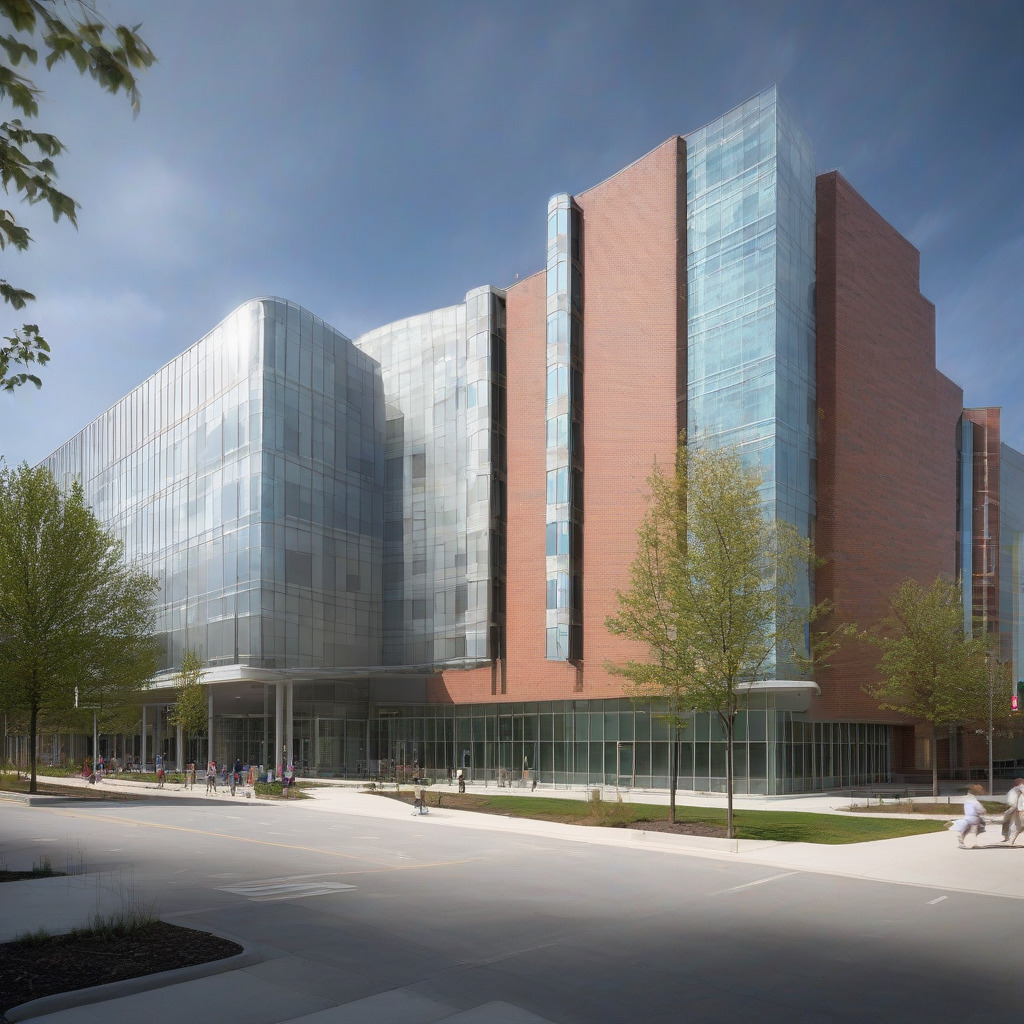
If you’ve lived in Indianapolis for more than a decade, you probably know this place as Wishard. The building itself served Marion County for more than a century before a replacement facility opened in December 2013 at 720 Eskenazi Avenue, just west of the IUPUI corridor on the near-west side. The name changed to honor Sidney and Lois Eskenazi, whose $40 million gift was the largest private donation in the hospital’s history. The institution didn’t change. It remains the county’s public hospital, still operated by the HHC—a quasi-governmental body authorized under Indiana law—and still carrying the same mandate: provide care to everyone in Marion County, regardless of insurance status, income, or immigration paperwork.
That lineage matters. If your grandmother went to Wishard for decades and you’ve never used the system yourself, you’re reading about the same institution under a different name and inside a newer building.
Who Qualifies for Care at Eskenazi
The short answer: anyone. Eskenazi’s public mandate means the system cannot turn patients away for inability to pay.
Uninsured patients are seen at every level of the system, from primary care at community health centers to the main campus emergency department. Financial counselors work to enroll uninsured patients in whatever coverage they qualify for, which may reduce or eliminate out-of-pocket costs. Medicaid patients are served across the system. Indiana operates its Medicaid expansion through HIP 2.0 (the Healthy Indiana Plan), which has its own contribution requirements and a history of coverage lapses when small payments are missed. For many low-income Indianapolis residents who fall into the coverage gap—earning too much for traditional Medicaid but unable to afford marketplace plans—Eskenazi is where they receive care regardless of HIP 2.0 enrollment status.
Undocumented patients can receive care at Eskenazi. The emergency department cannot refuse emergency care under federal EMTALA law, and Eskenazi’s financial assistance programs extend to patients who can’t document immigration status. Confirm which financial assistance tiers apply directly with Eskenazi’s Financial Counseling department at (317) 880-8939.
Marion County residency isn’t a hard requirement for emergency care, but the sliding-scale programs are primarily structured for Marion County residents. Patients from Hamilton, Hendricks, Johnson, or Hancock counties can receive care, but financial assistance eligibility is worth discussing with a counselor at intake.
One thing makes Eskenazi’s role sharper here than at safety-net hospitals in states with cleaner Medicaid expansion. Indiana’s HIP 2.0 program covers adults up to 138% of the Federal Poverty Level, but missed premium-like contributions can knock people off coverage—sometimes over surprisingly small amounts. That dynamic pushes more people to Eskenazi than would otherwise need it, and it’s why the hospital’s financial counseling function is more than a billing formality.
How the Sliding Scale Actually Works
Eskenazi’s income-based fee structure uses Federal Poverty Level guidelines to place patients in tiers that determine their share of visit costs. For 2024, the FPL for a single adult is approximately $15,060 annually; a family of four hits the FPL at around $31,200.
Patients at or below 100% of the FPL may qualify for zero-cost care under Eskenazi’s charity care program. Patients between 101% and roughly 200% of FPL typically receive significantly discounted services. Confirm the specific dollar amounts at each tier with Financial Counseling before your appointment—the schedule updates annually. Call (317) 880-8939 or ask at the Financial Counseling desk on the main campus.
When you go in, bring a government-issued photo ID, proof of income from the last 30 days of pay stubs or your most recent federal tax return, and any existing insurance paperwork, including Medicaid or HIP 2.0 letters. If you have no income documentation, you can provide a self-declaration. Financial Counseling staff work regularly with patients who arrive without traditional paperwork.
The Financial Counseling department is an enrollment hub, not just a billing office. Staff will screen you for Medicaid, HIP 2.0, CHIP for children in your household, and Eskenazi’s own charity care program—and in many cases complete applications on your behalf during the same appointment. Medicaid enrollment typically takes days to weeks depending on state processing volume. Charity care through Eskenazi can often be applied retroactively to recent visits, which is genuinely useful if you’ve already been seen and the bill is sitting on your kitchen table. Call (317) 880-8939 to understand your specific situation.
Why the FQHC Designation Matters for Your Bill
Several of Eskenazi’s community health centers carry Federally Qualified Health Center designation, which is the structural reason the sliding scale can reach zero dollars. FQHCs receive federal grant funding under Section 330 of the Public Health Service Act, which subsidizes per-visit costs so clinics can absorb what patients can’t pay. In exchange, FQHCs are legally required to offer income-based fees. They cannot charge below-100%-FPL patients the same rate as a commercially insured patient. They’re also required to have a patient-majority governing board—more than half of the people overseeing the clinic’s operations must be patients of the clinic.
The federal government helps pay for your visit, and the law prevents the clinic from pricing you out. That’s not charity in the discretionary sense. It’s a legal requirement backed by federal funding, and it’s why community health center visits can be free or near-free for low-income Indianapolis residents in a way that can’t be reversed by a budget decision. Eskenazi’s satellite community health centers carry this designation; the main hospital campus operates under a separate but complementary structure. Patients at FQHC-designated locations also benefit from the 340B drug pricing program, which is covered below.
Specialty Services Most Patients Don’t Know About
Primary care is what people associate with safety-net systems. Eskenazi’s clinical reach goes well beyond that—and if you map the services against Marion County’s documented disease burden, the overlap isn’t coincidental.
Eskenazi is one of only two Level I trauma centers in Indianapolis, alongside IU Health Methodist. Around-the-clock surgical specialists, neurosurgeons, the full infrastructure for the most severe injuries. That matters for the near-west side and for anyone brought in by EMS from across the county.
The Sandra Eskenazi Mental Health Center and Midtown Campus on the near-northside is one of Indiana’s largest public mental health facilities, offering inpatient psychiatric care, crisis stabilization, outpatient therapy, and substance use treatment. For Marion County residents experiencing mental health crises without private insurance, this is frequently the primary entry point into treatment. For many, it’s the only realistic one.
Eskenazi operates an HIV/AIDS clinic under the federal Ryan White Program, which funds care for low-income people living with HIV—case management, medication assistance, medical care. Without this program, much of that would be financially out of reach for uninsured patients managing a chronic, expensive condition.
The 340B federal drug pricing program allows eligible safety-net providers to purchase outpatient drugs at significantly reduced costs and pass those savings to patients. Eskenazi participates, which means prescriptions filled at Eskenazi’s on-site pharmacy can cost substantially less than at a commercial chain. For patients managing chronic conditions requiring ongoing medication, the difference can run to hundreds of dollars a year. Worth knowing before you automatically take your prescription to the nearest CVS.
Eskenazi operates dental clinics for adults and children, including uninsured patients. Dental care is frequently excluded from Medicaid coverage for adults in Indiana. Adults on Medicaid in this state routinely go years without dental access, and Eskenazi is one of the only places filling that gap for people who can’t pay out of pocket.
The ophthalmology program includes diabetic retinopathy screening—vision-threatening damage caused by uncontrolled blood sugar that often goes undetected without specialty eye exams. Marion County’s diabetes rates exceed state and national averages. Retinopathy is a preventable cause of blindness. The program connects a high-risk population to specialist screening most could not otherwise afford.
The Maternal-Fetal Medicine program serves pregnant patients with high-risk conditions—diabetes, hypertension, prior pregnancy complications. For uninsured or Medicaid patients carrying high-risk pregnancies, this is often the only realistic access point to the level of specialist monitoring their conditions require. Eskenazi’s endocrinology program handles complex diabetes, thyroid conditions, and metabolic disorders. Left unmanaged, these are the cases that generate the hospitalizations and complications driving Marion County’s healthcare costs upward.
The clinical mix isn’t accidental. It reflects what actually ails this county. That’s the difference between a safety-net system and one that handles primary care and refers everything else somewhere the patient can’t get to.
Neighborhood Locations Across Indianapolis
The main campus at 720 Eskenazi Avenue is the anchor, but many patients—particularly those using primary care rather than trauma or specialty services—have a closer option. Before making the trip across town, call (317) 880-8939 or check the locations page on Eskenazi’s website to confirm which satellite is nearest. Residents in Irvington, Fountain Square, Beech Grove, or Lawrence may find a satellite significantly more accessible. The drive to the near-west side isn’t always straightforward if you’re working around an IndyGo schedule.
The main campus sits near several IndyGo routes serving the IUPUI corridor. Satellite locations vary in their transit accessibility. Check IndyGo.net or call their trip planning line before your first appointment—routes change, and finding out at the bus stop is the wrong way to learn that.
What Patients Should Know About the Experience
Eskenazi is a teaching hospital affiliated with Indiana University School of Medicine. Patients are frequently seen first by a resident physician supervised by an attending. For some patients this can feel like less individual attention. The other way to look at it: you’re getting access to the IU medical school’s faculty and clinical resources at a cost calibrated to your income. That’s not a bad trade, though the experience can genuinely vary depending on the service and the day.
Emergency department wait times at Eskenazi, as at most urban trauma centers, can be long for non-emergent presentations. That’s true of every Level I trauma center in the country, not something specific to Eskenazi. If you’re deciding between the ED and a satellite clinic appointment, know that before you go. Patients seen at community health center satellites generally describe a smaller, more continuous primary care relationship than the main campus offers.
CMS Hospital Compare and Leapfrog Group publish quality metrics for all Indianapolis hospitals—mortality rates, infection rates, safety scores by procedure and condition. Both are free and more useful than reputation. Check medicare.gov/care-compare and leapfroggroup.org directly.
How to Get Started
Primary care or a non-emergency specialty appointment: Call (317) 880-8939 to reach the appropriate clinic or confirm which location best serves your neighborhood.
Financial assistance enrollment: Go directly to Financial Counseling on the main campus. Bring your ID, any income documentation you have, and any insurance paperwork. If you have nothing, say so. Staff work regularly with patients who arrive with minimal documentation and can walk you through a self-declaration process.
Emergency care: Go to the emergency department at 720 Eskenazi Avenue. Emergency care cannot be conditioned on financial screening. You’ll be treated first. Financial counselors follow up during or after your visit.
The Financial Counseling appointment is a one-on-one meeting. A counselor reviews your income, household size, and insurance status; screens you for Medicaid, HIP 2.0, and CHIP; and applies you for Eskenazi’s charity care program if you qualify. The conversation is confidential. Bring what documentation you have, but don’t delay seeking care because you lack paperwork. Charity care can often be applied retroactively to recent visits if you apply promptly. Medicaid and HIP 2.0 applications go through the Indiana Family and Social Services Administration and typically take days to a few weeks. Financial Counseling staff can flag urgent situations that may warrant expedited processing.
Financial Counseling direct line: (317) 880-8939
Where Eskenazi Fits in Indianapolis’s Larger Healthcare Picture
Indianapolis has three other major health systems: IU Health, Ascension St. Vincent, and Community Health Network. All three accept Medicaid and include some charity care. None of them are safety-net systems in the structural sense. They’re not legally required to offer income-based fees across their services. They don’t receive the federal grant funding that enables zero-cost visits. They’re not built around the same public mandate.
The financial gap for uninsured or underinsured patients at private systems is substantially higher than at Eskenazi. Someone without insurance who walks into IU Health or Community Health Network for non-emergency care can face full list-price billing even after charity care adjustments—and those adjustments aren’t standardized the way Eskenazi’s are. The difference can run to thousands of dollars for the same underlying care.
IU Health, Ascension, and Community Health Network are built around a commercially insured and private-pay population. Eskenazi is built around the opposite population, and that design runs through everything—the financial structure, the clinical mix, where the satellites are located. For Indianapolis residents navigating health costs alongside housing pressures, our health & wellness coverage tracks the broader local landscape. Residents who have insurance and real options aren’t the audience for this piece. Residents who don’t are.
Reporting note: Specific sliding-scale dollar amounts, current satellite location addresses, and undocumented patient financial assistance details should be confirmed directly with Eskenazi Financial Counseling at (317) 880-8939 before relying on them for individual decisions. The figures and policies in this article reflect publicly available information and should be verified with current program staff, as eligibility thresholds update annually.