Free and Sliding-Scale Mental Health Resources in Marion County for 2026
What's actually available, who qualifies, and how to get in — the verified intake requirements and crisis protocols that government PDFs consistently leave out.

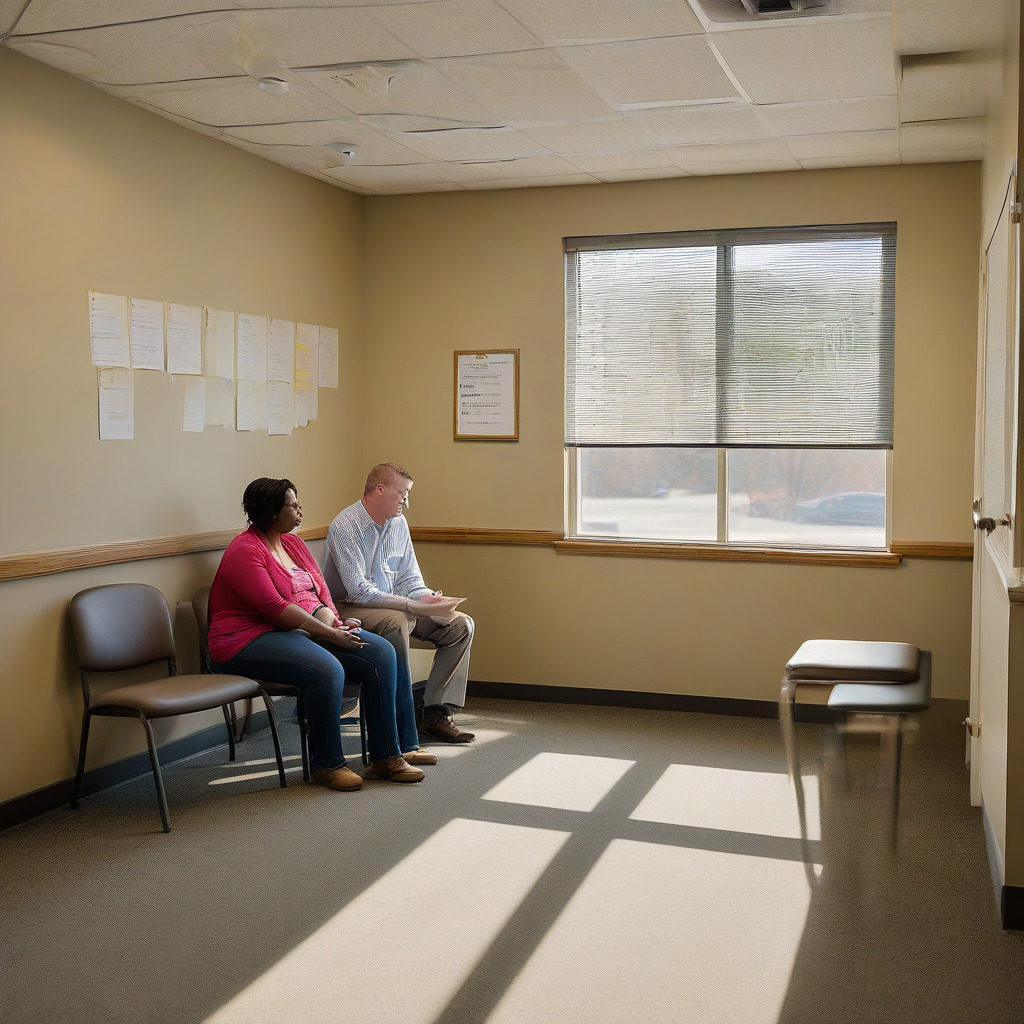
What’s actually available, who qualifies, and how to get in — the verified intake requirements and crisis protocols that government PDFs consistently leave out.
This guide is built for residents who need accurate, actionable information before they make a phone call, not after. The organizations listed below have active programs in Marion County as of publication. Hours, intake procedures, and sliding-scale policies change — and some providers in this space have undergone real organizational turbulence in the past two years — so we’ve flagged where you need to call ahead before you make the trip. Not a hedge. The most useful thing we can tell you.
What “Free” and “Sliding Scale” Actually Mean Here
Before you call anywhere, understand the difference between a provider that says it offers a sliding scale and one that is legally required to serve you regardless of what you can pay.
Federally Qualified Health Centers like HealthNet receive federal funding with a legal obligation attached: they must offer a sliding fee scale with a zero-dollar floor for patients below a specific income threshold, and they cannot turn you away solely because you can’t pay. That’s federal law, not a marketing commitment. The income thresholds that determine your cost are tied to current federal poverty level guidelines — confirm the exact numbers when you call.
Eskenazi Health operates under an institutional financial assistance policy, not a federal mandate. It’s real, and in practice it can bring costs to zero, but the mechanism is different. You apply for financial assistance separately from your clinical intake, and approval isn’t automatic when you walk in. Know which type of provider you’re calling. It changes what you can expect at the front desk.
If You’re in Crisis Right Now
Call or text 988.
The 988 Suicide and Crisis Lifeline serves anyone experiencing a mental health crisis — suicidal thoughts, psychiatric emergency, a situation where someone near you is in immediate danger. You don’t need to be suicidal to call. The number replaced 1-800-273-8255 as the national crisis line in July 2022; the old number still works, though the shorter one is easier to remember when you’re not at your best.
When you call 988 from an Indianapolis-area number, you’re routed to a local or regional crisis center, not a generic national call bank. If you reach someone who doesn’t know local resources, ask to be transferred to a local Indiana center. For Spanish-speaking callers, press 2 after connecting. 988 also accepts text messages and has a chat option at 988lifeline.org.
The question most people want answered before they dial: calling 988 does not automatically dispatch police. The counselor’s first response is phone-based support. If they determine someone is in imminent danger requiring in-person intervention, they may contact emergency services — but the 988 model is explicitly oriented toward clinical response rather than law enforcement. Indianapolis has a mobile crisis program that deploys mental health clinicians instead of officers for situations where in-person response is appropriate but a police presence isn’t. Confirm its current hours and coverage area through 988 or Eskenazi Health directly; those operational details weren’t fully locked for this publication. Ask the counselor explicitly whether a clinician-only mobile response is available for your situation.
For in-person crisis stabilization: Eskenazi Health’s main campus at 720 Eskenazi Avenue operates psychiatric crisis services and accepts walk-ins for psychiatric assessment. No appointment. No insurance required. Eskenazi’s financial assistance policy applies here. One note: the “Midtown Community Mental Health” branding associated with Eskenazi’s behavioral health division is in flux. Call Eskenazi directly to confirm the right address for crisis walk-in before you leave home.
No Insurance, No Income — Your Clearest Path to Care
Start with HealthNet. Its FQHC status means what it says: federal law requires that you not be turned away for inability to pay, with a zero-dollar floor for qualifying patients. That’s not a policy that can be quietly discontinued when funding gets tight.
HealthNet operates behavioral health services embedded inside its primary care clinics across Marion County, with active sites on the near-east and near-south sides. Call HealthNet directly to confirm which sites have behavioral health counselors, whether self-referral is accepted, and the current intake number. The co-location model is one of the better structural decisions in Marion County’s safety-net system — you’re entering care through a primary care relationship, with behavioral health connected rather than housed somewhere across town that requires a separate intake process and a separate bus ride. For patients managing physical and mental health conditions at the same time, which is most people, this matters more than it might sound.
HealthNet also offers Medicaid enrollment assistance at many sites. If you think you might qualify for Indiana’s Healthy Indiana Plan but haven’t enrolled, raise it when you call. Enrollment can retroactively reduce or eliminate costs already incurred and opens access to a much broader provider network. Don’t save that conversation for later.
Eskenazi Health runs a parallel financial assistance pathway for uninsured patients. The application — available at the front desk or through Eskenazi’s patient services line — can bring costs to zero for qualifying patients. Outpatient therapy, psychiatry, and substance use treatment are all accessible once the application is complete. Call ahead to confirm current intake and financial assistance contact numbers before visiting.
Same-Day and Walk-In Mental Health Services
The Marion County mental health system was not designed for same-day access. Most outpatient providers run scheduled-appointment models with intake waitlists. That’s just the reality. But for people who can’t wait, a few things actually exist.
HealthNet’s warm handoff is the most reliable path to same-day behavioral health contact for non-crisis patients. At clinics where a behavioral health counselor is co-located, a patient who comes in for a primary care visit and discloses depression or anxiety can be walked directly to the counselor that same day — no separate appointment. The PCP introduces you to the counselor before you leave the building. It’s a genuinely good design; it removes the gap between “someone suggests you talk to someone” and “you actually do.” Not every HealthNet site operates this way, though. When you call intake, ask specifically whether the site you’d be assigned to has an embedded behavioral health counselor available that day.
Eskenazi’s walk-in capacity at 720 Eskenazi Avenue is built for crisis and acute psychiatric situations. If your situation has become acute and you need an assessment today, go there. It’s not the right entry point for a first-time patient looking to schedule ongoing outpatient therapy.
Gallahue Mental Health Services historically served Marion County’s northeast and east-side neighborhoods and filled a real gap — residents on the east side would otherwise be traveling farther than they should have to reach HealthNet or Eskenazi’s main campus. But Gallahue has been through organizational changes in recent years, and its current operational status, hours, and walk-in availability cannot be assumed from anything published before 2025. Look up Gallahue’s current contact information through the Indiana Division of Mental Health and Addiction’s licensed provider directory before you call, and call before you travel there.
Outpatient Care: Eskenazi, HealthNet, and Gallahue
For residents not in crisis who need ongoing outpatient therapy, psychiatry, or substance use treatment, here’s how the three main safety-net providers actually differ.
Eskenazi Health (720 Eskenazi Avenue) is the most comprehensive outpatient behavioral health site in the county. Individual and group therapy, outpatient psychiatry, substance use and co-occurring disorder treatment, peer recovery support — it’s all here. Intake is by appointment; call Eskenazi to begin. Complete the financial assistance application at or before your first appointment if you’re uninsured. Eskenazi accepts Medicaid, Medicare, and most private insurance. Your first outpatient intake appointment will include a screening, a clinical assessment, and a conversation about your care plan and next steps. If you’re walking in during a crisis, the assessment is immediate and focused on stabilization.
HealthNet integrates behavioral health into primary care rather than running a standalone mental health clinic — the same model described above. It accepts Medicaid, uninsured patients on the federally mandated sliding scale, and some private insurance. A behavioral health intake typically includes a standardized depression and anxiety screen, a brief assessment, and a conversation about what services fit your situation. You’ll likely meet with a social worker or licensed counselor. Medication isn’t prescribed at a first behavioral health visit; that requires a separate psychiatric appointment if one’s indicated.
Gallahue Mental Health Services has historically offered outpatient therapy, psychiatric services, and substance use treatment in the east and northeast parts of the county. Given the organizational changes, contact Gallahue using a current number from the Indiana FSSA or DMHA licensed provider directory. Confirm which service lines are active, what the intake process looks like, and whether there are waitlists. Don’t trust aggregator sites or PDFs from before 2025. That information is probably stale and could cost you a wasted trip.
One realistic note on waitlists: at all three providers, there’s typically a gap between your first intake call and a scheduled therapy appointment, and psychiatric appointments tend to wait longer than therapy. Start the intake process at more than one provider simultaneously. Use peer support programming as a bridge while you wait — it’s not the same as therapy, but it’s not nothing either. As part of our health & wellness coverage, CityDesk Indianapolis also tracks other low-cost care resources for Marion County residents.
Language Access in Marion County’s Mental Health System
Language access in behavioral health isn’t the same as language access in primary care, and the gap matters more than the healthcare system usually acknowledges. An interpreter in an exam room during a physical is one thing. An interpreter present throughout a therapy session — where nuance, tone, and exact word choice carry clinical weight — is a different challenge entirely.
Spanish: The 988 line’s Spanish option (press 2) connects to a Spanish-speaking counselor and is the most reliable immediate-access point for Spanish-speaking residents in crisis. HealthNet provides interpreter services for Spanish-speaking patients, including behavioral health appointments. When you call intake, specifically request a Spanish-language behavioral health appointment or interpreter — don’t assume it’ll be offered. Eskenazi Health also offers interpreter services; call ahead to confirm availability for behavioral health specifically, since scheduling an interpreter may require advance notice.
Burmese: Marion County has a significant Burmese-speaking community, and the healthcare system doesn’t always plan around it the way it should. HealthNet has served this community through its primary care network and provides interpreter services for Burmese-speaking patients. Whether those services extend smoothly to behavioral health appointments — which require a different kind of interpretive relationship — should be confirmed when you schedule. Ask directly: “Is a Burmese interpreter available for my behavioral health appointment?”
Other languages: The 988 national line has access to interpretation in multiple languages through a translation relay, though connection quality and speed vary. At HealthNet and Eskenazi, languages beyond Spanish and the major refugee community languages are handled through telephone or video interpretation services. Less ideal for mental health conversations, but available. If language access is a concern, name it explicitly when you call intake. Don’t assume it will be volunteered.
NAMI Indiana and Mental Health America of Indiana
Neither organization offers therapy, psychiatric services, or medication. If you arrive at a NAMI program expecting to see a therapist, you’ll be disappointed — and you’ll have lost time better spent getting clinical care. What they offer is different and genuinely useful, but only if you know what it is going in.
NAMI Indiana runs peer-led education and support programming that’s free and requires no clinical referral.
Family-to-Family is a free eight-session psychoeducation course for family members, caregivers, and loved ones of people living with serious mental illness. It covers conditions, treatment options, communication strategies, and caregiver self-care. Contact NAMI Indiana to confirm whether summer 2026 sessions are scheduled in Marion County and how to register.
Peer-to-Peer is a free eight-session program for adults living with mental illness, led by trained peers with lived experience. No referral needed. Contact NAMI Indiana to confirm summer 2026 scheduling.
Connection Recovery Support Groups are free, ongoing peer support groups for adults living with mental illness. Not therapy groups. Not clinician-facilitated. For some people that’s exactly the right setting; for others it isn’t. NAMI Indiana has partnered with Indianapolis Public Library branches for meeting space — a sensible call for a city where getting somewhere without a car remains harder than it should be. Check the NAMI Indiana calendar or contact the organization directly to confirm which library locations are hosting Connection groups this summer.
NAMI programming works best for: family members trying to understand a diagnosis; people already in clinical care who want peer support alongside it; people on a waitlist who need a structured bridge; people in recovery who find peer community more useful at this point than ongoing clinical treatment. Find current contact information at nami.org.
Mental Health America of Indiana offers free online mental health screening tools — validated screens for depression, anxiety, PTSD, bipolar disorder, and substance use. Not diagnostic. But if you’ve ever tried to describe what’s wrong to a nurse on the phone while not quite knowing how to describe it, you understand why having a screen result in front of you before you call makes the intake conversation more productive. Find MHA Indiana’s current contact information at mhain.org. For summer 2026 in-person Marion County programming, call directly to confirm — their programming calendar changes seasonally.
What to Bring and What to Expect at Your First Appointment
The intake process is where people fall off. They show up without documents, or they don’t know what the first visit actually covers, or they leave without scheduling the follow-up.
At HealthNet: Bring a photo ID if you have one — not required for care, but it speeds intake. Bring your insurance card if you have insurance. If you’re uninsured, bring income documentation: a pay stub, a benefits letter, or a written statement of no income. Having it ready moves the process along. Also bring a list of any current medications. Expect a standardized depression and anxiety screen, a brief assessment, and a conversation about what services fit your situation. Medication isn’t prescribed at a first behavioral health visit; if a psychiatric appointment is indicated, that gets scheduled separately.
At Eskenazi Health: Bring a photo ID if you have one and an insurance card if applicable. For the financial assistance application, income documentation helps. Call ahead to understand what their financial counselors currently need and what can be completed on arrival. Your outpatient intake will include a screening, a clinical assessment, and a care plan discussion.
On waitlists: When you’re told there’s a wait, ask to be placed on the cancellation list for earlier openings. Start attending NAMI Connection groups or another peer support program in the meantime — not as a substitute for clinical care, but as something real while you wait. If you might qualify for Medicaid, raise it at your first visit. HealthNet has staff who can help with Healthy Indiana Plan enrollment on site, and getting enrolled can apply retroactively to costs you’ve already incurred.
Quick-Reference: Marion County Mental Health Resources at a Glance
These details were last verified by CityDesk Indianapolis for this 2026 guide. Phone numbers, hours, and intake procedures change. Call before you visit. For organizations where phone numbers aren’t listed below, look up current contact information through the Indiana Division of Mental Health and Addiction licensed provider directory at in.gov/fssa/dmha or directly through the organization’s website.
| Organization | Address | Phone | Walk-In Available | Cost Floor | Key Notes |
|---|---|---|---|---|---|
| 988 Crisis Lifeline | Call or text 988 | 988 | N/A (phone/text/chat) | Free | Press 2 for Spanish. Chat at 988lifeline.org. Local routing for Indiana callers. |
| Eskenazi Health | 720 Eskenazi Ave, Indianapolis — call ahead to confirm active behavioral health intake site | Call Eskenazi main line; confirm behavioral health intake number directly | Crisis walk-in; confirm outpatient walk-in policy | $0 with financial assistance | Outpatient therapy, psychiatry, substance use treatment, mobile crisis referral. Confirm intake hours and documentation requirements before visiting. |
| HealthNet Behavioral Health | Multiple Marion County sites — confirm active sites with intake | Call HealthNet directly for current behavioral health intake number | Same-day warm handoff at select sites — confirm by site | $0 (FQHC sliding scale floor) | Federal law requires zero-dollar floor. Medicaid enrollment help available on site. Spanish and Burmese interpreter services; confirm when scheduling. |
| Gallahue Mental Health Services | East/northeast Marion County — confirm current address via DMHA directory | Confirm via Indiana DMHA licensed provider directory | Call to confirm | Sliding scale | Call before visiting. Confirm operational status, hours, and active services. Do not rely on pre-2025 sources. |
| NAMI Indiana | Confirm current Indianapolis address at nami.org | Confirm via nami.org | No (scheduled programs) | Free | Family-to-Family, Peer-to-Peer, Connection groups. Not a clinical provider. Confirm summer 2026 schedule and locations directly. |
| Mental Health America of Indiana | Confirm current address at mhain.org | Confirm via mhain.org | No | Free | Online mental health screenings, community programming. Not a clinical provider. Call to confirm summer 2026 Marion County events. |
If you’re in crisis now, call or text 988. If you need immediate in-person support in Marion County, go to Eskenazi Health at 720 Eskenazi Avenue. You don’t need insurance or documentation to receive a crisis assessment.