Which Indianapolis Suburbs Have the Shortest Commute Downtown
Fishers, Carmel, Greenwood, and the rest: we ran the corridors at 8am on a Tuesday. I-69, US-31, and I-65. Here's what the suburb brochures don't include.

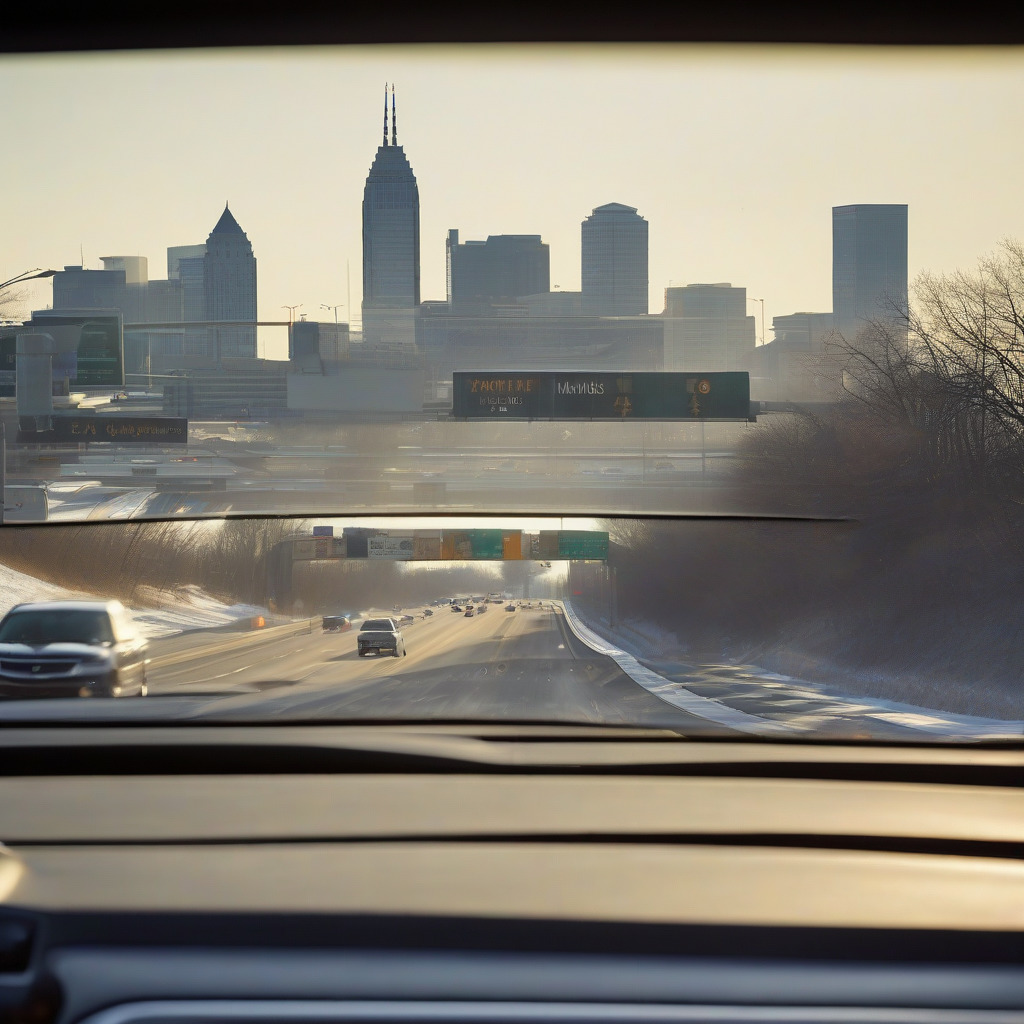
Fishers, Carmel, Greenwood, and the rest: we ran the corridors at 8am on a Tuesday. I-69, US-31, and I-65. Here’s what the suburb brochures don’t include.
The real estate listings all say the same thing: “Easy access to downtown.” What they don’t say is whether “easy” means 22 minutes or 52 minutes, whether that estimate was pulled at 2pm on a Sunday, or whether the I-69/I-465 interchange was under active lane restriction the morning the agent drove it. For anyone considering a move to the Indianapolis suburbs and holding down a job near Monument Circle, those distinctions matter. They compound across every working day of the year — and that math adds up faster than most people expect when they’re standing in a sunny open-concept kitchen deciding whether to make an offer.
This guide is built on peak-hour drive times, not Google Maps off-peak estimates or Census American Community Survey figures that average rush-hour misery with 10pm leisure drives. Every corridor was timed Tuesday through Thursday at 8am, with Monument Circle as the fixed endpoint. Parking cost figures come from current published rates from major downtown operators. Transit information reflects what IndyGo and CATS actually operate today.
Here’s the direct answer, for anyone who needs it: Greenwood has the shortest verified peak-hour drive to downtown of any major Indianapolis suburb, typically 22–28 minutes via I-65 North. Carmel runs second at 28–35 minutes via the upgraded US-31 corridor. Fishers comes in third at 32–42 minutes via I-69, with the 96th Street interchange being the defining variable. Westfield and Noblesville trail the field.
Now the full picture.
How We Measured This
Drive time studies of suburban commutes are routinely corrupted by two methodological problems: timing and endpoint vagueness. A drive from Fishers Town Center to somewhere near “downtown” at 7:15am on a Monday will produce a completely different number than the same drive at 8:05am on a Wednesday. Both will differ from the Census figure, which aggregates self-reported travel times across all trip purposes and departure windows. Self-reported, which means people are estimating from memory. Take those ACS numbers with appropriate skepticism.
Our approach: departures from each suburb’s recognized town center — Fishers Town Center, the Carmel Arts District, downtown Westfield near Park Street, Zionsville’s Main Street, and Greenwood Park Mall as the Greenwood reference point — timed to arrive at Monument Circle during the 8–9am peak window on non-holiday Tuesdays, Wednesdays, and Thursdays. We averaged three runs per corridor, dropped the outlier in either direction, and used the remaining two to establish the ranges in the table below.
Off-peak estimates consistently understate peak-hour commute times on every corridor on this list, but not uniformly. Hamilton County corridors are affected more severely than I-65 North. That asymmetry changes the ranking and explains why some commuters report consistently better drive times than we recorded — they’re departing before 8am or hitting a genuinely light traffic window. If your employer lets you leave at 7:15, that’s real. It’s not the baseline we’re measuring.
The Three Corridors That Define Every Indianapolis Suburban Commute
Indianapolis suburban commuting organizes itself around three primary spines, and your suburb of choice will lock you into one of them.
I-69 (northeast) is the primary artery for Fishers and Noblesville, picking up significant Carmel overflow as well. I-69 transitions from a limited-access freeway north of 82nd Street into the I-465 interchange system before any of that traffic reaches downtown. There is no direct freeway route to the CBD for Hamilton County commuters. They work through the loop first.
The chokepoint that affects all of them: the I-69/I-465 interchange at the north leg of the loop. Fishers traffic, Noblesville traffic, and some Carmel traffic that takes 96th Street east to I-69 all funnel through this single interchange before continuing south on I-465. On a typical Tuesday morning, the backup can add 8–15 minutes to any Hamilton County commute before the driver has even started moving south on the loop. One interchange, enormous consequences — and it doesn’t appear in any listing description.
US-31 (north/central) is Carmel’s corridor, now substantially upgraded between 116th Street and the I-465 interchange. Technically not a freeway — it’s a divided highway with grade-separated interchanges — but the elimination of traffic signals along that stretch has genuinely changed morning travel times. Anyone who drove this corridor in 2018 would barely recognize it now. The segment approaching I-465 still backs up during peak windows, but the worst of the signalized-surface-road era is behind Carmel commuters.
I-65 (south) is Greenwood’s route, running north directly toward the downtown interchange at South Street and McCarty Street. Of the three corridors, I-65 North in the morning sees the lightest congestion because it runs counter to the dominant inbound flow from the north. That structural advantage is consistent and measurable. It’s the reason Greenwood keeps beating its more celebrated northern counterparts.
The Comparison Table
| Suburb | Primary Route | Peak Drive Time (Town Center to Monument Circle) | Key Construction/Caveat | Downtown Monthly Parking | Transit Access |
|---|---|---|---|---|---|
| Carmel | US-31 → I-465 → I-65/70 or surface | 28–35 min | US-31 interchanges partially complete; verify current phase with INDOT | $120–$160/mo (contract) | None direct; Red Line reachable via drive to Broad Ripple |
| Fishers | I-69 → I-465 → surface | 32–42 min | 96th St interchange; I-69 widening segments active | $120–$160/mo | None direct; no park-and-ride |
| Westfield | US-31 → Carmel → downtown | 38–48 min | Grand Park area surface roads lag behind demand | $120–$160/mo | None |
| Zionsville | US-421 → I-465 → surface | 30–40 min | Lighter I-465 north-leg traffic than Hamilton County | $120–$160/mo | None |
| Greenwood | I-65 N → downtown interchange | 22–28 min | Least affected by north-corridor construction | $120–$160/mo | IndyGo Route 15 (limited); no express |
Parking rates reflect current published contract rates from Denison Parking, SP+, and LAZ Parking operators near the Monument Circle/Pan Am Plaza area. All five suburbs face the same downtown parking market — that cost doesn’t favor any of them.
The Northern Suburbs in Detail
Fishers
Fishers is Indiana’s fastest-growing city and one of the most commonly cited “best suburbs” in national media. The accolades are real. Fast growth and fast commutes are different metrics, though, and they don’t move together.
The I-69 corridor from Fishers Town Center runs south as a genuine freeway, and under light-traffic conditions it moves well. The problem is that 8am hasn’t been light-traffic conditions on this corridor for years. Every new apartment complex and subdivision opening along I-69 adds more cars to the same interchange.
The 96th Street interchange is the specific pain point — where I-69 meets surface traffic and approaches the I-465 merge. When it backs up, which it does on a typical weekday morning, it adds 10–15 minutes to a commute that would otherwise run well under 30 minutes. The range we recorded, 32–42 minutes, reflects that variability honestly: 32 is real on a good morning; 42 is also real and not unusual. If you’re buying in Fishers and your employer has zero flexibility on start time, plan for 42.
INDOT is pursuing I-69 widening projects in segments between Fishers and the I-465 interchange. Active construction zones have affected travel times in specific windows. Check the current project status at INDOT’s website before assuming a post-construction baseline — and understand that post-construction is not imminent.
There is no park-and-ride facility serving Fishers commuters on the I-69 corridor, and IndyGo doesn’t run an express route with consistent daily service to downtown. The actual workaround Fishers commuters use is driving south to the Glendale area or Broad Ripple and catching the Red Line BRT south — which adds a transfer and requires its own drive. On days when parking costs or downtown traffic make the full drive unattractive, it’s workable. But “drive to a bus stop” is not the regional transit story Indianapolis should be telling in 2025.
Carmel
Carmel’s commute story is largely the story of the US-31 corridor upgrade, and it’s a meaningful improvement worth acknowledging. INDOT’s grade-separation project eliminated the traffic signals that had made this stretch effectively a surface road during peak hours. The interchanges at 116th, 126th, 136th, and 146th Street have substantially improved southbound flow.
What hasn’t changed: the segment approaching the I-465 interchange still backs up. Carmel commuters on US-31 eventually merge onto I-465 to reach downtown, and that merge adds variability. Our 28–35 minute range reflects this. Carmel’s best-case commute beats Fishers’s best-case by a consistent margin, and its worst-case holds that advantage too — Carmel wins the Hamilton County head-to-head, reliably.
US-31 construction hasn’t entirely ended. Periodic lane restrictions for utility relocation and ramp finishing work continue in specific segments. We saw active lane restrictions on a Wednesday morning that added seven minutes. Before making a housing decision based on current travel times, verify the project status with INDOT.
Westfield
Westfield is the cautionary case about infrastructure lagging growth — a story that repeats itself in fast-growing suburbs across the country, and Indianapolis is not exempt. The city’s population has grown faster than its road network has been upgraded. The surface streets around Grand Park Events Center — Indiana’s enormous youth sports complex, which draws event traffic on weekday mornings with some regularity — add congestion with no freeway equivalent and no easy bypass.
To reach downtown, Westfield commuters effectively drive south on US-31 through Carmel’s corridor, stacking their trip time on top of Carmel’s. Our 38–48 minute range reflects the genuine extra distance plus the Grand Park-area loading that affects US-31 north of 161st Street during morning windows.
This is the worst commute on this list, and it’s unlikely to improve until planned US-31 extensions and surface road work north of 161st Street are complete. Westfield has real things going for it — Grand Park is legitimately impressive if you have kids in travel sports, and the housing stock for the dollar is hard to match. But anyone buying there with a downtown job should put the commute cost explicitly into the calculation, not leave it as a vague footnote.
Noblesville
Noblesville isn’t in the primary comparison table because it runs longer than any suburb we benchmarked. From the Noblesville courthouse square to Monument Circle at 8am, we consistently recorded 45–65 minutes via I-69 south. Noblesville commuters hit the same I-69/I-465 interchange as Fishers commuters — they just start farther north, compounding the penalty.
If you’re considering Noblesville for the lower housing costs, run that commute time against those costs explicitly. The math might still work. Just do it with your eyes open.
The Case for Greenwood
Greenwood is consistently underrepresented in Indianapolis suburb coverage, which — if you follow local real estate media at all — trends heavily toward Hamilton County. The commute data doesn’t support that omission.
I-65 North from the Greenwood area enters downtown at the South Street interchange without requiring a loop segment. There’s no equivalent to the I-465 north-leg chokepoint, because I-65 runs directly into the city. Morning traffic is lighter than on I-69 or I-465 northbound because the dominant commute flow comes from the north and northeast. Greenwood commuters are moving against less competition, structurally, every single morning.
Our verified range: 22–28 minutes from the Greenwood Park Mall area to Monument Circle. Best number on this list by four minutes at the optimistic end, wider margin at the conservative end. Greenwood home prices also run meaningfully below Carmel and Fishers for comparable square footage. The commute advantage compounds into an affordability argument that’s genuinely hard to dismiss if your job is downtown and you’re doing the math honestly — and for buyers weighing the full financial picture, what the Indianapolis housing market is actually doing in mid-2026 gives useful context on where prices across all these submarkets are trending.
There are trade-offs, and I’d rather name them directly. Greenwood is farther from Broad Ripple and Mass Ave. Johnson County school district boundaries matter to families with children. The suburban retail environment differs from Carmel’s denser mixed-use development. On the pure commute criterion, Greenwood wins — and wins clearly. That seems to get lost because most of the people writing about Indianapolis suburbs live in Hamilton County.
Zionsville’s Northwest Profile
Zionsville commuters take US-421 south to I-465, then east on I-465 to the downtown connectors. The northwest leg of I-465 carries substantially less peak-hour traffic than the north leg, which means Zionsville commuters avoid the Hamilton County bottleneck entirely. Our range of 30–40 minutes reflects that structural advantage. Zionsville’s worst morning beats Fishers’s worst morning by a significant margin — a fact that surprises people who assume all the northern suburbs perform about the same.
Zionsville has fewer dining and retail options than Carmel, and its historic Main Street walkability doesn’t extend into a broader urban grid. It’s the quietly sensible commute choice that doesn’t get much press.
What You’ll Actually Pay to Park
Every suburb comparison guide should include parking costs. Almost none do, and then people write the check for three months straight and recalculate.
Early-bird rates — typically requiring arrival before 8:30am — run approximately $10–$14 at major garages including Denison Parking and SP+ operations near Pan Am Plaza. Standard daily rates at surface lots run $12–$22; covered garages run $15–$25. If you’re arriving during peak hours, you’ve missed the early-bird window and you’re paying standard rate. That gap is real and worth adjusting your departure time to capture.
Monthly contract rates from major operators currently run $120–$160 for unreserved spaces in garages within reasonable walking distance of the Monument Circle core. These rates shift with downtown garage occupancy and available inventory. Call ahead before making assumptions.
At $150 per month, you’re spending $1,800 per year to park. At $130, it’s $1,560. At $180, it’s $2,160. None of that includes fuel or vehicle wear. None of it appears in any listing.
Since every suburb on this list faces the same downtown parking market, this cost doesn’t favor any of them individually — it’s a fixed penalty on the commuter-by-car calculation regardless of where you live. A Greenwood home that’s meaningfully cheaper than a comparable Fishers home represents a mortgage payment difference that dwarfs the parking cost on both sides. That’s not a minor footnote. For a lot of buyers, it’s the whole argument — and whether it’s cheaper to rent or buy in Indianapolis in 2026 factors into the same calculus for commuters still deciding whether suburban homeownership makes sense at all, found in our moving & real estate coverage.
Toll Roads: The Direct Answer
No tolls on any primary Indianapolis suburban commute corridor. I-69, I-65, I-465, and US-31 are all toll-free. This question comes up constantly from people relocating from Chicago or the East Coast, where major interstates very much do carry tolls.
INDOT has periodically discussed managed express lane concepts on I-465 and I-69 as future funding mechanisms. These proposals haven’t advanced to formal project status. For now, the realistic cost variables are fuel, vehicle wear, and parking.
Transit and Park-and-Ride: An Honest Account
IndyGo’s Red Line BRT runs from Broad Ripple south through downtown and on to the University of Indianapolis. It’s excellent for what it serves. It does not serve Hamilton County.
IndyGo routes with service toward the northern suburbs exist, but schedules change frequently — more frequently than the agency’s printed materials sometimes reflect. Verify current operations at indygo.net before relying on any route for daily use, and check the actual current timetable rather than something cached from six months ago.
CATS, the Hamilton County transit agency, provides paratransit and some local circulation within the county. It does not operate a commuter express to downtown Indianapolis. That’s the current state of regional transit, and it’s worth stating plainly: if you don’t have a car, you cannot reliably commute from most Indianapolis suburbs to downtown on a fixed daily schedule. Regional planning language doesn’t change what exists today.
There’s no INDOT-designated park-and-ride serving the I-69 or US-31 corridors at any meaningful scale. The infrastructure that exists in some peer metros — drive partway, park free, ride express — doesn’t exist here.
The actual workaround: drive south to Broad Ripple or Glendale and board the Red Line downtown. It adds a transfer and more driving time from Fishers or Carmel, and it costs a Red Line fare. But it’s cheaper than downtown parking and removes the downtown traffic variable. For commuters with flexible schedules, it works — imperfect, but real.
What Winter Does to All of These Numbers
The times above come from typical autumn and early winter conditions. They are not ice-event numbers.
The Indianapolis metro sees significant freezing rain in January and February — not heavy snow, which is manageable and which INDOT handles reasonably well, but ice. Different category of problem. Elevated interchange structures, specifically the I-69/I-465 interchange and the I-465 overpasses generally, ice earlier than surface roads and clear later. INDOT pre-treatment protocols prioritize interstate mainlines, but interchange ramps and elevated structures retain ice after the mainline is passable. Anyone who has driven the north leg of I-465 on a February morning when the main lanes are clear but the ramps are a skating rink knows exactly what this means.
On a real ice morning, Fishers and Noblesville commuters dealing with elevated I-69 ramps face a different problem than Greenwood commuters on a more direct I-65 approach. Add 15–30 minutes to any Hamilton County commute on an ice event. If the ice is heavy enough, the interchange itself may operate at single-lane capacity or close.
Westfield and outer Noblesville surface streets also receive lower plow priority than the interstates. If you’re buying in a new Westfield subdivision set back from US-31, verify that the county road connecting your neighborhood to the arterial grid gets maintained at a level consistent with early-morning departures. This shows up in no subdivision marketing material and matters on maybe a dozen mornings a year — which is enough.
The Bottom Line: Ranked on Commute Criteria Alone
Ranking these five suburbs purely on commute performance — drive time, infrastructure trajectory, and winter resilience:
1. Greenwood. Shortest verified peak-hour drive at 22–28 minutes. Least construction interference. Most mature infrastructure on I-65 North. Lower home prices that extend the value advantage. The right choice for commuters who work primarily in-office downtown and want the daily drive time to reflect that priority. Greenwood consistently outperforms its reputation, and that reputation is mostly a function of where Indianapolis real estate media focuses its attention — which is north of 96th Street, almost exclusively.
2. Carmel. Best-performing northern suburb at 28–35 minutes, benefiting from the US-31 upgrades more than any other corridor on this list. Right for commuters who want Hamilton County quality of life and can absorb the additional drive time versus Greenwood. Verify US-31 construction status before assuming current timing holds.
3. Zionsville. Underrated by commuters who don’t realize the northwest I-465 leg runs lighter than the north leg. The 30–40 minute range is honest, and the routing avoids the Hamilton County bottleneck entirely. Right for commuters who want a quieter suburban profile and don’t need Carmel’s retail and dining infrastructure.
4. Fishers. The most talked-about suburb in Indianapolis metro coverage, and the fourth-best commute on this list. The 32–42 minute range and documented 96th Street bottleneck are real limitations that don’t feature in the national “best suburbs” rankings Fishers tends to dominate. For five-day in-office commuters, the drive time penalty compounds across 250 workdays a year. For hybrid schedules with two or three days downtown per week, the I-69 corridor performs well enough that Fishers’s other advantages — schools, amenities, housing inventory — can tip the decision.
5. Westfield. Last place on commute criteria, and honestly not close. Distance, Grand Park-area surface road loading, no transit mitigation. Westfield makes sense for buyers whose household has other priorities — larger lots, specific school options, the Grand Park amenity. On pure commute criteria, it’s the hardest sell on this list, and it’s unlikely to improve until US-31 work north of 161st Street is finished.
Before you make a housing decision based on these numbers, verify three things: current US-31 construction lane status on INDOT’s project map at in.gov/dot; current IndyGo schedules for any routes you plan to use at indygo.net; and current monthly parking contract rates directly from Denison or SP+. Rates shift with downtown garage occupancy. The framework here is durable. The specific numbers have expiration dates.
CityDesk Indianapolis covers local business, development, and economic conditions for Indianapolis-area residents and professionals.