What Fishers and Carmel Families Buying This Summer Actually Need to Compare
Median prices by bedroom count, HOA costs at specific communities, school enrollment deadlines, and commute data — the comparison no Realtor blog will give you.

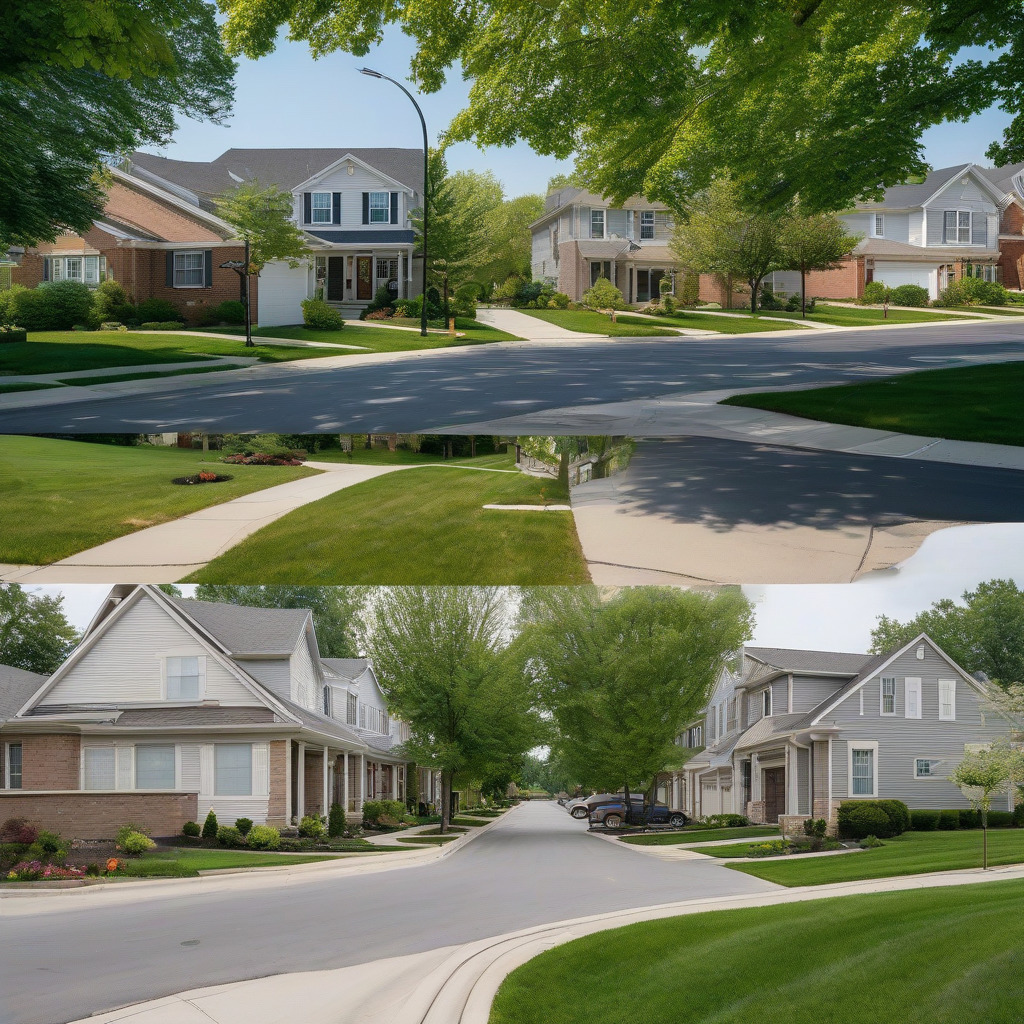
Median prices by bedroom count, HOA costs at specific communities, school enrollment deadlines, and commute data — the comparison no Realtor blog will give you.
If you’re a family targeting fall 2026 enrollment in Hamilton County schools and you haven’t started your home search, you’re already running behind. Indiana districts require proof of residency at closing — a final settlement statement or its equivalent. Not a signed purchase contract. Not an agent email. The actual closing documents. That one administrative fact shapes everything that follows, because it means the summer buying window isn’t a preference. It’s a logistical deadline with real consequences for your child’s school year.
Both Fishers and Carmel sit inside Hamilton County, both show up on national best-places lists, and both school systems substantially outperform state averages. The lifestyle gap between them has narrowed over the past decade as Fishers built out its downtown, its trail system, and an identity as something more than a cheaper Carmel — which, honestly, it hasn’t been for a while now. That doesn’t make them the same choice.
What makes the choice hard isn’t the emotional question of which city feels more appealing. It’s the operational specifics that competing coverage ignores: what a dollar buys by bedroom count right now, what HOA fees look like at specific communities with actual line items, how the schools compare on verifiable outcomes rather than reputation, and what the commute does to your Tuesday morning. Not your best-case Tuesday. Your actual Tuesday. For buyers still weighing these cities at the margins, Fishers vs. Carmel for homebuyers who can’t quite afford both works through the budget scenarios in more granular detail.
Here’s what the numbers say.
What You’re Actually Paying — Home Prices by Bedroom Count
The useful price comparison isn’t “Carmel runs about 20 percent higher.” It’s what your target budget buys in each city at the bedroom count a family actually needs.
Carmel carries a consistent premium over Fishers — historically 15–25 percent depending on neighborhood and product type. Based on MIBOR directional estimates for early 2025, the four-bedroom tier — what most family relocators are shopping — puts Fishers median closed prices roughly in the $490,000–$575,000 range and Carmel median closed prices roughly in the $625,000–$750,000 range. Confirm these figures with a full MIBOR quarterly data pull before you make any decisions.
In Fishers at the lower end of that four-bedroom range, you’re predominantly looking at 2010s–2020s construction. Newer mechanicals, open floor plans, three-car garages are common. These are clean, functional houses built during the suburban expansion years, on suburban lots in corridors like Saxony, along the Allisonville Road spine north of 96th Street, or east toward Geist Reservoir.
At the same dollar in Carmel, the picture is often quite different — and this is where it gets interesting. You’re more likely looking at 1990s–2000s construction: mature trees, established lots, proximity to the Monon Trail or older Clay Township neighborhoods. But also older roofs, older HVAC, and finishes that may reflect 2005. The Carmel premium at equivalent price buys location and neighborhood maturity, not a newer house. Worth knowing before you fall in love with the curb appeal.
Buyers who want both a new build and a Carmel address are shopping toward the top of Carmel’s range and above — areas like West Clay or the Midtown product along Rangeline Road.
New construction remains active in both markets. Fishers has significant development in the Geist corridor, Saxony area along 116th Street east, and the Switch neighborhoods. Carmel’s activity centers on West Clay, The Bridges, and Midtown-adjacent parcels.
The property tax picture: Hamilton County operates under Indiana’s circuit breaker caps, and homestead deductions bring effective residential rates well below what transplants from Illinois or Ohio are used to paying. If you’re moving from the Chicago suburbs, prepare to briefly double-check your math — the numbers seem low. The effective rate on owner-occupied property in Hamilton County generally runs 0.7–1.0 percent of assessed value depending on specific district. Verify with the Hamilton County Assessor at hamiltoncounty.in.gov.
Because both cities are in the same county under the same circuit breaker structure, the property tax difference between Fishers and Carmel is a direct function of purchase price. Lower-priced Fishers homes carry proportionally lower tax bills. That’s not a trivial difference when you’re stress-testing a monthly budget, and it deserves an explicit calculation with your lender before you decide which city you’re targeting.
HOA Fees at Specific Communities
Most real estate editorial either omits HOA costs entirely or drops a single figure with no community name and no line-item disclosure. Neither is useful. Our moving & real estate coverage regularly examines these ownership costs at the community level for exactly this reason.
Below are the specific active communities worth researching in each city, with directional fee ranges drawn from publicly available information. All figures require direct verification with the builder or HOA management company — fee structures change, and declarations vary by phase within the same named community.
Fishers
Saxony sits along the 116th Street east corridor as an established master-planned community with pool, trails, and retail proximity. This community has been built across multiple phases over roughly fifteen years, each with its own governing documents — so what you’ll actually pay depends on which section you’re buying into. The amenity package means fees run meaningfully higher than bare-bones Fishers HOAs. The management company can provide the specific declaration and fee schedule for your targeted section.
Geist corridor communities — Admirals Sound and comparable lake-adjacent products — offer a range of price points, some with lake or boat ramp access. Reserve fund adequacy varies substantially by HOA age, and older Geist-area HOAs have a mixed record on capital reserve contributions. That’s a polite way of saying some of them are behind. Request the reserve fund disclosure before you commit, not just the monthly fee figure.
Active Pulte and Drees communities along the 126th Street/Allisonville corridor offer new-construction product with clubhouse, pool, fitness center, and walking trails. Individual lot irrigation is typically owner-installed and owner-maintained.
DR Horton and Lennar active communities in the SR-37 and Allisonville corridors have lighter amenity packages by design. A lower HOA fee doesn’t automatically mean lower total ownership cost. Understand what the monthly charge actually covers before you sign.
Across Fishers, standard suburban HOAs run roughly $35–$125 per month. Amenity-heavy master-planned communities run $150–$200 per month. Verify directly with each community.
Carmel
Village of West Clay anchors the 131st Street and Towne Road area as Carmel’s signature master-planned community. Fees here reflect what the community maintains: common areas, neighborhood pool and recreation facilities, trail system, architectural review board administration, and private street maintenance in certain sections. The design standards are strictly enforced, which some buyers value and others find constraining. Know which camp you’re in before you sign. West Clay fees typically run $175–$350 per month.
The Bridges, at 126th Street and Springmill Road, is a newer upscale community with amenity center and pool. Because it’s relatively young, reserve fund history is limited. Ask about the current reserve balance relative to projected capital needs before finalizing.
Midtown Carmel townhome product along Rangeline Road carries HOA fees that cover exterior maintenance, common area, and in many cases building insurance. The location is walkable to the Arts and Design District in a way no detached suburban product in either city achieves. If walkability actually matters to your household — not as a vague preference but as a daily behavior — that’s worth pricing in honestly.
Established Carmel master-planned communities like Hamilton Proper have pool, clubhouse, trail maintenance, and landscaping. These are old enough that their reserve fund history is reviewable. Review it.
Across Carmel, standard communities run roughly $60–$175 per month. West Clay and comparable premium communities run $175–$350 per month.
Before you sign any contract, get clear answers to these questions: Is snow removal on your street covered by the HOA or is it owner responsibility? Is your individual lot’s irrigation system under the HOA’s common contract or does it run separately? At communities with attached product, what does exterior maintenance actually include — siding, roof, windows? These are not hostile questions. Any HOA management company should answer them before you write a check. If they can’t, that’s its own answer.
Carmel Clay Schools vs. Hamilton Southeastern — The Measurable Difference
Both districts are genuinely strong. But “genuinely strong” covers meaningful variation, and families relocating from competitive suburban markets should look at what the Indiana Department of Education’s ILEARN proficiency data actually shows rather than defaulting to rankings that don’t explain their methodology.
Carmel Clay Schools consistently posts ILEARN proficiency rates in English/Language Arts and Math that rank among the state’s top five districts. Hamilton Southeastern Schools also posts strong numbers, though with variance by school that reflects both the district’s rapid growth and the demographic shifts that come with it. Pull school-specific ILEARN data from doe.in.gov for the exact elementary that your prospective address feeds. District-level averages can obscure building-level variation, particularly in a high-growth district like HSE.
High school structure matters here, and it’s genuinely different between the two cities. Carmel High School is a single-campus school of approximately 5,000 students — one of the largest in Indiana, consistently ranked among the state’s top five in academic outcomes. Hamilton Southeastern runs two high schools: Hamilton Southeastern High School and Fishers High School, which was created when the district split in 2013. Families buying in newer Fishers subdivisions northeast of SR-37 or along the 106th–116th corridor often feed to Fishers High School; families west or south may feed to HSE High School. The boundary is not intuitive and has been adjusted as enrollment grew. Assuming you know which high school your address feeds without verifying it is a mistake.
Carmel High School has nationally competitive swim, debate, and band programs. If your child competes seriously in any of those, the Carmel premium buys program access. That’s a legitimate reason to pay it.
In Fishers, rapid development has created enrollment complexity where elementary assignments aren’t predictable by subdivision name alone. New phases of existing communities have been assigned to different elementaries than the original sections, and the HSE district manages this through periodic boundary adjustments. A family buying today may be told one elementary and see it revised before their child reaches school age. The district communicates changes. But it’s a real variable that deserves verification at the specific address before purchasing.
Hamilton Southeastern has invested heavily in STEM programming and career and technical education pathways — a meaningful differentiator for families with students who may not be on a traditional four-year college track.
Both districts operate on boundary assignment, not open enrollment. You attend the school your address assigns you to. If a specific elementary or the guarantee of one high school over another matters to your household, verify the address before you buy.
The Enrollment Deadline Nobody Tells You About
Indiana’s kindergarten age cutoff is August 1 under current state code. A child must turn five on or before August 1, 2026 to enroll in kindergarten for the 2026–2027 school year. Verify against current Indiana Code 20-33-2 before relying on this date.
Both Carmel Clay Schools and Hamilton Southeastern require proof of residency at the time of enrollment: a final closing settlement statement. This is the hard stop that surprises more families than you’d expect. Being under contract is not sufficient.
If your closing slips to late July or early August with a child entering kindergarten or changing schools, you can still enroll. You may be starting a week or two late, which is manageable. The more serious risk is at oversubscribed elementary schools in high-growth Fishers corridors — several HSE district elementaries in the northeast Fishers area, particularly those absorbing students from new development along SR-37, have run close to capacity in recent years. Families purchasing in those corridors should call the district enrollment office before they close, not after.
For fall 2026 enrollment, plan to close no later than July 2026, with June as the more comfortable target. August closings are the danger zone for kindergarten entry. Winter closings carry their own risk — seasonal slowdowns in transaction volume can introduce delays, and families going under contract in December or January should build buffer time accordingly.
Contact the district enrollment offices directly: Carmel Clay Schools at (317) 844-9961, and Hamilton Southeastern Schools at hse.k12.in.us. Call. Third-party relocation websites are routinely months behind on policy changes, and you won’t know it until it matters.
The Commute on a Typical Tuesday Morning
“About 30 minutes” is useless. Here’s what the routes actually look like — specific travel times should be verified against INDOT corridor data or a Tuesday 8 a.m. Waze run from your specific origin point.
From Fishers — specifically from 116th Street and Allisonville Road to Monument Circle — the primary corridor is I-69 south to I-465 to downtown connectors, roughly 22–25 miles. The known pinch is I-69 southbound between 96th Street and the I-465 interchange, where merge traffic hits full severity by approximately 7:45 a.m. on most weekdays. Budget meaningfully more than a best-case estimate for an 8 a.m. arrival. SR-37 south from western Fishers to 96th Street provides a legitimate alternative, with bottlenecks at signalized intersections rather than merge points — which many commuters find more predictable than freeway compression.
From Carmel — from 126th Street and US-31 to Monument Circle — US-31 runs roughly 18–20 miles to downtown. Carmel has a genuine geographic advantage here. Grade-separated improvements along US-31 through Carmel eliminated the signal delays of earlier years. But southbound US-31 traffic at the 96th Street/I-465 interchange is a known pinch point at 8 a.m., and Carmel’s distance advantage largely washes out there.
The honest answer: neither city has a materially better commute to downtown Indianapolis for a typical 8 a.m. arrival. What should actually inform the commute decision is your specific worksite. If you work on the north side — Keystone Corridor, 86th Street commercial — Carmel may be meaningfully more convenient. If you work at Fishers-area employers along the 116th Street spine or in the Nickel Plate District corridor, Fishers may eliminate the commute question entirely.
Indianapolis averages about 23 inches of annual snowfall. Both I-69 and US-31 are primary INDOT-maintained arterials, but both can double or triple in travel time during significant winter weather events. Budget 90 minutes on any February morning that starts with white on the ground until you know how the corridor actually behaves. You’ll learn fast.
Running the Side-by-Side Math for Your Situation
Run all four variables together, not in isolation.
Purchase price delta. At the four-bedroom tier, the Carmel range runs substantially higher than Fishers. Convert that gap to a monthly principal-and-interest figure using your actual rate with your lender. A six-figure price difference produces a material monthly payment difference — that’s the real number that belongs in your household budget.
HOA monthly fee difference. West Clay runs $175–$350 per month; a comparable Fishers master-planned community runs $150–$200. That gap — $25 to $150 per month depending on the specific communities — is real money across a twelve-month year.
Property tax difference. Both cities are under the same Hamilton County circuit breaker structure, so the tax differential is a direct function of purchase price. At an effective rate of 0.7–1.0 percent, a higher Carmel purchase price produces a proportionally higher annual tax bill. Run the specific numbers with your lender or a local CPA.
Commute cost. For downtown workers, this largely washes out. If your worksite is on the northwest side of Indianapolis, Carmel may save meaningful daily drive time, but that advantage is unlikely to close the purchase economics gap on its own.
Moving from a Fishers four-bedroom to a comparable Carmel four-bedroom adds meaningful monthly cost across mortgage, HOA, and property taxes. Whether that premium makes sense depends on whether the Carmel-specific value — established neighborhood infrastructure, Carmel Clay school assignment, program access at Carmel High School, or the Monon — genuinely matters for your household. That’s a real question worth sitting with.
For buyers whose budget lands in the Fishers range, Fishers is not the consolation prize. It’s a different value proposition: newer housing stock, a developing downtown anchored by the Nickel Plate Trail district and the Fishers Event Center, and a genuinely strong school district. Readers who want a fuller accounting of what Fishers ownership actually costs beyond the purchase price will find the total cost of living in Fishers beyond the home price broken down in detail. For buyers who need a specific Carmel Clay elementary boundary, or whose high schooler competes in swim, debate, or band at a level where Carmel High School’s infrastructure matters, the premium is real and the arithmetic should reflect it.
What to Ask Before You Make an Offer
Ask the district enrollment office to confirm the exact elementary assignment for the specific address you’re considering — not the subdivision, the address. The HSE district website’s school finder tool is useful, but call to confirm; boundary changes aren’t always immediately reflected online. If you have a child entering at the middle or high school level, confirm that assignment too.
Request the full reserve fund disclosure from any HOA, not just the monthly fee. A reserve fund significantly underfunded relative to projected capital needs is a signal that a special assessment may be on the near-term horizon. Established HOAs in both cities vary widely on reserve fund health.
Ask explicitly whether snow removal on the street your home fronts is covered by the HOA or is owner and city responsibility. In some communities, main roads are HOA-maintained while cul-de-sac stubs are owner-maintained. This is not always in the marketing materials.
If you’re buying new construction, build at least 60 days of buffer between your builder’s estimated close and any enrollment deadline. Builder delays are routine. The enrollment window does not flex to accommodate your punch-list.
If it matters whether your address feeds to Hamilton Southeastern High School or Fishers High School, verify it at the address level before you make an offer. The boundary runs through developed neighborhoods, not along obvious geographic features. You can’t eyeball it on a map.
In Carmel’s 1990s–2000s construction stock at the four-bedroom tier, ask for documentation on roof age and HVAC service history before finalizing your inspection contingency. An aging roof and HVAC on a house at Carmel price levels represents capital expenditure within the first few years of ownership that changes the effective purchase price materially. A house that looks like a deal at $650,000 looks different when you’re pricing a new roof eighteen months in.
The family that closes before July 31 and files enrollment paperwork will have a child in school on the first day. The family that finds the right house but closes in August is having a harder conversation with the district enrollment office — and possibly a different school year than they planned. The numbers in this piece are meant to get you to the right city. The deadline is what gets your kid into class.
CityDesk Indianapolis covers local business, development, and real estate with independent reporting. Home price ranges cited are directional estimates pending MIBOR quarterly closed-sale verification and should be confirmed before any purchasing decision. HOA fee ranges require direct verification with the builder or HOA management company. School performance data should be verified at doe.in.gov. Property tax rates should be verified with the Hamilton County Assessor at hamiltoncounty.in.gov. School district enrollment policies change annually — verify directly with Carmel Clay Schools at (317) 844-9961 and Hamilton Southeastern Schools at hse.k12.in.us.