What Buying a Home in Nora Actually Gets You in 2026
A ground-level look at north Indianapolis's most underrated neighborhood, where a shorter commute and lower prices come with real tradeoffs worth understanding before you sign.

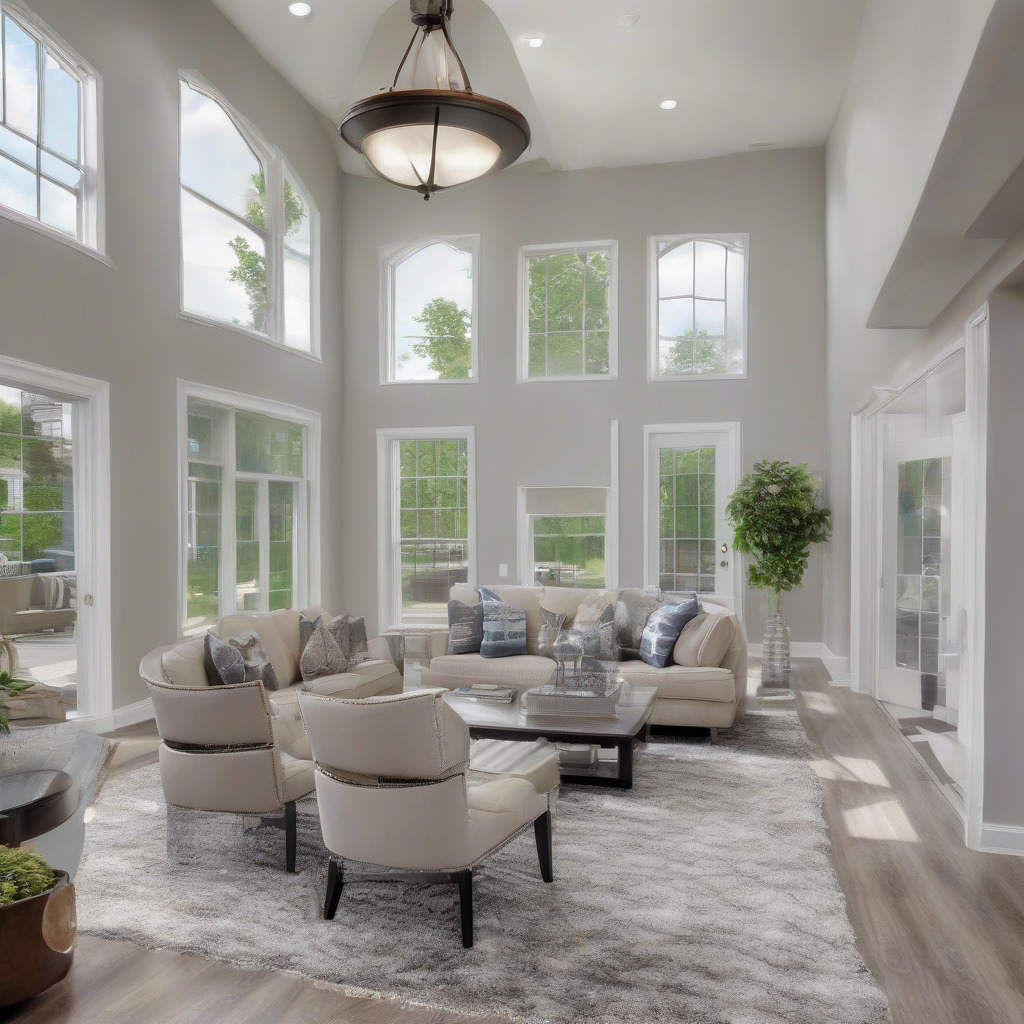
A ground-level look at north Indianapolis’s most underrated neighborhood, where a shorter commute and lower prices come with real tradeoffs worth understanding before you sign.
For buyers who’ve spent three weekends touring Carmel and Fishers and come home with sticker shock, a realization tends to arrive somewhere around the fourth open house: the Hamilton County premium is real and it’s not going away. At that point, a lot of buyers start looking just south of 96th Street and asking whether Nora makes sense.
The honest answer depends on specifics. Nora boosters gloss over the tradeoffs. Hamilton County partisans return the favor. This guide tries to run the math honestly — which means some of what follows will confirm what you’ve heard, and some of it will complicate it.
What “Nora” Actually Means on a Map
This is where buyers make their first mistake. “Nora” is a colloquial designation with no legal boundary. Not a municipality, not a platted subdivision, not a zoning district. The name refers to the neighborhood centered on the intersection of Westfield Boulevard and College Avenue in north Indianapolis, generally understood to run from 82nd Street south to 96th Street north.
The zip codes most commonly associated with Nora listings are 46240 and 46260, with some listings on the eastern edge carrying 46280. That distinction matters more than most buyers realize. Your school assignment, property tax rate, proximity to the Hamilton County line, and flood zone risk all vary by specific address — not by whatever neighborhood name your agent used in the listing description.
Before you fall in love with a house in “Nora,” pull the Washington Township school district boundary map and confirm your address. Do the same with the Marion County Assessor’s parcel viewer. The neighborhood name on the listing is marketing. The parcel number is reality.
What the Market Is Actually Doing Right Now
The Nora market in early 2026 is tighter than it looks from the outside. MIBOR data for 46240 and 46260 has shown median sale prices running in the $285,000 to $330,000 range — well below comparable Hamilton County markets — but buyers should pull current MIBOR monthly reports rather than relying on any static figure. The directional picture is constrained inventory and limited discounting on anything priced right.
The housing stock explains most of it. Nora is predominantly 1950s-through-1980s ranch and split-level construction: brick ranches on established lots, finished basements, two-car garages, mature trees that new-construction suburbs literally cannot replicate. There’s no meaningful pipeline of newly built homes here. What you see is what there is.
The renovation-premium tier — fully updated kitchens, primary suite additions, new mechanicals — now runs $400,000 to $500,000, and those homes move fastest. Buyers targeting well-priced updated homes under $350,000 should be pre-approved and ready to move before late February. The spring surge historically hits March through May, and multiple-offer situations on anything competitively priced are common enough that winter is a real window. But only for buyers who’ve already decided they like the neighborhood. If you’re still on the fence, you’ll lose the house.
The $425,000 Question: Nora vs. Carmel vs. Fishers
In Nora, price per square foot in 46240 has been running roughly $155 to $195 for move-in-ready inventory — verify against current MIBOR data before making any offer. In Carmel, comparable inventory has been running closer to $200 to $240. Fishers falls roughly in between. For a side-by-side breakdown of how those two Hamilton County markets stack up for buyers on a fixed budget, our coverage of Fishers vs. Carmel for homebuyers who can’t quite afford both runs the comparison in detail.
What the gap means in practice: the same money in Nora buys older construction on a larger lot with genuine mature landscaping. In Carmel or Fishers, you’re more likely to land in a planned subdivision with newer but smaller-footprint homes and a yard that was planted three years ago. Both have their appeal. I’d be skeptical of anyone who tells you one is obviously better.
Property taxes add a layer of complexity that most comparative analyses get wrong. Marion County carries a higher mill rate than Hamilton County, but Hamilton County homes at comparable price points often carry higher assessed values because of newer construction and faster appreciation. The net tax bill between a specific Nora parcel and a specific Carmel parcel is not predictable from mill rates alone.
Run the actual parcel numbers through both county assessors before drawing conclusions. The assessor parcel search tools for Marion County and Hamilton County are publicly available and worth 20 minutes before you make an offer. A buyer paying $310,000 in 46240 should not assume their tax bill will be higher than on a comparable Carmel home at $390,000. The assessed values and applicable exemptions will tell you which way it actually goes.
Washington Township Schools: An Honest Assessment
This is where a lot of Nora conversations break down. Buyers either dismiss Washington Township entirely based on a reputational hangover from decades ago, or overcorrect and pretend the gap with Hamilton County isn’t real. Neither is useful.
The schools serving Nora addresses within Washington Township Metropolitan School District are North Central High School, Eastwood and Westlane middle schools, and Nora and Spring Mill elementaries. Accountability grades shift annually — check the Indiana Department of Education’s public school accountability dashboard directly rather than taking anyone’s word for it.
What can be said plainly: North Central is a large school with genuine program depth. A real IB program. Strong extracurriculars. A student population that’s considerably more economically and racially diverse than Carmel High School or Hamilton Southeastern. The academic outcomes gap between North Central and those Hamilton County schools is real and documented in state data. It’s also been narrowing. Carmel High School consistently ranks among the top public high schools in Indiana on standardized measures, and buyers for whom that ranking is a hard requirement should acknowledge it and keep driving north. That’s not a knock on Washington Township. It’s a recognition that the schools serve different populations with different resource bases, and outcomes reflect that.
Two things worth knowing. First, buyers near 96th Street should verify their specific address against district boundary maps before assuming their school assignment. The boundary between Washington Township and Hamilton County districts doesn’t follow a clean line. A home a block north of where a buyer thought the district line sat may carry a completely different school assignment. Check directly with Washington Township’s enrollment office.
Second, Washington Township’s access to IPS magnet programs is something Hamilton County residents can’t use. For families interested in specialized programming, that matters in ways that don’t appear in school ratings.
The Commute from Nora to Downtown
For a buyer who works downtown, the commute math from Nora is one of the clearest advantages the neighborhood has. Most real estate coverage undersells it because it doesn’t fit on a feature sheet. Nobody types “saves you 15 minutes each way” into the MLS.
From Nora to Monument Circle at 7:45 a.m. on a Tuesday: Meridian Street and US-31 southbound runs about 25 to 30 minutes in typical conditions and is relatively predictable except when something goes wrong on I-465. Keystone to I-465 west adds time in most conditions but can beat Meridian on days when surface traffic backs up through Broad Ripple. Michigan Road via 86th Street is the least consistent of the three — faster in light traffic, more variable when the I-65 interchange is congested. Run peak-hour tests on your specific origin address before relying on anyone’s averages, including these.
The 25-to-30-minute range from Nora compares directly to 40-plus minutes from most Carmel residential neighborhoods under comparable conditions. For a buyer commuting downtown several days a week, that difference is a genuine daily quality-of-life advantage. It compounds. It doesn’t appear anywhere in the listing.
On transit: the IndyGo Red Line BRT doesn’t reach the Nora area in a way that’s practical for most residential commutes. Verify the current northern terminus and service frequency at IndyGo.net. The neighborhood is car-dependent for transit purposes, full stop.
The Monon Trail, though, deserves more credit than it usually gets. It runs directly through the Nora corridor, connects north into Carmel, and heads south through Broad Ripple and Midtown and into downtown Indianapolis. For residents who bike commute, run the trail, or use it for weekend access to Broad Ripple’s bar and restaurant corridor, the Monon shapes daily life in ways that are invisible in a listing and obvious within weeks of moving in. It’s real infrastructure. It matters.
The College Avenue Corridor: What You Actually See When You Drive It
Retail corridors are a reliable proxy for neighborhood trajectory, and the College Avenue and Nora Plaza corridor in 2026 is a mixed picture.
The anchors are still there, though buyers should confirm current operating status of specific businesses before relying on anything written here — retail changes fast. Shallo’s Antique Restaurant on College Avenue has been operating long enough to have become inseparable from the neighborhood’s identity. Not a curiosity. A place people actually go. Sangiovese Ristorante is a neighborhood Italian spot that long-term residents cite as a genuine regular. The Kroger at Nora Plaza functions as the primary grocery anchor for a large chunk of the neighborhood, and its continued operation matters more to daily life than any boutique opening or closing.
The strip itself is in a recognizable phase of suburban retail repositioning — some vacancies, some turnover, some newer tenants in spaces that have cycled through multiple concepts. This isn’t unique to Nora; it’s happening to suburban retail corridors across the metro. Grocery-anchored strips outlast the mid-tier tenants that once filled their inline spaces. The current tenant picture looks like reconfiguration, not decline. Whether that reconfiguration produces the kind of food-and-service corridor that tends to support stable residential values — the evidence from the ground suggests yes, but it’s a directional read, not a guarantee.
Walkability needs to be reported honestly. Most Nora residential addresses score in the 40-to-60 range on Walk Score — technically “somewhat walkable” but practically car-dependent for daily errands. The neighborhood was built for the postwar car-owning household, and the street grid and lot setbacks reflect that. Buyers coming from more walkable urban neighborhoods should calibrate expectations. You’ll still need your car for most things.
Who Is Actually Buying in Nora Right Now
Three buyer types show up consistently in the current market.
The first is the relocating professional cross-shopping Hamilton County who runs the commute math and price differential and decides Nora works for their situation. Typically someone who works downtown two to four days a week, has no school-age children yet or has a child young enough that the school decision is still a few years out. Values 20 fewer minutes in the car over a suburban school ranking. This buyer tends to stay once they move in.
The second is the buyer who looks at Carmel and Fishers planned subdivisions and finds them aesthetically unappealing compared to a 1960s brick ranch with original hardwood floors, a covered back patio, and mature trees. That mid-century ranch inventory is genuinely not available anywhere else in the metro at these prices. For this buyer — often someone who would renovate anyway — the vintage stock is the whole point.
The third buyer pool has grown noticeably in the past 18 months: buyers making a conscious commute-versus-school tradeoff with elementary-age children already in the picture. They’ve assessed Washington Township honestly, visited North Central, and decided the commute differential and purchase price difference matter more to their household than the school rating gap. This buyer isn’t naive about the comparison. They’ve done the research. And frankly, it shows in how fast the better-priced homes are moving.
What to Watch Out For Before You Offer
The inspection realities of Nora’s housing stock are predictable once you know what you’re looking at.
Basement drainage is the first priority on any 1960s or 1970s ranch here. Sump pump dependency is the norm in parts of 46240 and 46260. A sump pump running continuously for 20 years without replacement is a very different situation from one recently updated. Ask about sump pump age. Ask whether there’s a battery backup. Look for evidence of prior water intrusion — efflorescence, staining, the smell of past moisture. Budget for a full basement waterproofing assessment if there’s any ambiguity. Don’t skip that conversation.
Indiana’s Residential Real Estate Disclosure form is mandatory for most transactions and requires sellers to disclose known material defects — not full property condition. Out-of-state buyers accustomed to more expansive disclosure requirements should understand the distinction. Your inspection is your protection. For a breakdown of what a professional inspection actually covers — and costs — in this market, see our coverage of what a home inspection costs in Indianapolis and what you’re actually paying for.
On infill and teardown activity: Nora has seen teardown-and-rebuild activity over the past decade, particularly on larger lots where a dated ranch can be replaced with something significantly larger. If a listing backs to or neighbors a vacant lot, or sits next to a visibly deteriorated structure, have your agent research the ownership and any pending permits. Living next to an active construction site for your first two years of ownership is something most buyers underestimate until it happens.
HOA prevalence is lower in Nora than in comparable Hamilton County neighborhoods. Many single-family homes in 46240 and 46260 carry no HOA at all — which is either a feature or a concern depending on your tolerance for what your neighbors do with their property. Some planned communities within the broader Nora geography do carry associations with fees and covenants. Verify by specific address before you make an offer, not after.
Who Nora Is and Isn’t Right For
If Carmel Clay Schools or Hamilton Southeastern is a non-negotiable, Nora isn’t the right answer. Keep driving north. That’s a legitimate priority, not a failure of imagination.
If new construction with a builder warranty, a subdivision pool, and a neighborhood where every roof was installed in the last decade is what you need, Nora can’t offer that either. The housing stock is older, character-rich, and requires more buyer attention and ongoing maintenance than a five-year-old home in a master-planned community. That’s not spin. That’s what it is.
What Nora does offer: a shorter commute to downtown Indianapolis than any Hamilton County address can match. Mid-century ranches and split-levels on real lots with mature landscaping that new construction cannot replicate. A Marion County tax situation that — when calculated against actual assessed values on the specific parcels you’re comparing — is not as disadvantaged relative to Hamilton County as the mill rate comparison alone suggests. Neighborhood retail and trail infrastructure that supports actual daily use. For more on those broader north-side dynamics, this piece is part of our Indianapolis moving and real estate coverage.
The buyer who comes out ahead in Nora is the one who’s run the real numbers — commute time, tax bill on specific parcels, school context for their children’s actual ages and needs, and the cost differential between a renovated Nora ranch and a comparable Hamilton County home. That buyer makes an affirmative decision rather than a default one.
Nora has been underpriced relative to its proximity to downtown, its housing stock, and its infrastructure assets for reasons that are partly historical and partly reputational. Whether that gap closes or stays where it is over the next five years is a legitimate question. What’s not legitimate is whether the neighborhood deserves serious consideration from buyers who’ve been trained to look north of 96th Street by default.
It does.
CityDesk Indianapolis covers local business and real estate. Home price ranges cited are directional estimates based on available market data and must be verified against current MIBOR reporting before reliance. Tax comparisons are structural observations; buyers should verify current assessed values and exemptions directly with the Marion County Assessor and Hamilton County Auditor on specific parcels under consideration. School accountability grades should be confirmed with the Indiana Department of Education’s public dashboard and with Washington Township Schools directly.