What Westfield Indiana New Construction Homes Are Actually Delivering in 2026
Westfield is growing fast enough that builders can afford to be patient. With roughly 50,000 to 55,000 residents and a development pipeline showing no signs of cooling, this Hamilton County city ha…

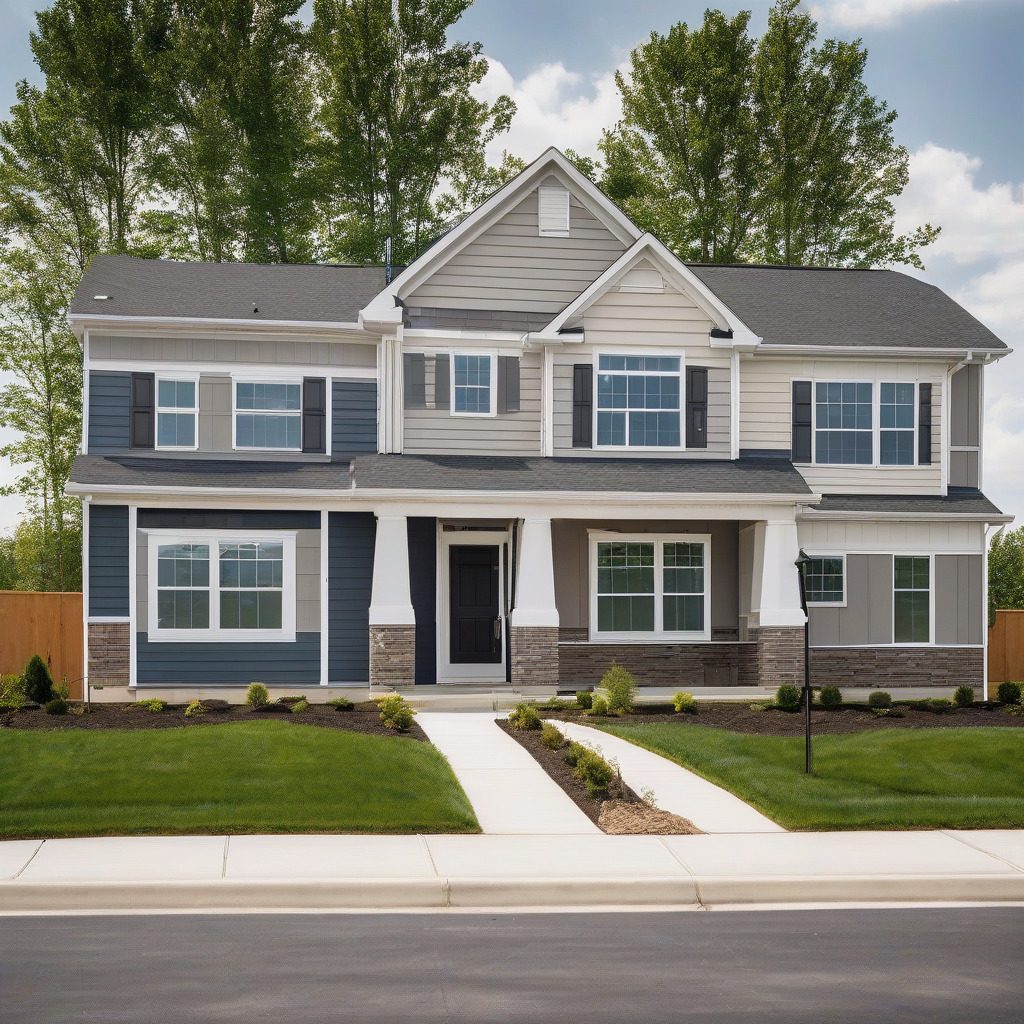
Westfield is growing fast enough that builders can afford to be patient. With roughly 50,000 to 55,000 residents and a development pipeline showing no signs of cooling, this Hamilton County city has become one of the most active new construction markets in the Indianapolis metro. That’s good news if you want a brand-new home with a warranty and a fresh design center palette. The catch: the brochure price is almost never the price you’ll pay at closing. The gap is almost always bigger than buyers expect, and builders are not in a hurry to explain it.
This is written for buyers past the “should I consider Westfield?” stage who are trying to make a financially informed decision in 2026. Which builders are actually delivering? What do their homes cost when you account for everything? How does new construction compare to resale in the same price band? And what contract language should you read before you’re emotionally attached to a floor plan?
Why Westfield Keeps Growing — and Why That Gives Builders Pricing Power
Three factors have sustained Westfield’s growth in ways that separate it from other Hamilton County suburbs. The Grand Park Sports Campus — 400 acres of youth athletics fields drawing tournament traffic from across the Midwest — anchored commercial development along the US-31 corridor. Hotels, restaurants, and retail followed, making the area more self-contained than it was a decade ago. The US-31 reconstruction, recently completed or substantially underway depending on the segment, shortened commute times to Carmel and downtown Indianapolis enough to expand the practical buyer pool considerably.
The most durable driver, though, is Westfield Washington Schools. In Hamilton County — where Carmel Clay, Hamilton Southeastern, and Noblesville all carry strong reputations — WWSC has become the district that draws buyers who want a smaller-community feel without sacrificing academic performance. That perception, whether or not it survives rigorous comparison to its neighbors, creates real pricing power for builders. When buyers are selecting a school district as much as a house, they have less flexibility to walk away from a new build over a $20,000 disagreement on upgrades.
Builders understand this dynamic. So should you.
Who Is Building What and Where in 2026
The active builder market in Westfield in 2026 includes a handful of national and regional names occupying distinct price tiers. Community names and phase status change faster than any guide can track — verify against builder websites and Hamilton County plat records before visiting a model home.
PulteGroup operates through two brands here. Pulte targets move-up and upper-move-up buyers. Centex handles the entry-level end of the same parent company’s range. Pulte has maintained a presence in Harmony, a large master-planned community spanning multiple phases — but current lot availability in any specific phase requires a direct call to the sales office. Don’t assume.
Fischer Homes, the Cincinnati-based regional builder that has pushed aggressively through the Indianapolis metro, is active in several Westfield subdivisions in the entry-to-move-up range. Their initial pricing can look more transparent than competitors’. It isn’t. The gap between base price and finished price is no smaller — it just shows up later in the process.
M/I Homes has a presence in Hamilton County broadly and has appeared in Westfield-area communities, typically in the move-up range. Drees Homes, the Kentucky-based builder known for a semi-custom approach and longer timelines, operates at the upper end of move-up and into the lower luxury range. If you want more control over finishes and can tolerate a slower build, Drees is worth a look — just price the timeline cost honestly if you’re carrying a rate lock.
Chatham Hills is its own category. The golf course community features custom and semi-custom builders working at price points starting around $700,000 and running well past $1.5 million on estate lots. The HOA rules, architectural controls, and fee structures are entirely different from production builder communities. It requires separate research and a different frame of reference entirely.
Additional communities are in the approval pipeline or early phases. Before assuming inventory is available anywhere, check Hamilton County’s online GIS portal and plat records — recorded plats, unbuilt lots, and recent permit activity are all there. Builder websites sometimes lag behind actual availability. The county records don’t.
The Real Price of a Westfield New Construction Home
In Westfield’s 2026 market, expect the finished price to run 20 to 30 percent above the advertised base. Sometimes more. Here is where that money goes.
The base price excludes the lot. Lot premiums vary by site but commonly run $5,000 to $20,000 for preferred locations. Structural options — finished basements, ceiling height upgrades, room additions, third garages — can add $30,000 to $80,000 depending on what you select. Design center finish upgrades add another $20,000 to $60,000 on top of that. None of this is hidden exactly, but it isn’t foregrounded either.
The structural-versus-finish distinction matters for your financing. Options selected at the contract stage are financed into the mortgage. Options added after closing are paid from cash. For buyers working near the edge of their qualification ceiling, that difference can determine whether a home is actually affordable. A buyer who selects a finished basement at contract and budgets for it in the mortgage is in a different financial position than one who skips it and tries to add it post-close. The post-close version costs more and you’re living through the construction.
Go into the design center with a clear-eyed budget for structural versus finish selections before you sit down with a design consultant. Once you’re in the room looking at cabinet samples, the math gets harder to do clearly.
New Construction Versus Resale in the Same Price Band
If you have $450,000 to $550,000 to spend in Westfield in 2026, you have a real choice between new construction and resale. Buyers weighing the same tradeoffs across the broader metro will find useful context in our moving & real estate coverage. Here’s what actually differentiates them.
A new construction home in that range comes with modern energy standards — better insulation, low-E windows, high-efficiency HVAC. You customize finishes within the design center’s offerings. The major systems are new, and the builder warranty covers defects.
What you’re giving up is lot size. Buyers consistently underestimate this until they’re standing in their new backyard. Recent Westfield plats deliver lots commonly in the 6,000 to 9,000 square foot range. Resale homes in established Westfield neighborhoods — anything platted in the 1990s and early 2000s — routinely sit on 10,000 to 15,000 square feet. That difference shows up as narrower side yards, rear fences closer to the house, and neighbors whose windows face your windows. It’s not abstract. You’ll notice it every day. Landscaping is another reality check: builder-minimum plantings on a bare lot take years to look like anything.
The counterargument for new construction is deferred maintenance — an aging HVAC, a roof with unclear remaining life, windows that don’t meet current energy code. Those are real costs that buyers of older homes absorb. But they shouldn’t obscure the lot-size math.
My read: buyers who prioritize yard space and a neighborhood that already feels like a neighborhood will often find resale more competitive than builder marketing suggests. Buyers who want modern mechanicals, don’t want to inherit someone else’s décor choices, and can price the finished product accurately have genuine reasons to go new. The key phrase is “price the finished product accurately.” Most buyers don’t.
Lot Sizes, Pond Views, and What You’re Actually Paying For
The shrinking lot trend in Westfield’s recent plats isn’t incidental — it’s math. When Pulte or Fischer acquires a land parcel, more lots per acre improves the economics of the development. Side yard setbacks in some recent communities are measured in feet, not the generous swaths of grass the word “suburban” might suggest. Density surprises buyers who picture something more expansive.
Builders address this through lot premiums. Corner lots typically carry premiums in the 3 to 8 percent range. Cul-de-sac lots, which have wider rear yards due to the pie-slice geometry, command similar or higher premiums. “Pond view” lots are frequently the highest-premium category, adding $5,000 to $20,000 to the base lot price.
Before you pay that premium: nearly every pond in a new Indiana subdivision is an engineered stormwater detention or retention basin, required by Indiana drainage regulations to manage runoff from the impervious surfaces the development itself created. These are not natural water features. Water levels fluctuate with rainfall. Regulatory buffers often prevent direct use. Some develop algae problems in summer. A few are genuinely attractive amenity features. Most are utilitarian basins with a marketing name.
Ask the builder directly whether the water feature is a regulated detention basin. Request the drainage plan from the development permit filing — it’s available through Hamilton County’s online permit records. This is not an adversarial request. A builder who stonewalls it is telling you something.
Hamilton County clay soil is a separate lot-selection issue that most buyers encounter only after closing. Heavy clay creates drainage challenges on lower-elevation lots. In a wet spring — which Indiana delivers with some regularity — poorly graded lots hold standing water against foundation walls. Walk the lot during or after rain if you can. Ask to see the grading and drainage plan for your specific lot before signing.
Upgrades Worth Paying For and Design Center Markups to Skip
Structural options selected at contract are hard or impossible to add later and are financed into the mortgage. Design center finish selections are easy to replicate after closing at competitive market prices. That’s the framework.
Worth selecting at contract: A finished basement. Adding one post-close costs substantially more than selecting it upfront and means living through a construction project after you’ve moved in. Third garage bay — same logic; structural changes post-close are prohibitively expensive. Ceiling height upgrades on the main floor can’t be added after framing. Enhanced insulation packages genuinely reduce long-term energy costs. Indiana’s climate — hot humid summers, cold winters — makes HVAC efficiency meaningful.
Where builder margins are highest: Appliance packages. Builder bundles in this market run 40 to 60 percent above what comparable equipment costs independently. Decline the package and buy independently. Luxury vinyl plank flooring is widely available through independent flooring contractors at competitive prices after close — no reason to pay the design center markup. Exterior stone accents, the partial stone facades standard on production builder homes, are consistently high-margin items. Get an independent masonry quote before selecting.
Smart home bundles — cameras, video doorbells, smart thermostats — are easy to install post-close, often in an afternoon. Decline them. Landscape packages offered at closing rarely represent good value; a local landscaping company will give you more plant variety and better installation for less money.
Go through the design center with a written list of what you’re selecting structurally and what you’re deferring. Builders will push back. That’s expected. Hold the line.
HOA Fees, Developer Control, and the Special Assessment Risk
Every new construction community in Westfield has an HOA. Fee structures vary significantly by tier. Standard communities with a pool, clubhouse, and walking trails run roughly $400 to $900 per year. Larger multi-phase developments with layered master and sub-HOA structures run $600 to $1,200 per year in combined fees. Chatham Hills, with golf course and elevated amenity expectations, carries fees in the $1,200 to $2,400-plus range — and buyers there should request a full schedule including any golf membership or club assessments that run separately.
What those fees cover varies. Most include common area maintenance and community pool operation. What they frequently don’t cover: individual lot drainage maintenance, private street repair, and reserves for future infrastructure replacement.
Under Indiana Code 32-25.5, developers who establish HOAs typically retain control of the association during the active sales period. Developer control allows the builder to set initial HOA fee levels, which are routinely set low during the sales phase to make the community look more affordable. When control transfers to homeowners — based on percentage of lots sold or a fixed timeline — the incoming board may discover fees are inadequate to fund operating costs and that reserves are underfunded. This isn’t specific to Westfield; it’s how Indiana law permits developer control to operate. But it catches buyers off guard regularly enough to be worth understanding before you close.
Special assessments are the mechanism for making up reserve shortfalls. Before closing on any new construction home in Westfield, request the current HOA budget, the reserve study if one exists, and the CC&R document governing assessment authority. These are available through the builder during due diligence and are recorded with Hamilton County. Buyers who want a broader frame on property rights in new communities will also find Indiana’s homestead exemption rules in Marion County worth understanding, even if Westfield sits in Hamilton County.
What the Westfield Washington Schools Data Actually Shows
WWSC earns strong Indiana Department of Education performance grades, and it has maintained that reputation through significant enrollment growth. But buyers in 2026 should work from current data rather than the general reputation — which has taken on a life of its own in real estate marketing materials and no longer requires much factual grounding to get repeated.
The more immediate issue is enrollment growth versus capacity at the elementary level. The district has managed population-driven student growth through boundary adjustments, modular additions, and in some cases attendance reassignments. If you’re buying in a new subdivision, verify which elementary school that specific address feeds and whether that school is operating near capacity. The WWSC district office will answer this question directly. Ask before you’re under contract.
Westfield’s growth has also pushed development toward Hamilton Southeastern and Carmel Clay boundaries. Several new subdivision sites near the city’s northwestern and southwestern edges sit close enough to adjacent district lines that a buyer who assumes WWSC enrollment without checking is taking a real risk. The district boundary maps on the WWSC website are the authoritative reference. Cross-check the legal address of a specific lot against those maps — not the subdivision’s marketing materials, which will not flag this for you.
Hamilton County’s GIS portal allows parcel-level address lookup and can be used alongside the district boundary map to confirm placement. This takes 15 minutes. It can save considerable frustration if the home you’re buying turns out to feed a different district.
What to Verify Before You Sign a Builder Contract
Builder purchase agreements are builder-drafted documents. They are not neutral instruments. The clauses that cost buyers money are usually the ones that receive the least attention during the excitement of selecting a floor plan.
Timeline and delay provisions. Indiana’s construction environment makes timeline slippage routine — cold winters, wet springs, and clay soil that delays ground-breaking after wet weather are not unusual. Builder contracts include broad force majeure and delay provisions that protect the builder from any obligation to close by a specific date. If you have a rate lock expiring, a lease end date, or a dependent sale, you need to understand exactly how much schedule flexibility the builder retains and what your remedies are if the close date shifts by 60 or 90 days. Read that language before you’re emotionally committed to a floor plan, not after.
Option and upgrade locks. Know at what stage selections are locked and what governs changes after that point. Some builders allow change orders with fees. Others treat the selection sheet as binding from a specific date — which may arrive earlier than buyers expect.
Buyer representation. The builder’s on-site sales rep works for the builder. That’s not a criticism; it’s a job description. An independent buyer’s agent who represents only you — and has no financial incentive to steer you toward specific upgrades or communities — is worth the arrangement. In Indiana, builders typically compensate the buyer’s agent from the transaction. Verify this is the case before assuming the cost is zero.
County records. Hamilton County Auditor and Recorder filings are a pre-closing research resource that most buyers underuse. The Recorder’s office has the recorded plat, CC&Rs, and easements affecting a specific parcel. The Auditor’s office has assessed value data that can flag discrepancies between builder claims and county records. The GIS portal allows parcel-level lookup and map visualization.
Independent inspection. Not the builder’s own quality-control walkthrough. A separate inspector who works for you. No exceptions. New construction has defects like any construction project. Independent inspectors catch things builder walkthroughs miss — and builder walkthroughs are not designed to catch things builder walkthroughs miss.
Making the Westfield New Construction Decision in 2026
Is buying new construction in Westfield a good deal right now? It can be — if you go in with accurate financial expectations and do the verification work before you sign anything.
The demand fundamentals are real. The schools deliver strong outcomes. The US-31 access is genuinely better than it was five years ago. Grand Park has made Westfield something other than a bedroom community in ways that are hard to argue with. Pulte and Fischer are building homes that meet current energy standards. The ability to control finishes matters to buyers for whom a home’s interior is a real quality-of-life consideration.
But the gap between the brochure price and the finished price is large — plan for 20 to 30 percent above base. Lot sizes in recent plats are meaningfully smaller than what resale delivers in the same price band. HOA fees are structured to favor the developer during the sales phase and may rise after control transfers. Pond-view premiums often buy you a stormwater basin with a marketing name. The school district boundary assumption, if wrong, is expensive to discover after closing.
None of this is disqualifying. It’s just the information buyers need before they walk into a model home and start falling in love with cabinet hardware. The tools to do this research — Hamilton County’s GIS portal, WWSC’s boundary maps, the Recorder’s CC&R filings, MIBOR market data — are all publicly available before you sign anything. The buyers who use them are in a different position than the buyers who don’t.