Where Indianapolis Goes for Burmese and Southeast Asian Food
Along East Washington Street and into Lawrence Township, a largely self-contained dining corridor has developed around the city's Burmese and Southeast Asian refugee community. National platforms h…

Along East Washington Street and into Lawrence Township, a largely self-contained dining corridor has developed around the city’s Burmese and Southeast Asian refugee community. National platforms have ignored it. We didn’t.
Editorial note: A source brief for this piece contained a geographic error identifying Indianapolis as being in Minnesota. This article is reported for and about Indianapolis, Indiana. All operators, addresses, and hours referenced below should be confirmed by phone or site visit before publication, as noted throughout. Details marked with [confirm] require verification before the piece goes live.
Why This Corridor Exists—and Why It Took So Long to Get Coverage
For decades, Indianapolis has been one of the country’s most active refugee resettlement cities. The affordable housing stock on the east side, combined with an established network of resettlement agencies, made it the natural hub. Exodus Refugee Immigration and Catholic Charities Indianapolis both run resettlement operations here. The Burmese American Community Institute, known locally as BACI, operates on the east side and is one of the most active community organizations in the city.
The Burmese community that took shape here isn’t ethnically monolithic—and that matters more than most food coverage bothers to acknowledge. The Indianapolis diaspora includes several distinct communities: Chin, Karen, Bamar, and Kachin groups all have presence here. Many arrived not directly from Myanmar but after extended stays in Thai refugee camps before resettlement. That experience shaped both community identity and, eventually, menus.
The restaurants that exist on East Washington Street and in Lawrence Township are not a food trend. A food writer on assignment didn’t discover them. An algorithm didn’t flag them. They exist because the families who live on this corridor needed to eat food that reflected who they are. Often a woman who had been feeding a community informally would open a kitchen. Here’s what I keep coming back to: the fact that mainstream Indianapolis food coverage has largely not made the drive east along US-40 says more about where food writers live and where restaurant publicists concentrate their clients than it does about the quality of what’s being cooked out here. This piece is an attempt to correct that.
Mapping the Corridor—Where to Actually Go
East Washington Street, the old National Road designation of US-40, runs east out of downtown Indianapolis through Irvington, a neighborhood with its own historic commercial strip. As it passes through Shadeland, the Mitthoeffer Road intersection, and on toward the Pendleton Pike area and Lawrence Township, the built environment transitions to lower-density commercial nodes.
Out here it’s strip malls, converted fast-food buildings, and freestanding structures that have housed multiple tenants over the years. Signage is often hand-lettered or uses typefaces that don’t render well on Google Street View. Parking is not an issue; most strip-mall locations have surface lots. IndyGo Route 8 runs along East Washington Street and provides transit access for the corridor, though service frequency varies. These restaurants don’t accumulate Yelp reviews the way a downtown spot does. They require you to actually drive out and look.
Asian grocery stores with prepared-food counters are a significant and frequently overlooked part of what this corridor offers. [Reporter note: Confirm which specific grocery stores operate food counters, and on what days and hours, before publishing this section.] Several grocers maintain made-to-order food operations that serve the community for lunch and sometimes dinner. There may be no seating, no printed menu, and no English-language signage. Walk through the door and ask. That’s the barrier to entry.
[Reporter note: Specific addresses for all confirmed operating restaurants, grocery stores with food counters, and other food operators must be verified by site visit or direct phone confirmation before publication. Use BACI as a community directory starting point, and cross-reference with Marion County business license records.]
The Restaurants—Who’s Cooking and What They’re Running
The anchors of Indianapolis’s Burmese restaurant scene, as of the most recent available information, include Rangoon Restaurant and Mandalay Restaurant, both on or near the East Washington corridor. [Confirm current operating status, addresses, hours, and ownership for both before publication.] These are small restaurants. Expect a handful of tables, laminated menus, and food prepared to order rather than held in a steam table. The pace is unhurried. Service is typically family-run, meaning you may be served by the owner’s teenage child or by the cook who stepped out of the kitchen. That’s not a complaint. That’s the whole point.
Hours on this corridor differ from downtown restaurant norms in ways that will catch you off guard if you don’t call ahead. Many operators run lunch and early dinner with mid-afternoon gaps. Monday closures are standard. Weekend availability of certain dishes—particularly mohinga—is common because the broth requires prep work the kitchen only commits to when community demand justifies it. Cash-preferred payment is the norm, though this is slowly changing. Bring twenties. [Reporter note: Confirm specific hours by calling each restaurant the week before publication. Google Maps hours for this segment are notoriously unreliable. When you call, also confirm: mohinga availability (weekends only or daily?), payment preference, and whether they take reservations for larger groups.]
Beyond the established names, watch for newer operators. Turnover is active on this corridor, and a restaurant that opened in the past 12 months may not appear in any existing coverage. The most reliable way to get a current picture is to check in with BACI. Their staff and volunteers know this community in a way no Yelp search replicates—or ever will.
The Owners—Brief Profiles of Who’s Behind the Stoves
Most owners of these restaurants didn’t train in kitchens. They learned to cook from mothers and grandmothers in villages in Chin State, in Karen State, in the Mandalay region, in camps along the Thai-Myanmar border. Many arrived in Indianapolis with limited English and took whatever work was available. Eventually they decided that feeding people was what they were meant to do.
[Reporter note: These profiles require direct interviews. Do not publish without confirming specifics. Key questions for each owner: What part of Myanmar are you from, and what ethnic community? How did you arrive in Indianapolis—directly or through a third country? What resettlement agency worked with you? Why did you open a restaurant? What dish on your menu means the most to you personally, and why?]
The Chin community is one of the largest subgroups in the Indianapolis Burmese diaspora, with roots in the mountainous northwestern Myanmar region along the Indian border. Others came from Karen State in southeastern Myanmar, and their culinary traditions differ sharply from Chin cooking. The Bamar population is also represented, particularly among owners whose families lived in major urban centers before displacement. Resettlement agencies including Exodus Refugee Immigration and Catholic Charities Indianapolis have worked with newly arrived families across these communities. [Confirm which agencies worked with which specific restaurant owners through direct interviews.]
What most owners share, regardless of ethnic background, is that they opened a restaurant first and foremost as community service. They cook for their neighbors first. Outside customers are welcome, but the restaurant exists because the community needed a place to gather and the owner could cook. That distinction—restaurant as community infrastructure rather than commercial venture—is worth keeping in mind when you sit down to eat. It changes how the room feels, once you notice it.
A First-Timer’s Ordering Guide
If you’ve never eaten Burmese food, understand this: it occupies a genuine culinary middle ground. It’s neither Chinese nor Indian nor Thai, though it reflects all three influences. The food of the central Irrawaddy valley is richer and more oil-forward than Thai food. The food of border regions like Chin State and Shan State is lighter, more herb-driven, and sometimes resembles Yunnan Chinese or northeastern Indian cooking more than anything most Americans would file under “Southeast Asian.” The category is bigger than the label.
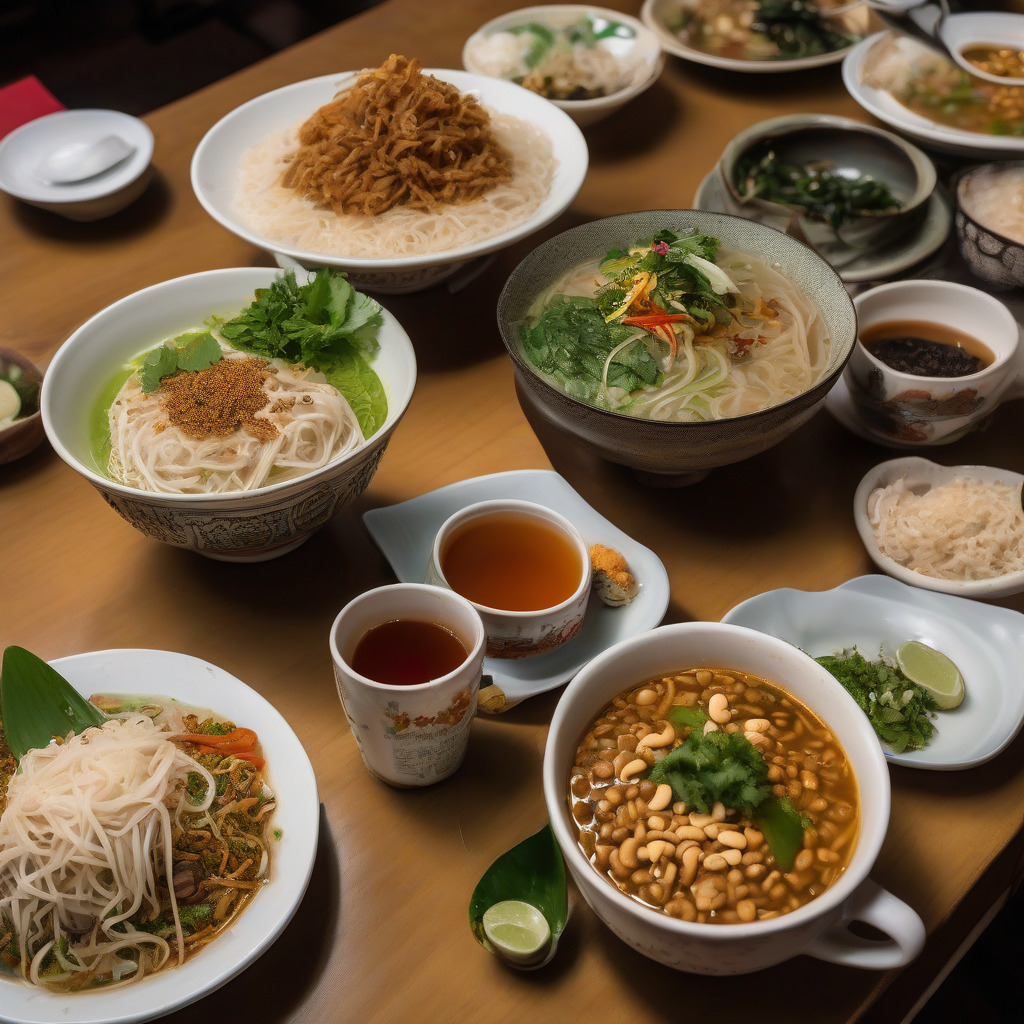
Mohinga is the national dish of Myanmar—a fish noodle soup considered the most essential preparation in the Burmese kitchen. Burmese people eat it for breakfast, though it works at any hour. It’s also the dish most likely to be available only on weekends at Indianapolis restaurants, because the broth requires significant preparation. Call ahead and ask whether mohinga is being made the day you plan to visit, and plan accordingly. If you only eat one thing out here, let it be this.
Lahpet thoke, or tea leaf salad, converts skeptics reliably. Fermented tea leaves tossed with fried garlic, peanuts, sesame, and tomatoes—simultaneously crunchy, funky, savory, and bright. It has no real analog in any other cuisine, which sounds like the kind of thing food writers say about everything. In this case it’s just accurate.
Shan noodles are the gentler on-ramp for diners wary of the fish-heavy foundation of mohinga. Shan State, in eastern Myanmar, borders China and Thailand, and its noodle dishes reflect that geography—rice noodles in a light broth with chicken or pork. A good first order for a table that includes hesitant eaters.
Ohno khao swè is a coconut milk noodle soup that often surprises people who expect something lighter. When the weather turns cold—and Indianapolis winters are long—it’s one of the most satisfying dishes on the menu. Samusa thoke, or samosa salad, opens a window into Myanmar’s Indian culinary influences and shows how Burmese cooking absorbs and transforms outside influence rather than rejecting it. This kind of breadth is part of what makes the corridor worth your attention in our food & hospitality coverage of Indianapolis’s immigrant dining scene.
[Reporter note: For the “off-menu or ask-for-it” recommendation per restaurant, this requires direct conversation with each owner or a trusted regular. Useful framing: “Is there anything your community orders that’s not on the printed menu?” or “What do you cook at home that you don’t serve here?” Mont di, a Chin-style rice noodle dish, is a strong candidate at restaurants with Chin ownership.]
”Burmese Food” Is Not One Thing
The term “Burmese food” on a restaurant menu almost always refers to Bamar-majority cuisine—the food of the Irrawaddy valley, of Yangon and Mandalay, with its characteristic combination of fermented fish paste, turmeric-yellow curries, and oil-lacquered salads. That food is delicious and is what you’ll find on most printed menus in Indianapolis.
Here’s the thing, though: the Indianapolis Burmese community skews heavily Chin, and Chin culinary traditions are distinct. Chin State sits in the mountains of northwestern Myanmar along the Indian border, and its food reflects that elevation and geography. More smoked and dried meat. More foraged vegetables. Different fermentation traditions than lowland Bamar cooking. Mont di—a Chin-style rice noodle dish—is a foundational Chin preparation that rarely appears on an English-language menu but may be available if you ask. At a restaurant with Chin ownership, this is worth requesting directly. The worst that happens is they say no.
Karen food, from the southeastern hill regions, emphasizes pork and fresh herbs in ways that differ again from both Chin and Bamar cooking. A restaurant run by a Chin family will still serve mohinga and Shan noodles; these kitchens cook for a whole community, not just one ethnic group. But the dishes most personal to a given owner—the ones carrying the most memory and the most technique—are often the ones not listed on the laminated menu. Asking is always the right move.
The Rest of the Corridor—Vietnamese, Laotian, and Hmong Neighbors
Burmese restaurants are the most concentrated and distinctive presence on this corridor, but they’re not alone. East Washington Street has supported Vietnamese restaurants and pho shops for years, some long-established and others rotating through the same commercial spaces as ownership changes. The Laotian and Hmong food presence is real but less visible from the street, because it tends to operate within grocery store contexts rather than as standalone restaurants. Several Asian grocery stores on East Washington and its cross-streets may maintain prepared-food areas where Laotian and Hmong dishes are sold for lunch. [Confirm specific operating Vietnamese and Laotian/Hmong food operations with addresses before publication. BACI may be able to refer you to community contacts for additional food sources.]
Drive East Washington Street from Irvington out to the Lawrence Township line. You’re passing through one of the most concentrated and least-documented immigrant food corridors in the Midwest, and I’m not sure most Indy residents realize it’s there. The Burmese restaurants are the headline, but they’re part of a larger picture. For context on how other Indianapolis dining corridors have developed their own identities, how Indianapolis food halls compare shows what concentrated food destinations look like in more visible parts of the city. Budget several hours and eat more than one meal.
Practical Details—Hours, Price, and What to Know Before You Go
Entrees at most Burmese restaurants on this corridor typically run $9 to $15. [Confirm current pricing on site visit.] This reflects what the operators charge their community, not what a downtown dining market would bear. Many of these dishes require significant prep work and high-quality ingredients. The math is not in the owner’s favor.
Cash is preferred and sometimes required. Some have added card readers in recent years, but don’t assume. Bring cash, and bring small bills—change is sometimes limited. Most of these restaurants don’t hold a liquor license. Some are BYOB; confirm with each operator before bringing a bottle. [Confirm per-restaurant BYOB policy and liquor license status through Indiana ABCC.]
Hours posted on Google Maps are frequently wrong for this segment. Call ahead the morning of your intended visit. Ask about mohinga if you want it. Ask what time they stop seating. Lunch is generally reliable; dinner may end earlier than posted. Monday closures are standard. Mohinga is commonly a weekend-only offering at some places, available daily at others. Call ahead. This isn’t optional.
BACI is the best non-restaurant resource for readers who want to engage with the east-side Burmese community more broadly. They can point you toward community events, language resources, and informal food programming. Their work extends well beyond dining, but for a first-time visitor trying to navigate the corridor with more context, they’re worth a phone call.
What’s Worth Watching
Thingyan, the Burmese Water Festival, typically falls in mid-April—the traditional new year, marked with water throwing and communal feasting. Indianapolis’s Burmese community has organized Thingyan events in recent years, and these events often include public-facing food programming that is the best possible introduction to the breadth of Burmese cooking. Ceremonial foods, home-cooked dishes from multiple ethnic communities, and sweets that don’t appear on any restaurant menu are all part of what gets served. If you only go to one community event on the east side this year, make it this one. [Confirm Thingyan event dates and location with BACI each spring; this is a natural follow-up piece.]
The broader reality about this corridor is that it changes. Restaurants open and close. Owners age out and their children may or may not continue the work. Post-COVID attrition hit this segment hard between 2020 and 2022—some kitchens that were open in 2019 aren’t open now. Some new ones have opened since. Nobody has a perfect count, and anyone who claims they do probably isn’t spending enough time out here.
Treat this piece as a starting point, not a definitive guide. If you eat on this corridor and find something we missed—a new operator, a dish worth knowing about, a grocery-counter kitchen we didn’t mention—send a tip to CityDesk. We’ll keep coming back.
CityDesk Indianapolis covers local business and community development in Indianapolis, Indiana. Details marked for confirmation throughout reflect reporting-in-progress status at time of outline publication. Do not publish without completing on-ground verification.
For more local coverage, explore our Food & Hospitality section.