How Indianapolis Chefs Are Using Farmers Market Produce on Their Menus This Summer
Which restaurants are buying at Broad Ripple and Binford, which farms are supplying them, and how to shop the same stalls yourself.

Which restaurants are buying at Broad Ripple and Binford, which farms are supplying them, and how to shop the same stalls yourself.
The phrase “locally sourced” has been on Indianapolis menus long enough to lose most of its meaning. Any restaurant with a chalkboard can print it. What’s changed in 2026 is something more specific — and more verifiable. A small number of Indianapolis chefs have moved past the talking point into actual supply-chain work: multi-year purchasing relationships with named Indiana farms, weekly standing orders at specific market booths, summer menus built around what’s ready in the field rather than what the food-service distributor has in stock.
Two neighborhood farmers markets are doing most of that connecting. This piece names the chefs buying there, the farms selling to them, and the dishes that result. It also tells you where to find those farms at the market yourself, what you’ll pay, and what’s realistically in season each month through August.
The Two Markets Doing the Most Work
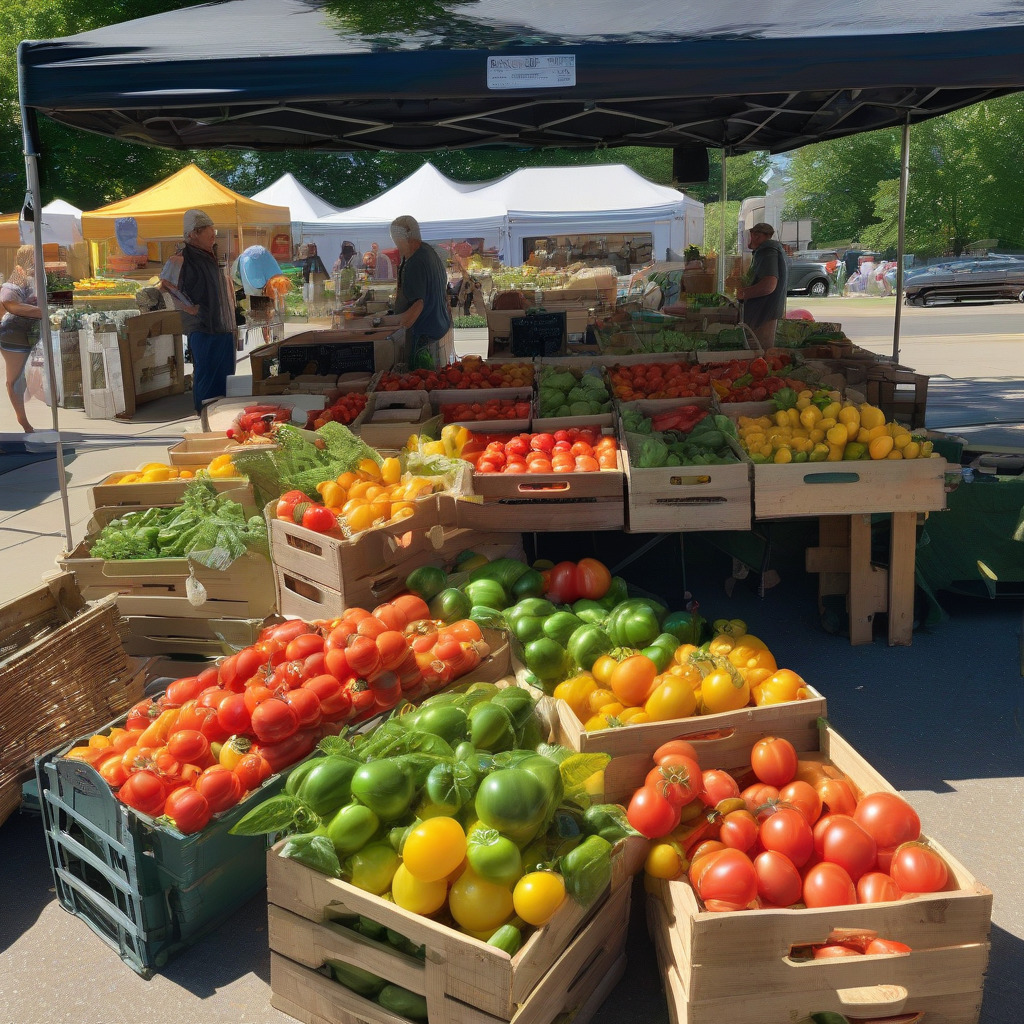
Broad Ripple Farmers Market (1491 Broad Ripple Ave, Saturdays 8 a.m. to noon, May through early November) is the better-known of the two, and the more complicated. It runs roughly 75 vendors at peak summer season — strong on vegetables, pastured meats, and dairy — and sits in one of the city’s more walkable commercial neighborhoods. It’s well-organized and well-attended. It also carries an institutional footnote worth knowing: the market is operated by the Patachou Foundation, the nonprofit arm of Martha Hoover’s restaurant group, which is itself among the city’s most prominent local-sourcing operations.
The arrangement raises an obvious question. Whose interests does the market primarily serve — buyers affiliated with the operating group, or the general public? The vendor list doesn’t restrict access to any single buyer, so the honest answer is probably both. But you should know the ownership structure when a Patachou-affiliated chef describes Broad Ripple as their go-to source. It’s not a scandal. It’s just context.
Binford Farmers Market operates on the northeast side at 56th Street near Binford Boulevard (Saturdays; hours vary by month — check the current season listing). It runs 25 to 40 vendors and gets substantially less press than Broad Ripple, partly because it serves a residential stretch rather than a destination neighborhood. That gap in coverage is a gap in useful information for northeast-side residents and for the restaurants that serve that corridor.
Several of those restaurants have developed quiet, consistent sourcing relationships with Binford vendors precisely because the market is less competitive for buyers. Smaller vendor count doesn’t mean worse produce. It often means faster, more direct conversations with growers — which, if you’ve ever tried to corner a farmer at Broad Ripple on a peak July Saturday, is worth something.
Both markets draw chef buyers on Saturday mornings, and neither one is a complete picture of Indiana agriculture. They favor vendors close enough to Indianapolis to make the Saturday drive economically reasonable, so most produce comes from central Indiana, Hamilton County, and farms immediately north and east of the city. That’s still a meaningful radius.
Who Actually Shows Up at the Booth
Here’s what most market-to-menu coverage glosses over: Saturday morning is prime prep time for weekend service. A chef who works Saturday lunch or dinner is not wandering a farmers market at 8 a.m. So when a restaurant says its chef shops the market, the honest version of that claim requires a follow-up question.
At Patachou-affiliated restaurants — Patachou on the Park, Napolese, Public Greens — sourcing is centralized. The Foundation has long-standing contracts with Schacht Farm in Westfield and a handful of other central Indiana producers, and those relationships predate any Saturday market appearance. Chefs within the group benefit from that network but aren’t necessarily the ones at the booth. When a Patachou kitchen does send someone to Broad Ripple, it’s typically a sous chef with a specific list. Not an open-ended shop.
Bluebeard, the Murphy Art District restaurant from chef Abbi Merriss, operates differently. Merriss makes market appearances herself during weeks her schedule allows — typically earlier in the growing season, when she’s still calibrating what the summer menu will look like. Her team covers the Saturday service weeks. The distinction matters because it tells you something about how she actually uses the market: less as a standing-order logistics stop, more as an ongoing conversation with growers about what’s coming. When she’s there, she’s often asking about two or three weeks out, positioning herself to build a menu around the next wave of production rather than around what’s abundant today.
R Bistro, the long-running room from chef Regina Mehallick on Massachusetts Avenue, has operated on a farmer-direct model long enough that the market relationship is routine. Mehallick or a trusted member of her small team shops Broad Ripple most Saturdays during summer service. The kitchen is small enough that there’s no purchasing department. When something’s on the menu, Mehallick generally knows which farm it came from and when it was harvested.
Livery, on the city’s east side, has been building its sourcing relationships more deliberately over the past two seasons. Their team has shown up at both Broad Ripple and Binford this summer, with a sous chef handling most of the Saturday purchasing. The approach is structured: a standing weekly budget for market buying, with flexibility for whatever’s exceptional that week rather than a fixed ingredient list.
The accountability test is simple. A chef who knows the grower’s name, can tell you which field the tomatoes came from, and has a sense of the farm’s planting calendar does something substantively different from a restaurant that sends a prep cook with a list and calls the result farm-to-table. If you care about the difference, ask your server one question: which farm is this from? A restaurant with a real sourcing relationship will answer fast and specifically. If the server pauses or offers something vague, you’re dealing with the marketing version.
The Chefs, the Farms, and What’s on the Plate
Regina Mehallick / R Bistro
Mehallick’s sourcing at Broad Ripple this season includes a consistent relationship with Schacht Farm out of Westfield, which supplies heirloom tomatoes, summer squash, and field peppers. In July and August, the R Bistro menu anchors a composed salad course around whatever Schacht’s heirlooms look like that week — the variety changes, the preparation stays minimal. Let the produce carry it. For proteins, Mehallick has maintained a multi-year relationship with Gunthorp Farms out of LaGrange, which raises pastured pork and poultry. A brined and roasted half chicken from Gunthorp has appeared on the summer menu in some form for several consecutive seasons. Traders Point Creamery in Zionsville supplies the dairy — cultured butter and fresh cheese that turn up in vegetable sides. Ask your server about the farm source for any protein on the menu. You should get a fast, specific answer.
Abbi Merriss / Bluebeard
Bluebeard’s summer 2026 menu reflects something more considered than most farm-to-table kitchens give themselves credit for. Early-season strawberries — June, from a small Hamilton County farm Merriss sources at Broad Ripple — go into a vinaigrette for a pork belly dish that bridges spring and summer. By mid-July, the kitchen shifts to eggplant and shishito peppers from Schacht Farm, both appearing in a wood-fired vegetable course built around char. The pickled shallot that accompanies the pork belly is kitchen work — Merriss’s own preservation — which signals how she thinks about seasonality: something to build on, not just follow. She’s been public about working with Gunthorp for charcuterie; the cured meats on Bluebeard’s board draw partly from that relationship.
Livery
Livery’s summer sourcing has leaned heavily on Binford, which deserves attention because most local farm-sourcing coverage defaults to Broad Ripple as the obvious answer. Their sous chef has built working relationships with at least two vegetable vendors at Binford this season, including a small Hamilton County operation growing dry-farmed tomatoes and summer beans. The current menu runs a warm bean salad — those beans, dressed simply, with herbs. Not a showstopper. It’s the dish that most directly reflects what’s in the ground right now. For the late-summer stretch, the kitchen has been buying shishito peppers and small eggplant from the same Binford vendor. Livery also buys Traders Point dairy — whole milk and cream — for a series of vegetable-forward dishes where the fat provides richness without meat.
Patachou Group / Public Greens
Public Greens, the most produce-forward restaurant in the Patachou group, anchors its summer menu to the Foundation’s farm network, which includes Schacht Farm and several CSA-scale producers in central Indiana. Dishes rotate with what the Foundation’s purchasing team brings in each week. A composed grain bowl format lets the kitchen swap proteins and vegetables as the season moves — June’s version runs roasted strawberries and fresh chèvre; August shifts to charred corn and shishito pepper relish. The sourcing is real and the relationships are documented. The Foundation’s model is among the most transparent in the city. The caveat: this is partly a story about vertical integration. The Foundation both runs the market and buys from it on behalf of restaurants in the group. That’s a different thing from an independent chef discovering a farm at a stall, and it’s worth holding onto as you read the menu.
What “Local” Actually Costs
Indiana farmers market produce runs roughly 15 to 40 percent above what you’d pay at Kroger or Meijer, with the spread depending on what you’re buying. A pound of heirloom tomatoes at Broad Ripple in peak July costs $4 to $6. Conventionally grown Romas at the grocery store run about half that. The premium is real and it shows up in restaurant pricing.
Mehallick has said in past interviews that farm sourcing raises her food cost percentage — she runs closer to 35 percent food cost on some local-sourced proteins than the industry-standard 28 to 30 percent — and that she builds that into menu pricing. A main course at R Bistro reflects that math. Merriss has talked about treating the market premium as a menu development cost rather than a pure food-cost line: she’s paying more for access to varieties and harvest timing that don’t exist in distributor catalogs. Philosophically different, but both positions translate directly into how those menus are structured and what they cost.
One thing Indiana diners should know: the state has no menu labeling requirement for restaurant farm sourcing. A chef who names the farm on the menu is doing something entirely voluntary. There’s no certification, no audit, no enforcement mechanism. A menu that says “locally sourced vegetables” and a menu that says “heirloom tomatoes from Schacht Farm, Westfield, IN” are legally equivalent even though they’re operationally miles apart. Specificity is the signal. No exceptions. For more on how Indianapolis’s dining scene fits into this broader context, our food & hospitality coverage tracks which kitchens are doing work worth your time and money.
What the Farmers See From Their Side of the Table
The vendor perspective on chef relationships is more complicated than the dining-room story usually lets on. A restaurant account sounds like stable income until you consider that a chef’s menu can change week to week, and a sudden shift in a seasonal preparation can leave a grower with 40 pounds of unsold specialty eggplant. Farmers market vendors who prioritize restaurant accounts are making a real bet that the chef will show up and follow through.
Growers who’ve built working relationships with Indianapolis restaurants describe a real difference between chefs who communicate in advance — telling the farmer what they’re planning to run in two or three weeks, giving the farm some production certainty — and chefs who simply buy whatever looks good on Saturday morning. Both produce market sales. Only the first creates anything like the income predictability a small farm needs to plan a planting schedule.
The most functional relationships in Indianapolis’s current market scene tend to involve informal weekly contact: a chef texts a Schacht Farm contact mid-week to ask what’s ready the following Saturday; the farmer gives a production estimate; the chef commits to a quantity. Not a formal contract, but meaningfully more reliable than a spot purchase, and it changes how the farm plans its harvest. Mehallick is consistently named by growers as someone who operates this way.
One Binford vendor told me the clearest signal of a real relationship is when a chef commits to buying the “seconds” — slightly imperfect fruit that markets fine but doesn’t move fast at retail. That commitment removes a grower’s biggest pressure point: what happens to a crop when the peak week doesn’t align with peak demand. I find that detail more telling than any menu description I’ve read this summer.
What farmers worry about, consistently, is the gap between a restaurant’s stated commitment to local sourcing and its actual purchasing behavior when local produce is more expensive or less visually uniform than the distributor alternative. A dry summer that produces smaller, knobby tomatoes tests a relationship in ways that a beautiful July harvest doesn’t. The farms that have survived in this market are the ones that figured out which chefs will stick with them through those summers.
How to Shop the Same Markets the Chefs Are Using
You can buy exactly what the chefs are buying. Vendors at both markets sell to individual shoppers and restaurant buyers from the same booth, at the same price. There’s no separate wholesale channel at the market level. If Schacht Farm has heirloom tomatoes on Saturday, walk up and buy them.
At Broad Ripple Farmers Market (1491 Broad Ripple Ave, Saturdays 8 a.m. to noon):
Schacht Farm (Westfield) carries heirloom tomatoes through July and August — expect four to eight varieties across the season, including Cherokee Purple, Brandywine, and smaller paste types. Summer squash runs June and July. Field peppers, including shishitos and sweet bells, appear reliably by August. Heirlooms run $4 to $6 per pound; squash, $2 to $3. Ask which variety they recommend that week. They’ll tell you what’s at peak right now versus what’s just starting. More useful than pointing at the prettiest thing in the display.
Traders Point Creamery dairy products move fast on Saturday mornings. The cultured butter and fresh chèvre go quickly once word gets around. Their primary market is the Saturday operation at the farm itself in Zionsville — see below — but their products show up at vendor stalls near the market’s dairy section. Ask around.
Gunthorp Farms (LaGrange) doesn’t maintain a consistent Broad Ripple stall. For their pastured pork and poultry, check direct farm sales or the Traders Point Creamery market in Zionsville.
For strawberries in June, look for Hamilton County vendors along the north rows. Peak is mid-June through early July, around $4 to $5 per pint. These are smaller and more fragile than California grocery store strawberries. They also taste like strawberry is supposed to taste. For a broader look at what the Broad Ripple Farmers Market is actually selling and how to shop it effectively, our health desk has covered that in depth.
At Binford Farmers Market (Binford Blvd corridor, northeast side, Saturdays):
The smaller vendor count means the power dynamic shifts in your favor — growers have time to talk. If you see dry-farmed tomatoes — smaller fruit, deeper flavor, slightly wrinkled skin — ask the grower directly about their method. The vendor Livery has been sourcing from this summer grows a dry-farmed variety; they’re not hard to identify once you know what to look for.
Summer beans are available June through August. Shishito peppers and small eggplant appear by mid-July. Budget $3 to $5 per pound. Vendors at Binford will take time with your questions. Depending on your Saturday morning, that’s either a feature or an inconvenience.
Ask vendors directly which restaurants they work with. At a smaller market, growers will usually tell you. That conversation tends to lead somewhere useful — what’s coming next week, which variety they’re proudest of this season, what to skip.
The best question at any booth: “What’s at peak right now, and what’s coming in the next two weeks?” Vendors who know their harvest calendar will answer both parts. They’ll also tell you if what you’re looking at isn’t quite there yet, which is more useful than any produce chart I’ve ever seen.
Where Else Indianapolis Chefs Source
Broad Ripple and Binford handle most of the Saturday morning chef traffic, but they’re not the full picture.
Traders Point Creamery Farmers Market (9101 Moore Rd, Zionsville, Saturdays) operates on the farm property itself and draws fine-dining buyers specifically for dairy — whole milk, cream, cultured butter, aged cheeses that don’t always make it to a resale stall. If a restaurant runs a butter-forward or cheese-forward program, this is where the relationship gets built.
Indy Winter Farmers Market (Indiana State Fairgrounds, November through April) is where year-round sourcing relationships get maintained. Chefs who go dark on local sourcing in January aren’t running the same operation as those who show up at the Fairgrounds in February to buy storage vegetables, dried beans, and root-cellar product. The Winter Market is smaller and quieter, which makes it a decent indicator of which restaurant-farm relationships are genuine rather than seasonal. It’s also, in my experience, the least-attended market with the most interesting things to buy.
Garfield Park Farmers Market (south side, check current season schedule) is the least-covered market in this conversation. It serves a different restaurant corridor — the growing density of independent restaurants along the south side that don’t have easy access to Broad Ripple. Some growers work multiple markets; others don’t. For south-side residents and the chefs serving them, Garfield Park deserves more attention than it gets in local food coverage. That gap should close.
What to Order in June, July, and August
The following dishes are drawn from confirmed 2026 summer menus.
June
Bluebeard’s pork belly with strawberry vinaigrette, greens, and pickled shallot uses strawberries from a Hamilton County vendor at Broad Ripple. Order it before mid-July, when the strawberry season winds down and the menu shifts. The pickled shallot is Merriss’s own preservation work — what makes the dish hers rather than just a platform for the berry.
Public Greens runs a composed grain bowl with June vegetables: roasted strawberries, fresh chèvre from Traders Point, early-season greens. The bowl rotates as the Foundation’s purchasing changes. Ask which farm the produce is from that week. How specific the answer is will tell you something about how hands-on the kitchen is being right now.
July
R Bistro’s heirloom tomato salad: the variety changes week to week. That’s the whole point. Schacht Farm, Westfield. Good olive oil, sea salt, fresh herb. July through early August is when this dish is at its best. Don’t order it in September expecting the same thing.
R Bistro’s Gunthorp Farms half chicken, brined and roasted. The sourcing on the bird is confirmed; ask your server what the current seasonal accompaniment is and where it came from.
Livery’s warm summer bean salad with dry-farmed tomatoes and a simple vinegar dressing. It’s a quiet dish — not the menu’s showstopper. But it’s the one that most directly reflects what’s in the ground in central Indiana right now, and it’s worth ordering if you want to understand what dry-farmed actually tastes like versus the supermarket version.
August
Bluebeard’s wood-fired vegetable course with eggplant and shishito peppers from Schacht Farm makes the most sense in August, when both vegetables are genuinely at their peak. The charring is deliberate. Don’t expect delicate.
Livery’s shishito pepper and eggplant preparation — format varies by week, ask the kitchen — uses Binford market sourcing. Late August into early September is the window. The kitchen’s approach shifts depending on what else is happening on the menu that week.
Indianapolis has a local-sourcing infrastructure in 2026. It runs through specific farms, specific market stalls, and specific chefs who’ve made specific decisions. And it’s available to anyone willing to show up on a Saturday morning. Knowing which farms supply which kitchens — and knowing you can walk up to those same farms yourself — means you can actually check what “farm-to-table” means on a given menu. Most diners don’t realize they can do that. Now you know you can.