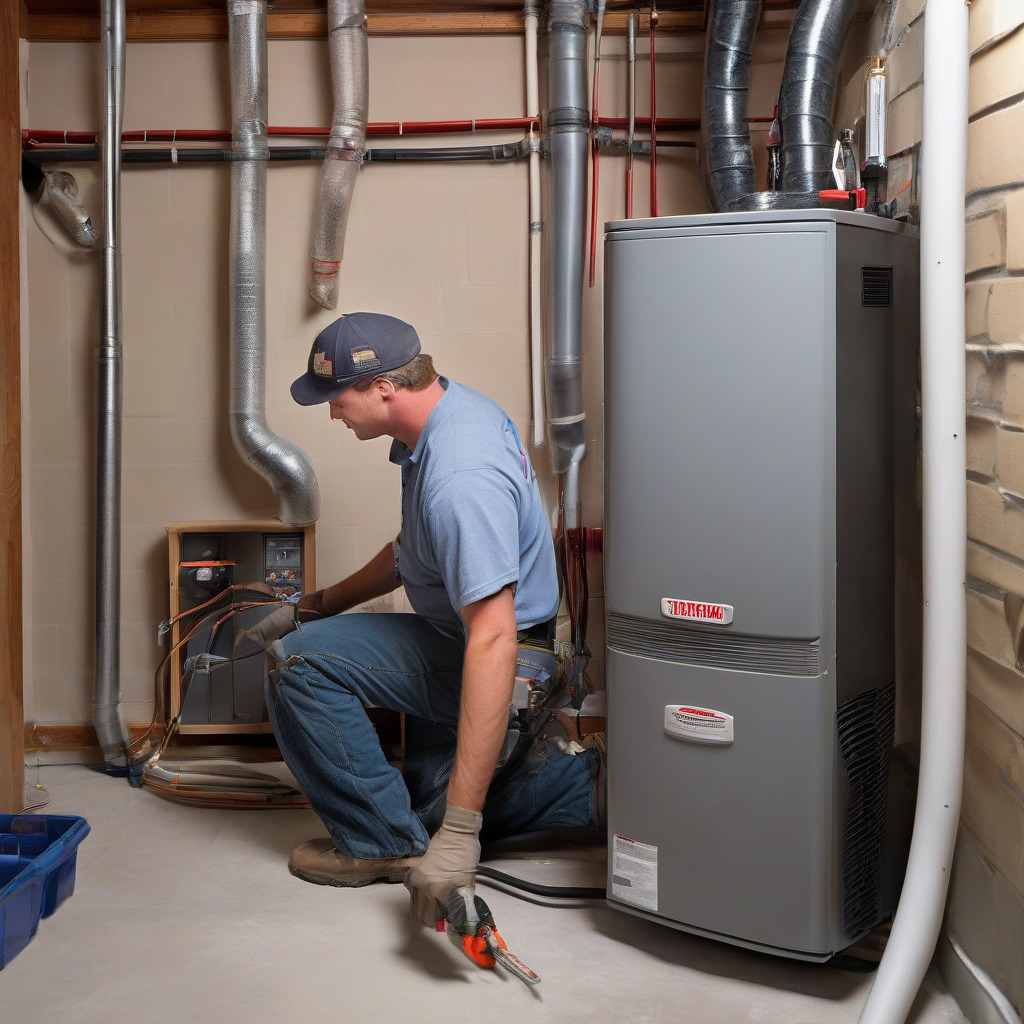
What Indianapolis Foundation Cracks in July Actually Mean and When to Worry
Marion County's clay soils are shrinking right now. Here's how to read what you're seeing, why July is peak season for this problem, and why the order in which you make phone calls will determine h…

Marion County’s clay soils are shrinking right now. Here’s how to read what you’re seeing, why July is peak season for this problem, and why the order in which you make phone calls will determine how much you spend.
If you’ve noticed new cracks in your basement walls, your garage floor, or the drywall above a doorframe this month, you’re not imagining things. July 2026 has delivered the specific combination of conditions that does the most damage to Indianapolis-area foundations: sustained high heat, low soil moisture, and soils that have been measurably shrinking for six to eight weeks, depending on where you live in Marion County.
Most of what Indianapolis homeowners are seeing right now is manageable. But the decisions you make in the next few weeks will determine whether you spend a few hundred dollars on a professional assessment or tens of thousands on repairs that may or may not have been necessary. Who you call first matters more than almost anything else. I’ll get to that, but the soil science is worth understanding first — it’s the reason this keeps happening every July like clockwork.
Why July Is the Worst Month for Indianapolis Foundations
Marion County sits on glacial deposits that include significant concentrations of Brookston and Crosby series silty clay loams. The Natural Resources Conservation Service classifies these soils as having moderate to high shrink-swell potential: they absorb water and expand when wet (why Indianapolis basements often show stress in spring), then release that water and contract when dry. July is when the contraction happens, every single year.
Clay shrinkage isn’t gradual or uniform. As surface moisture evaporates, the soil pulls away from whatever it was pressing against — including your foundation walls. That lateral soil pressure, which normally braces the wall from outside, disappears. If the foundation was already managing a hairline crack or a slightly out-of-plumb wall, losing that support is when the crack becomes visible or widens.
Concrete is expanding at the same time. NOAA’s 30-year climate normal puts the average Indianapolis July high at 84°F. Concrete expands measurably at those temperatures, and existing cracks are being stretched from two directions simultaneously: the soil below is pulling away while the slab itself is thermally expanding. A crack that was invisible in April can be 1/8 inch wide in July because two separate physical processes are working in the same direction at once.
April soils are saturated. October soils are cooling and stabilizing. July aligns everything in the worst direction.
This also explains why you may be seeing cracks where you didn’t expect them. Interior drywall above door and window frames reflects the same subsoil movement — it just shows up six feet above the foundation instead of in the wall itself. A crack over a doorframe in July is often the same clay-shrinkage event appearing above grade, not a separate problem.
Which Indianapolis Neighborhoods Are Most Exposed
Not all of Marion County sits on the same soil, and the differences matter for figuring out whether your specific address is in trouble or just doing what everyone else’s house is doing.
The Near Eastside — ZIP codes 46201, 46203, 46219 — carries some of the highest clay-soil risk in the county. Much of this area sits on lower-elevation glacial lake-bed deposits, where fine-grained clay settled out of meltwater over time. The housing stock is predominantly pre-1960 construction, built to standards that often didn’t require footings deep enough to reach stable substrate below the active clay zone. If you own a bungalow or two-flat in Irvington, Fountain Square, or anywhere along the East Washington Street corridor, you’re on exactly the right soil and the right age of construction for this problem.
Pike Township (46254, 46268) is a different scenario. The soils here include glacial till with high clay content, but a large share of the township’s housing is postwar slab-on-grade construction. Slabs on expansive clay are particularly vulnerable because the entire floor system moves with the soil — there’s no basement buffer. Homeowners in Pike Township noticing interior floor cracks or doors that suddenly bind should take that seriously. The shallow foundation type common in that era amplifies what the soil is already doing.
Decatur Township (46217, 46221) has among the most pronounced Brookston clay loam concentrations in Marion County, combined with low topography that creates a severe end-to-end shrink-swell cycle. Decatur Township soils tend to be among the most saturated in the county during spring — maximum expansion — and among the most desiccated by July. That full range of movement, repeated every year, puts cumulative stress on foundations. The damage compounds.
Portions of Washington Township and the Broad Ripple corridor (46220) sit on sandier glacial outwash deposits with significantly lower shrink-swell potential. If you’re on one of the sandy ridge lines north of 62nd Street, your soil is doing less of this than your neighbors’ soil two miles south. That doesn’t make your foundation immune to other issues, but the specific mechanism driving July 2026 cracking is less of a factor up there.
To know exactly what soil type underlies your specific parcel, the NRCS Web Soil Survey at websoilsurvey.nrcs.usda.gov lets you enter your address and generate a report. Five minutes. Worth doing before you call anyone.
How to Read What You’re Seeing
Get a flashlight and a tape measure and go to your basement before you call anyone. The goal is to separate cosmetic from structural, and urgent from monitor-and-document.
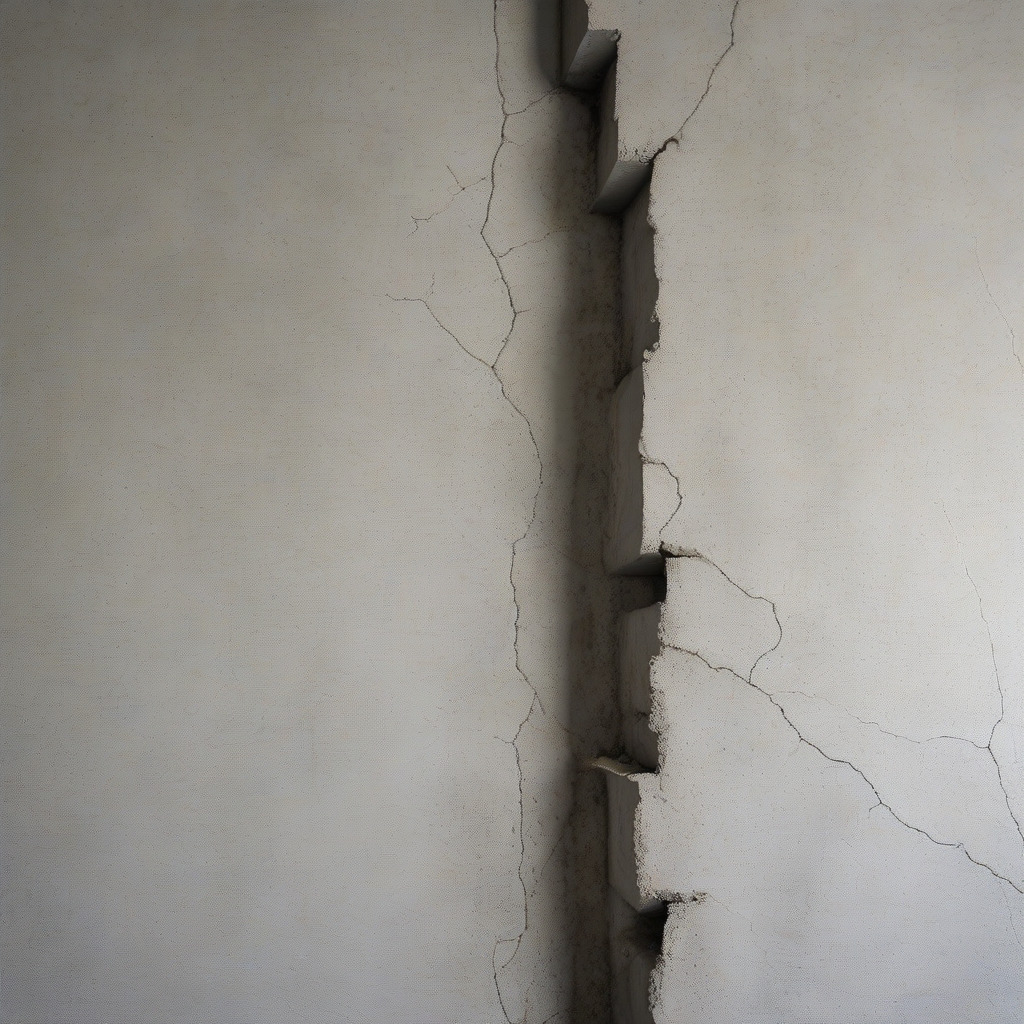
Vertical cracks run straight up and down on a poured concrete wall and are typically caused by differential settlement or concrete curing shrinkage. A hairline vertical crack — under 1/16 inch wide, both sides at the same elevation — in an otherwise solid wall is generally cosmetic. Seal it to prevent water intrusion, but it doesn’t mean the wall is failing. If the crack is wider, or if one side sits higher than the other, the situation is more serious.
Horizontal cracks are the highest-concern crack type in a basement wall. If you see one, call a structural engineer immediately — not a repair company. A horizontal crack across a block or brick foundation wall indicates that lateral soil pressure has overcome the wall’s resistance. The wall may be bowing inward. If your basement has a block or brick foundation and you’re looking at a horizontal crack running across multiple courses, you need a licensed PE to look at it before you do anything else. Don’t sit on this.
Stair-step cracks follow mortar joints in block or brick foundations in a diagonal stair pattern, signaling differential settling — one part of the foundation is moving more than another. If the two sides of the crack are at the same level and the crack is hairline, photograph it, date it, and check again in the fall. If one side sits visibly higher or lower than the other, get a professional evaluation promptly.
Diagonal cracks from window and door corners are extremely common in July and are usually seasonal movement. The corners of openings are stress concentration points, and thermal and moisture movement tends to express itself there first. A thin diagonal crack that’s been there for years and hasn’t grown is probably not a crisis. One that appeared in the last four to six weeks, is visibly widening, and is accompanied by a door or window that now binds? That’s worth taking seriously.
On width: hairline cracks under 1/16 inch need sealing. Photograph and date them and check again in October. Cracks between 1/8 and 1/4 inch warrant a structural engineer consultation within the next few weeks. Anything over 1/4 inch, call a licensed PE this week.
Displacement escalates everything. Any crack type — vertical, horizontal, diagonal, stair-step — where one side sits higher than the other is more serious than the same crack without offset. Displacement means the two sections of wall are no longer in the same plane. That’s structural shift.
One more thing homeowners frequently misread: if interior doors or windows that operated fine in May are now binding or failing to latch, don’t automatically blame summer humidity. Humidity causes wood to swell, yes — but if the binding appeared suddenly in July alongside any of the crack types above, treat it as part of the same picture.
Call a Structural Engineer Before You Call a Repair Company
This is the most important sentence in this article, and it runs directly counter to what most homeowners actually do.
When someone notices a foundation crack, the instinct is to call a foundation repair company. Those companies will send someone to assess the situation — usually at no charge — and provide a proposal. The problem: foundation repair companies diagnose problems they also sell solutions for. That’s not an accusation of dishonesty. It’s a description of an incentive structure any rational consumer should account for. A company that sells steel push piers will assess your foundation through a framework in which steel push piers are a potential answer. A company that sells carbon fiber straps will see the case for carbon fiber straps. That’s just how it works.
A licensed structural engineer — a PE licensed in Indiana under the Indiana Professional Licensing Agency — operates under a completely different set of incentives. They charge a flat fee for an inspection and written assessment. In the Marion County market, that’s usually $300 to $600. They have no product to sell and no installation revenue to generate. Their professional license and statutory liability are attached to whatever they put in writing. If a PE tells you the crack is cosmetic, that’s an assessment you can rely on. If a PE tells you that you need helical piers on the north wall, you now have an independent professional basis for evaluating whatever contractor proposals come next. That same logic applies to what a home inspection covers and what it costs in Indianapolis — understanding what each type of professional is actually assessing helps you sequence your calls correctly.
Engineer first, contractor second. Bring the PE’s written assessment to every contractor you meet with. Ask each one to explain how their proposal addresses what the engineer found. If a contractor’s proposal diverges significantly from what the PE recommended — either by recommending less, or by adding work the PE didn’t mention — ask them to explain the discrepancy in writing. That paper trail protects you if a repair fails or turns out to have been unnecessary.
To find a licensed structural PE in Marion County, use the Indiana Professional Licensing Agency search at in.gov/pla. The Indiana Society of Professional Engineers at ispe.org also maintains a referral directory. Verify active licensure before scheduling anyone.
What Foundation Repairs Actually Cost in Indianapolis
These figures come from Indianapolis-area contractor data, not national aggregates from lead-generation sites. Use them for budgeting and bid evaluation, not as final numbers — get written quotes before committing to anything.
Epoxy injection to seal cracks in poured concrete walls runs $400 to $800 per crack. It addresses water intrusion through hairline to moderate vertical cracks but doesn’t address underlying movement. If the wall is shifting, epoxy treats the symptom.
Carbon fiber strap reinforcement for a bowing wall typically costs $4,000 to $8,000 for a complete installation, depending on wall length and number of straps. It’s appropriate for walls that are bowing inward but haven’t moved beyond the threshold where straps can stabilize further movement. Carbon fiber is not the right answer for walls with significant displacement — that matters, because some contractors will propose it anyway.
Helical piers run $1,500 to $2,200 per pier installed. Most residential projects need six to twelve. Helical piers are the more common choice in softer Marion County clay soils because they’re screwed into stable substrate below the active clay zone rather than driven. They work in tighter spaces and don’t require the soil resistance that push piers need.
Steel push piers cost $1,200 to $1,800 per pier and are better suited to denser substrate. Less common in the highest-clay zones of Marion County, more common in areas with mixed glacial till.
Mudjacking lifts a settled slab with cement slurry for $500 to $1,500 for a typical section. It works, but it adds weight to the soil below, which can accelerate future settlement in clay soils. Worth factoring in before you commit.
Polyurethane foam lifting runs $800 to $2,500 for a typical section. Lighter than mudjacking, faster cure, less additional load on the underlying soil. Costs more per square foot but is often the better call for driveways and garage floors in clay-soil conditions.
Full foundation replacement — reserved for walls that have failed beyond the point where reinforcement makes sense — ranges from $30,000 to $80,000 or more depending on wall length, access, and backfill requirements. Last resort, but sometimes the only realistic option.
Standard homeowner’s insurance will not cover any of this. I’ll address why below.
Indiana’s Disclosure Law and What It Means for Sellers and Recent Buyers
Indiana Code IC 32-21-5 requires sellers of residential real estate to complete a Residential Real Estate Sales Disclosure Form before or at the time of an offer. The form requires disclosure of known foundation problems, structural defects, and water or moisture intrusion. The operative word is “known” — sellers aren’t required to hire inspectors before listing, but they are required to disclose what they actually know.
Once a foundation repair company has visited a property, assessed the condition, and handed over a written proposal, the seller has documented knowledge of a foundation condition. If that seller then lists the home without disclosing the issue, they’ve created civil liability. A buyer who discovers an undisclosed problem after closing has grounds to seek damages or, in some circumstances, rescission of the sale. The paper trail created by contractor visits is difficult to overcome in litigation. Sellers who’ve had repair companies out this summer and are thinking about listing without disclosing should understand that clearly.
For sellers who discover foundation issues this summer: disclose, document, and either repair before listing or price the home to reflect the known condition. That’s it. Real estate attorneys regularly pursue cases where sellers omitted active foundation conditions from disclosures. The exposure is real.
For recent buyers who find cracks this summer in a home that showed no disclosed foundation history: pull your closing documents and review what the seller signed. If a foundation condition was known and not disclosed, consult a real estate attorney before you contact any repair company. Preserving your legal options comes first. Indiana allows buyers to pursue civil damages for material misrepresentation in residential sales, and time matters. Don’t wait months after closing.
For investors evaluating Marion County properties, treat disclosure history as a due-diligence item. A property with a repaired foundation and complete documentation is a better asset than one where the foundation history is opaque. Ask for repair records and PE assessments specifically during your evaluation. In our home and property coverage, we track these kinds of ownership and market conditions across Indianapolis neighborhoods throughout the year.
For current statutory language and any 2025–2026 legislative updates to IC 32-21-5, see iga.in.gov.
What Your Homeowner’s Insurance Will and Won’t Cover
The baseline is unambiguous: standard ISO HO-3 policies — the form used by the vast majority of Indiana homeowners — exclude earth movement, settling, shrinkage, and expansion. Foundation cracking caused by clay-soil shrinkage is not a covered peril. It doesn’t matter which insurer you have or how long you’ve been a customer. That exclusion is in the policy form language, not a discretionary call by an adjuster. Going in without that expectation will cost you.
There is one narrow exception worth knowing. If a burst pipe caused soil saturation that then led to foundation movement, some Indiana policies will treat the resulting structural damage as an “ensuing loss” under the water damage provision. This is not a guaranteed outcome — it’s litigated case by case and depends on your specific policy language, the timeline of events, and the insurer’s interpretation. But if the sequence in your situation matches that pattern, raise it with your agent before you accept a denial. Document everything before you repair the pipe.
Similarly, if a sewer backup caused sustained soil saturation, some policies with sewer backup riders may create a basis for an ensuing-loss argument. Again: not guaranteed, but worth the conversation.
Sewer or water line coverage riders address the cost of repairing the pipe itself, not the resulting foundation damage. Don’t assume your insurance will cover foundation damage and delay repairs on that basis. Budget for out-of-pocket costs.
The Bottom Line for Indianapolis Homeowners Right Now
Go to your basement this week with a flashlight and a tape measure. Document what you find with dated photographs.
Hairline vertical cracks with no offset and no widening trend are almost certainly cosmetic. Seal them for water intrusion and check again in October.
Horizontal cracks, cracks wider than 1/4 inch, any crack with visible offset, or anything that appeared suddenly and is widening: these need a licensed PE before anyone with something to sell shows up. The engineer’s assessment will cost a few hundred dollars and will tell you whether you’re actually spending anything on repairs at all.
If you’re selling, disclosing, or recently bought: understand your position under IC 32-21-5. A lawyer’s consultation now is cheaper than litigation later.
July is reliably the worst month for the clay-soil shrinkage mechanism in Indianapolis. It’s also the season when homeowners are most likely to panic and call the first contractor they find through a search engine — which is exactly when consumers are most exposed to repair recommendations shaped by what a company sells rather than what a problem actually requires. The sequence that protects you: engineer first, contractor second, insurance third.
CityDesk Indianapolis covers local business and real estate for Marion County residents. Licensing information for Indiana structural engineers is at in.gov/pla. The Indiana Society of Professional Engineers referral directory is at ispe.org. NRCS soil data for your specific parcel is at websoilsurvey.nrcs.usda.gov. Indiana Code IC 32-21-5 disclosure requirements are at iga.in.gov. All cost figures should be confirmed with current contractor quotes before any financial decisions.