What Indianapolis Homeowners Need to Do Before the First Freeze
September is your last realistic window before HVAC contractors book up and the first cold snap catches you off guard. Here's what actually fails in Indianapolis winters — neighborhood by neighborh…

September is your last realistic window before HVAC contractors book up and the first cold snap catches you off guard. Here’s what actually fails in Indianapolis winters — neighborhood by neighborhood, system by system — and what it costs when you miss the window.
Indianapolis is not Phoenix. It’s not even Columbus. The city sits in a climate band that delivers sustained polar air, hard freezes arriving late October, and on the worst winters, the kind of rapid temperature collapse that turns a minor maintenance gap into a five-figure emergency. Homeowners who treat October like there’s still time are often wrong.
This guide is written for Indianapolis conditions, Indianapolis housing stock, and Indianapolis contractors. Not a national checklist with a local header slapped on.
Why Indianapolis Winters Break Houses That Phoenix Winters Don’t
The average first freeze lands between October 15 and 20. January lows average around 20°F — cold enough to freeze an uninsulated pipe run in a single night with sustained wind. But averages obscure the real risk.
In late December 2022, a bomb cyclone dropped the city to negative 11°F in under 24 hours. Nearly 50 degrees of temperature swing in a day. Marion County restoration companies reported three-week backlogs within days. Residents with burst pipes waited weeks for remediation crews while standing water sat on their basement floors and first-floor hardwood. If you were one of those people, you don’t need me to explain what that felt like.
That event is not an outlier. Indianapolis sits at the edge of cold-air-mass intrusion from the Plains, and the urban heat island downtown provides almost no protection for the older residential neighborhoods — Irvington, Fountain Square, Holy Cross, the Near Eastside. These are the places where thermal envelopes are thinnest and pipe configurations most vulnerable.
The question isn’t whether a bad January is coming. It’s whether your house is ready before contractor schedules fill.
What Actually Fails in January
Generic winterization advice talks about weatherstripping. Real Indianapolis failure events look like this:
Frozen exterior-wall pipe runs are the most common expensive winter failure in pre-1960 Craftsman bungalows. These homes were often plumbed with supply lines running through exterior wall cavities with no meaningful insulation between the pipe and outside air — standard practice in 1925, genuinely dangerous now. Common in Irvington (46219), Fountain Square (46203), and the Near Eastside.
The pipe repair itself might run $1,500. The consequential water damage — drywall, flooring, personal property — adds thousands in remediation costs, plus weeks of displacement if restoration crews are backlogged. In January 2023, they had a three-week backlog. That part is not hypothetical.
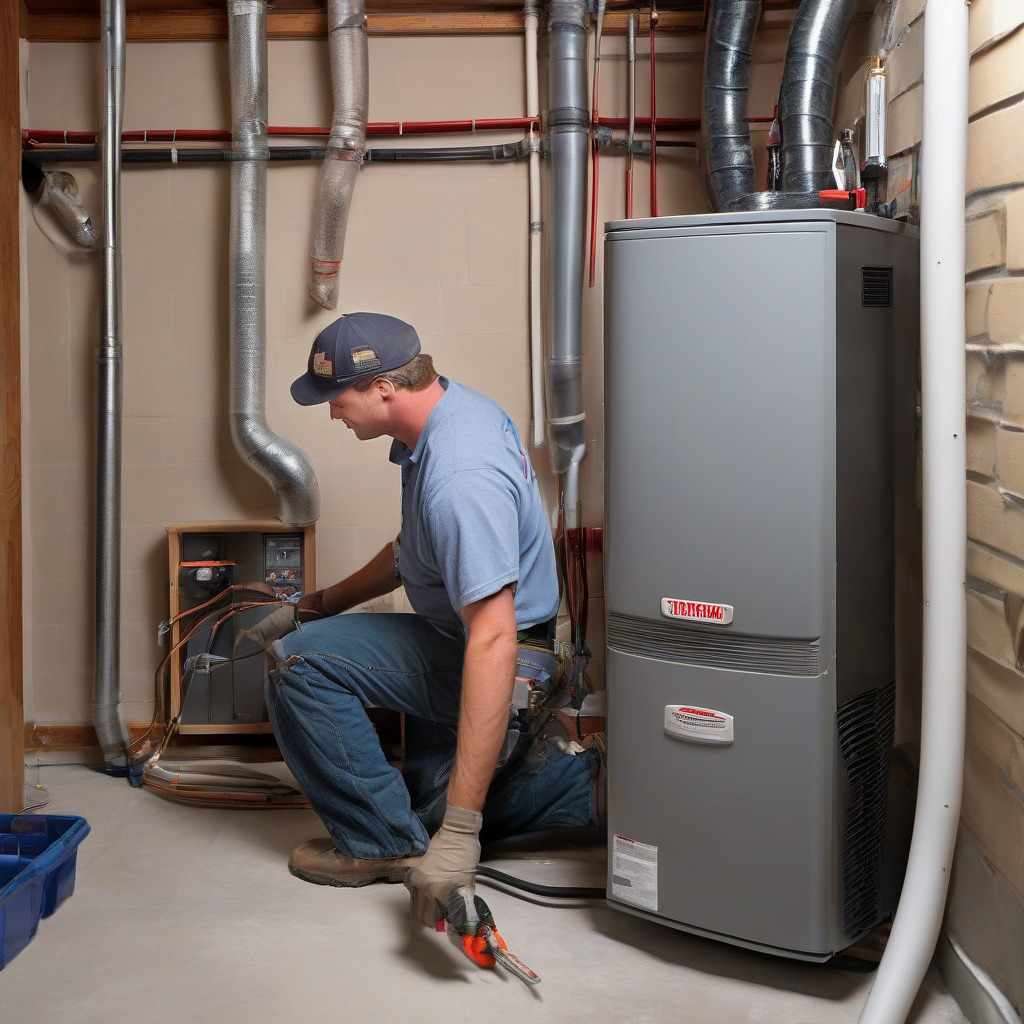
An aging furnace without recent service may have heat exchanger failure. A cracked exchanger leaks combustion gases, including carbon monoxide, into the living space. HVAC technicians are required to red-tag the unit and shut it off on the spot. If that happens in mid-January, you’re looking at emergency replacement at the busiest, most expensive moment of the year — typically $5,000 to $7,000 installed, rushed. The same failure flagged during a September tune-up becomes a scheduled, non-emergency replacement at a time of your choosing. That difference is not small. It’s the difference between calling your HVAC company from your kitchen in September and calling them from a 58-degree house at 11pm in January.
Older Holy Cross and Cottage Home homes with converted coal-to-gas boiler systems — cast-iron Weil-McLain and Burnham units, standing iron radiators throughout — are particularly vulnerable to failed pressure-relief valves and zone valve failure. A well-maintained cast-iron boiler can outlast three furnaces, which is genuinely impressive engineering. It does not help you if yours hasn’t been touched in a decade. A pressure-relief valve failure runs a few hundred dollars in parts and labor. A boiler that drains because nobody caught the expanding tank waterlogging or the corroded zone valves will cost considerably more, and that’s before you factor in the emergency rate.
One real problem: the pool of technicians who understand hydronic and steam systems is shrinking. Most younger technicians are trained on forced-air, which is where the volume is. If you own one of these systems, identify a qualified hydronic tech before you need one. Ask any prospective contractor directly whether they’ve serviced steam and hot-water radiator systems. If they hesitate, keep calling.
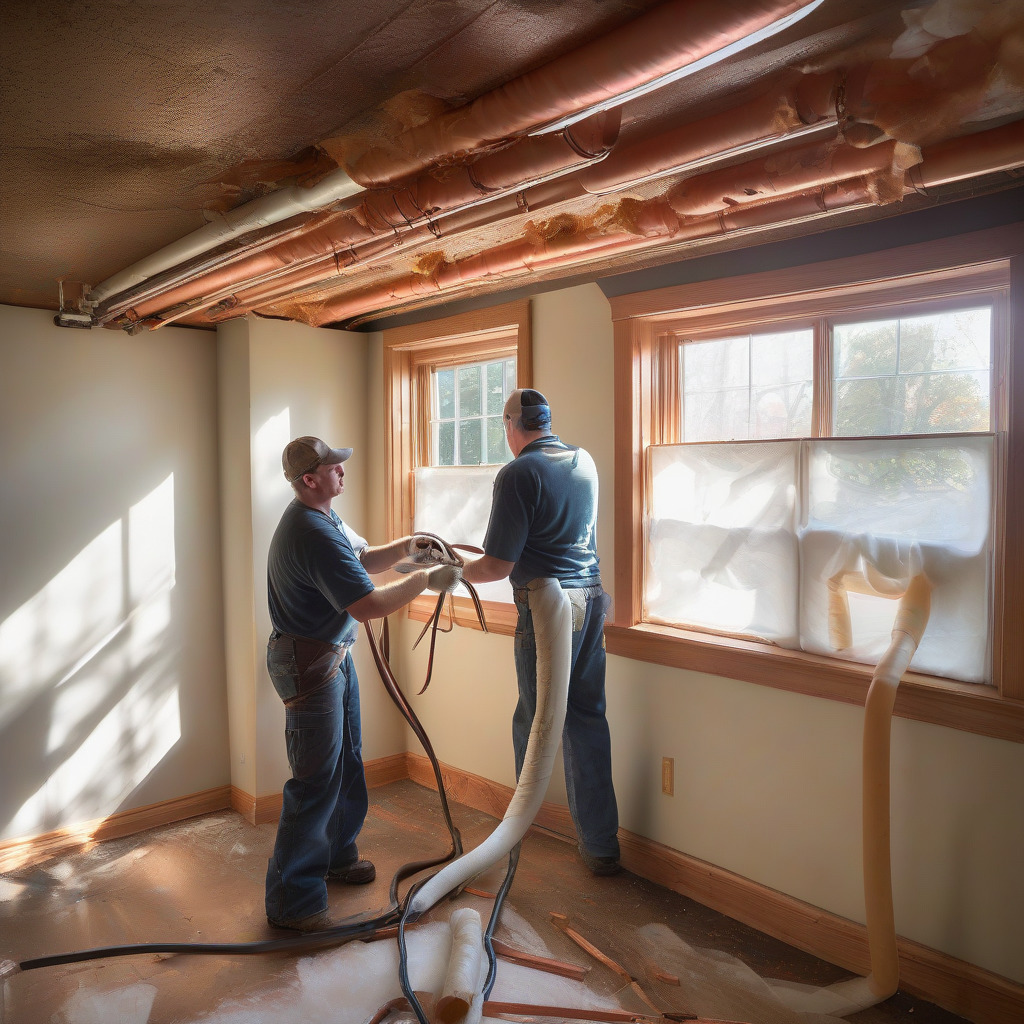
Ice dams form when heat escaping through a poorly insulated attic melts snow on the roof, which refreezes at the cold eave. That ridge of ice backs water under the shingles. Bungalows with shallow roof pitches and thin attic insulation are the most frequent victims — common across Irvington and Broad Ripple. Ice dam removal alone can run $1,500 or more, before roof repair or interior water damage. Most pre-1960 Indianapolis homes have R-11 to R-19 attic insulation. The current Indiana Energy Code minimum for new construction is R-38. If your house was built in 1930, your attic is doing roughly a third of the thermal work it should be.
Near Eastside sump pump failures follow a specific pattern. These homes were often built over original field-tile drain systems, and sump discharge lines exit through the foundation wall and terminate near grade. In a prolonged freeze, the discharge line ices over. The pump runs against back-pressure and burns out. The basement floods. The pump itself is a $200 repair. The flood it fails to prevent is not. That asymmetry should bother you.
The math is not complicated. Preventive work — tune-up, inspection, a few hours of insulation — typically costs a couple hundred dollars per item. Emergency repair of the failure it prevents costs multiples of that, at emergency rates, with a three-week wait behind you.
Furnace Tune-Up Pricing in Indianapolis
Independent shops operate at lower overhead than dealer service departments and generally pass the savings along. Peterman Brothers, one of the larger independent HVAC operations in central Indiana, has historically quoted furnace tune-ups around $89 to $119. Mowery Heating, Cooling & Plumbing and Godby Heating, Plumbing & Electrical operate in a comparable range. Call each for a current quote before booking — fall promotional pricing varies, and post-pandemic rates have moved.
These independents aren’t locked into a single equipment brand, which means their technicians service a wider range of furnace makes and are generally competitive on parts.
Lennox and Carrier/Bryant dealer shops, including regional operators like ARS/Rescue Rooter, have historically run higher on tune-up pricing, sometimes bundled with parts warranty terms. The structural reason is overhead: manufacturer training programs, warranty claim processing, brand affiliation costs. That said, if your furnace was originally installed by a dealer shop, you may be a preferred customer with faster scheduling. Worth a phone call to find out.
By mid-October, Indianapolis HVAC contractors fill up for non-emergency furnace service. A tune-up scheduled in September gets done in September. The same call after the first cold night in late October may not yield an appointment until mid-November. If that appointment surfaces a cracked heat exchanger requiring a new unit, the installation slot may push into December.
If your furnace is 12 or more years old, or hasn’t been serviced in the last two years, call this week. Not next week.
What Irvington, Fountain Square, and Near Eastside Homeowners Face That Fishers Doesn’t
New construction in Fishers, Carmel, and Westfield was built to modern energy codes — insulated rim joists, sealed crawl spaces, HVAC systems within the last decade. Pre-1960 Indianapolis housing stock was built to no such standards, and the failure patterns are specific.
The standard Craftsman bungalow in Irvington or Fountain Square was plumbed with supply lines following the exterior wall cavity — often the shortest route from the basement to the kitchen above. In 1925, that was a reasonable solution. In a modern Indianapolis winter, with original balloon-framing allowing cold air to wash through the wall cavity, that pipe is effectively outdoors. Nobody made a bad decision. The house is just a hundred years old.
Adding foam pipe insulation sleeves to exposed basement runs is a weekend task. The pipes inside the wall require a plumber’s assessment — rerouting or heat tape, depending on access and configuration.
Fountain Square includes a number of attached and semi-attached structures. Not true rowhouses in the Philadelphia sense, but close-set construction where a shared masonry wall is the entire thermal barrier between units. When the neighboring unit is vacant or unheated, that wall becomes an exterior wall in practice. Residents here often notice cold zones along party walls that standard insulation assessments miss. If you’ve stood next to your east wall in February and thought “why is it always cold here,” this is probably why.
Many Broad Ripple bungalows were expanded with a rear addition poured on slab that meets an original crawlspace foundation. The joint between the two systems is a thermal bridge — cold migrates from the slab edge through the floor framing into the living space. Air sealing and insulation at this junction requires someone who can identify the specific failure point. A generic attic blow-in won’t touch it.
Pre-1940 Indianapolis homes in Irvington, Herron-Morton Place, and the Near Eastside frequently retain knob-and-tube wiring, at least in portions of the house. This matters for winterization beyond fire code. Blown-in insulation placed directly over live knob-and-tube is a fire hazard that most insurers won’t cover and that reputable insulation contractors will decline to perform. If you’re planning any attic weatherization in a pre-1940 home, have an electrician assess the attic first. No exceptions, and no shortcuts on this one.
Near Eastside homes built over clay field-tile drainage systems face a specific winter failure: ground frost drives the water table upward into already-marginal drainage infrastructure, and basement floor drains back up. A licensed plumber can install a check valve as temporary mitigation. Permanent resolution may involve sewer lateral work and an IndyDBI permit. For more on navigating city permit requirements, our home & property coverage addresses DBA processes and contractor obligations across Marion County.
What You Can Do This Weekend vs. What Requires a Licensed Contractor
Indiana licensing law draws a clear line between homeowner maintenance and licensed trade work.
Do this weekend:
Disconnect garden hoses from exterior faucets, open the faucet to release residual pressure, and close the interior shutoff valve. This is the single highest-impact winterization task for any Indianapolis home. Five minutes. A frozen hose bib can crack and flood a basement wall. A disconnected one cannot.
Foam pipe insulation is available at any hardware store. Focus on pipes within 18 inches of the foundation wall, particularly on the north and west sides of the house.
Hold a stick of incense near your exterior door frames on a cold morning. Visible smoke drift indicates infiltration. Adhesive foam weatherstripping and replacement door sweeps are cheap and take under an hour per door.
Electrical outlets and switch plates on exterior walls are direct infiltration points most people never think about. Pre-cut foam gaskets install in seconds after removing the cover plate. Hardware store. Costs almost nothing.
Reverse your ceiling fans. There’s a switch on the motor housing. Clockwise rotation at low speed pushes warm air collected at the ceiling back down along the walls. Actually measurable in rooms with eight-foot or higher ceilings, and it costs nothing.
Test every CO detector. Replace batteries. Replace any unit over five years old. CO detector failures cluster in furnace season, not summer — this is when it matters.
Clear your gutters before the first freeze and extend downspouts at least four feet from the foundation. Particularly important on Near Eastside homes where the grade slopes toward the house.
Call a licensed contractor for:
Any work on gas appliances. A cracked heat exchanger requires internal inspection with professional equipment. Call now, before schedules fill.
Chimney cleaning if you use a fireplace or wood-burning insert. Hire a CSIA-certified sweep and verify credentials before booking.
Plumbing work falls under IndyDBI permit jurisdiction. Permitted work protects you — it carries code inspection and appears on property records. If a plumber suggests skipping the permit, find a different plumber.
Electric heat tape on exterior-wall pipe runs in older homes should be assessed by a licensed electrician before installation. Depending on the scope, an electrical permit may apply.
Attic insulation in any pre-1940 home: call an electrician before you call an insulation contractor. That sequence is not optional.
Citizens Energy Cold-Weather Shutoff Protection
Indiana doesn’t have a blanket prohibition on winter utility shutoffs. The IURC cold-weather rule provides protection, but it’s income-tiered, requires proactive enrollment, and does not activate automatically. This surprises a lot of people every year.
Citizens Energy must provide 14 days’ advance notice before disconnecting service, and customers who contact the company to arrange payment can trigger a temporary hold. Calling in December when you’re already behind is a reactive position with limited options. The stronger protection comes from enrolling in Citizens Energy’s assistance programs before November 1 — customers below certain income thresholds who are enrolled in qualifying programs receive enhanced protection that restricts shutoff during Indiana’s cold-weather period.
Call Citizens Energy’s customer assistance line in October. Ask about eligibility and enrollment. The process requires income documentation and takes time. Customers who wait until they receive a shutoff notice have already used most of their window.
LIHEAP and Weatherization Assistance — How Marion County Residents Apply
Two programs that most homeowners conflate are separate, run on different timelines, and serve different purposes.
LIHEAP pays utility bills. For the 2024–25 heating season, the application window opens approximately November 1. Income eligibility is roughly 60% of state median income or 150% of the federal poverty level, whichever is higher — historically around $46,800 annually for a family of four, adjusted each year. Verify the current threshold when you apply.
LIHEAP in Indiana runs through IHCDA via local Community Action Agencies. For Marion County, call 211. Don’t navigate the state website hoping for Marion County-specific routing — call 211 and ask directly about LIHEAP intake for Marion County. Competing websites frequently carry outdated intake information.
Marion County LIHEAP allocations ran out before spring in 2022. Households that applied in November received assistance. Households that applied in February were told funds were exhausted. Apply in November.
WAP (Weatherization Assistance Program) funds physical improvements — insulation, air sealing, furnace repair or replacement, water heater upgrades. It operates on a different application timeline with a separate waiting list and different income thresholds from LIHEAP. Also administered through IHCDA’s local Community Action Agency network. Also accessed through 211.
The waiting list is long. WAP is not a program that delivers a new furnace in three weeks. But homeowners who qualify and apply early may receive improvements before the following heating season even if they miss this one. The long wait is not a reason to delay. It’s a reason to apply now.
If your household income is at or near the LIHEAP threshold, call 211 in October, ask about both programs, and get your LIHEAP application in before November 1.
The September Deadline Is Real
The timing argument in this guide is specific and verifiable. Indianapolis HVAC contractors start filling non-emergency slots by mid-October. LIHEAP opens November 1 and has historically run out of Marion County funds before winter ends. Citizens Energy assistance enrollment requires documentation processing before cold-weather protection activates.
If you found this article after the first cold snap, you’re already in a compressed timeline. Here’s the sequence:
In the next 72 hours: Disconnect exterior hose bibs. Add pipe insulation to exposed basement runs. Test CO detectors. Call an HVAC contractor and get on the schedule, even if the appointment is weeks out.
This week: Walk your basement perimeter and identify any pipe runs close to the foundation wall. Check door and window weatherstripping. Clear gutters if leaves have fallen. If you have a boiler system and don’t have a hydronic tech you trust, find one before you need one in an emergency. That call at 8pm in January when the heat is out and it’s 12 degrees is not the moment to start researching.
Before the end of the month: If your household income is near LIHEAP eligibility, call 211. Contact Citizens Energy directly if you’re behind on your bill or expect to struggle this winter. Proactive contact opens options that reactive contact doesn’t.
The houses that fail in an Indianapolis January usually aren’t owned by careless people. They’re owned by people who planned to get to it and ran out of time. September is the time. It goes faster than you think.