A Walkable Dining Guide to Fountain Square Right Now
Where it stands in 2025, what's new, what's been there a decade, and how it honestly compares to Mass Ave.

Where it stands in 2025, what’s new, what’s been there a decade, and how it honestly compares to Mass Ave.
What Counts as Fountain Square for This Guide
Most dining roundups about Fountain Square are quietly lying to you about their geography. They’ll pad in restaurants from Fletcher Place, slide something off East Washington Street into the mix, or annex a block of Bates-Hendricks because the map pin is close enough. The result inflates the neighborhood’s apparent density while leaving readers confused about what they’ll actually find when they park.
This guide draws the boundary at the five-point roundabout where Shelby Street, Virginia Avenue, and Prospect Street converge. That intersection anchors the neighborhood — it’s where the Fountain Square Theatre Building sits, where the mural density peaks, where the pedestrian logic actually works. The dining corridor covered here runs primarily along the 1000 to 1200 blocks of Virginia Avenue and the adjacent Shelby Street blocks within comfortable walking distance of that roundabout. If you have to cross a highway ramp or lose the neighborhood’s visual character to reach it, it’s not in this guide.
That’s not a trivial distinction. Fletcher Place has its own dining story. Bates-Hendricks is a different socioeconomic conversation. East Washington is a commercial strip with different energy entirely. Fountain Square proper is smaller and more specific than its reputation suggests, which is exactly why a precise guide is more useful than a generous one.
The Anchors
Two restaurants have spent years doing the hardest thing a neighborhood dining room can do: staying relevant while independent operators cycle through the corridor around them.
Bluebeard, in the former Tube & Tin building on Virginia Avenue, has been the neighborhood’s culinary flagship for over a decade. The farm-to-table positioning reflects actual sourcing — not just a marketing line. The regional partnerships are specific. The wine list reads like someone actually thought about it, which, frankly, not every wine list does. The dining room is warm without being precious, and the bar area works as a destination on its own terms, not just an overflow waiting room. Bluebeard earned James Beard Award recognition and has held that caliber of attention through years of turnover in the corridor around it.
Rook, on Virginia Avenue, makes the neighborhood’s case even more forcefully. The Southeast Asian kitchen has drawn multiple James Beard Award semifinalist nominations for Best Chef: Great Lakes/Midwest. The bar program is serious. The space is small enough that a reservation on a weekend evening is not optional — treat it that way.
Both restaurants are, in the plainest terms, among the better restaurants in Indianapolis regardless of neighborhood. They justify a trip from anywhere in the city. They’re not equally easy to get into, and they’re not open every night, but they represent the kind of culinary commitment that takes years to build and defines what Fountain Square’s dining identity actually is.
The Walkable Core
The circuit most useful for an evening in Fountain Square is short — well under a mile, walkable in fifteen minutes if you’re moving point to point. The logical sequence begins at the Fountain Square Theatre Building, which anchors the roundabout and houses a bar, a duckpin bowling alley, and music programming. It works as a reliable first stop for a drink before dinner, though ground-floor commercial programming has shifted and current tenant status is worth confirming directly.
Virginia Avenue is the primary artery from there. The sidewalk quality is reasonable heading northwest, though uneven in a few spots near older building frontages. Shelby Street has more significant gaps, particularly between the roundabout and the residential blocks to the south. Watch your footing rather than your phone. Evening lighting around the roundabout is adequate; the Virginia Avenue blocks are better lit than the Shelby segments.
A practical itinerary that actually works: start with a cocktail at the Theatre Building bar, walk Virginia Avenue to Bluebeard for dinner (reserve in advance), close the evening at Rook for a drink or a late menu item. Reverse the sequence if Rook anchors your dinner. This isn’t a sprawling evening. It’s a focused one, and that focus is the neighborhood’s real strength.
What’s New in the Last Year or So
The 1000 to 1200 blocks of Virginia have been the primary zone of activity, and the Theatre Building’s ground-floor commercial spaces have continued to cycle through tenants. That reflects both the neighborhood’s energy and the ongoing difficulty of making food service square footage work in a pedestrian district that’s still building its weekday foot traffic. For context on the broader development story, our food & hospitality coverage tracks new openings, closures, and neighborhood dining trends across Indianapolis.
For any concept that opened after mid-2024, confirm current operating status directly. A restaurant mentioned in a guide published in winter may be running under different hours, different ownership, or not at all by summer. This isn’t a reason to avoid the neighborhood — it’s a reason to spend two minutes on Google before you drive.
Confirmed closures of restaurants operating as recently as 2023 are noted in the Dead Zones section below.
The Honest Weeknight Question
If you’re planning a Tuesday night dinner in Fountain Square and haven’t confirmed hours in advance, there’s a real chance you’ll arrive to find several of your targets closed. Monday and Tuesday, many of the corridor’s independent operators are dark.
This isn’t instability. It’s how serious independent restaurants manage labor costs and chef schedules. A kitchen running six or seven nights a week at the level Bluebeard and Rook operate would burn through staff and quality simultaneously — and you’d taste it. The operators who have lasted in Fountain Square have lasted partly because they made smart decisions about when to be open. Wednesday is improving, and a few operators hold Wednesday hours, but inconsistently.
Thursday is the realistic minimum for a reliable outing. By Thursday, the majority of operating restaurants in the corridor are open and bar programs are running. Friday and Saturday are fully operational. Reservations at Bluebeard and Rook are difficult on weekend evenings without advance booking — don’t test that theory.
Rook’s hours have varied and should be confirmed before planning around it; the restaurant has historically run dinner service only, with days of operation shifting. Bluebeard’s hours should similarly be confirmed. Post-pandemic, hours across the corridor have been less stable than pre-2020 patterns would suggest. Thunderbird, on Shelby Street, is primarily a weekend draw.
The practical upshot: Thursday through Saturday is the window where Fountain Square works as a complete evening without logistical compromise. If you have a specific restaurant in mind on a weeknight, call or check hours online before you leave the house.
Fountain Square vs. Mass Ave
This is the comparison Indianapolis residents are actually making when they’re deciding where to go for dinner, and it deserves a direct answer.
Mass Ave is more predictable. Fountain Square is more interesting.
Mass Ave, the Massachusetts Avenue corridor running northeast from downtown, has more restaurants, more weeknight reliability, some chain presence (not dominant, but there), and a broader brunch infrastructure. Better-maintained sidewalks throughout. You can walk into Mass Ave without a reservation on a Wednesday and find a satisfying dinner. The parking situation includes garages — tight on Friday and Saturday but an option that Fountain Square simply doesn’t offer.
Fountain Square excels at the top of its range. Rook and Bluebeard represent stronger cooking than anything Mass Ave currently anchors at equivalent price points, and it’s not a close call. Thunderbird has a character that Mass Ave’s bar scene doesn’t replicate. The neighborhood itself is more visually interesting: the murals on Virginia Avenue, the Theatre Building’s physical presence, the tighter block structure around the roundabout. Price points are broadly competitive. Bluebeard trends toward the higher end of the corridor’s range, but the gap isn’t dramatic.
Mass Ave is better if you’re with a group that has different tastes, can’t confirm a reservation, want brunch, or prefer a longer evening across a broader strip without pre-planning. Go to Fountain Square if you have a reservation at Rook or Bluebeard and you’re treating dinner as the point rather than the backdrop. Go if you want a cocktail bar with actual intention behind the menu. Go if you’re visiting from out of town and want to see what Indianapolis independent dining looks like at its most developed.
The two neighborhoods aren’t really competing for the same evening. They’re competing for different readers. The reader who wants to browse and stumble into something good is better served by Mass Ave. The reader who has done a small amount of planning and wants the best dinner they’ve had in Indianapolis should be in Fountain Square.
Parking, Patios, and the Logistics That Guides Skip
There’s no parking garage in Fountain Square. If you’re used to Mass Ave’s structures or downtown’s options, know that before you arrive. Street parking on Virginia Avenue and Shelby Street is generally available on weeknights. Weekend evenings can require a block or two of walking. The surface lot near the Theatre Building is the primary off-street option and fills on busy nights. Given the neighborhood’s scale, a short walk isn’t really a hardship — but plan for it.
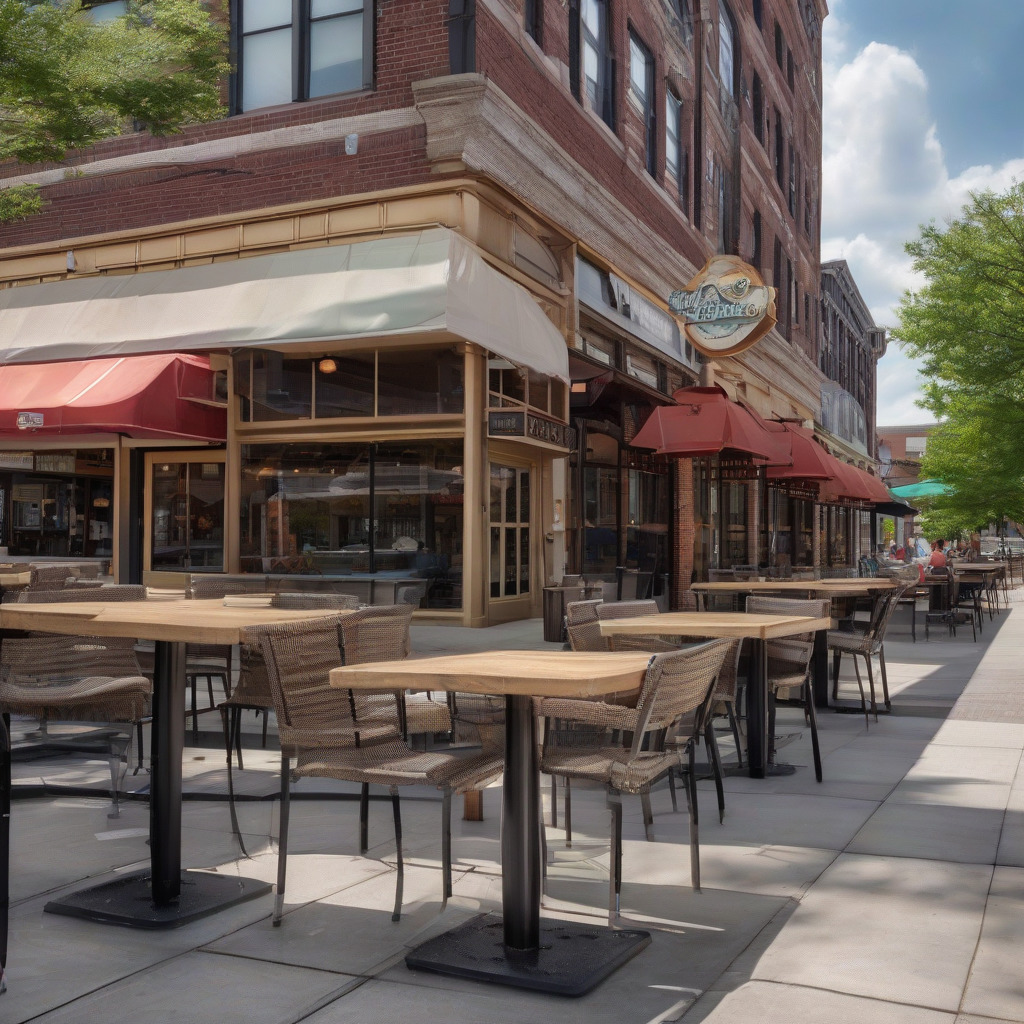
Patio season is real and significant here. Bluebeard’s patio is one of the more attractive outdoor dining spaces in the corridor, and Thunderbird has outdoor space as well. The “walkable dining corridor” framing is most accurate from mid-April through October. Indianapolis winters are not gentle, and a February evening in Fountain Square is a materially different experience than a June one — the neighborhood’s whole personality changes. Some operators adjust hours and staffing accordingly.
May through September is the peak window for everything this neighborhood does well: outdoor seating, the walk between restaurants, the street-level visual environment. If you’re deciding when to make the trip, that’s your window.
The Arts District Question
Fountain Square’s dining identity is inseparable from its history as an arts district, and that tension is real and ongoing in 2025.
The Virginia Avenue galleries that anchored the neighborhood’s creative identity in the 2000s and early 2010s have thinned. Some closed; some relocated. The murals remain — baked into the built environment at this point. The Theatre Building continues to function as something more than a real estate play, hosting community events and a duckpin bowling alley that is genuinely multigenerational in its use. But the blocks immediately adjacent to the roundabout have filled with restaurant and bar concepts serving a demographic that is wealthier and, in many cases, newer to the neighborhood than the artists and working-class residents who gave Fountain Square its character.
This isn’t a story unique to Fountain Square. It’s the story of every successful neighborhood dining district in every midsize American city. Indianapolis residents who’ve been following the neighborhood for fifteen years carry a specific version of this anxiety — a reasonable one. The restaurants in this guide are good restaurants. They’re also the economic expression of a neighborhood transformation that displaced some of what made the place interesting in the first place. Those two things are both true.
Where it stands in 2025, Fountain Square is past the early gentrification phase and into consolidation. Rents are high enough that the speculative creative uses that incubated the neighborhood are largely gone. The dining corridor is mature enough to have real anchors. The neighborhood’s future will be defined by whether the community institutions — the Theatre Building foremost among them — hold their ground. The creative identity is maintained more by infrastructure and memory now than by active production, and that’s a meaningful distinction.
If you’re also tracking what the residential side of this transformation looks like, what is actually selling in Fountain Square and who is getting there first covers the property market running parallel to these dining changes.
The Dead Zones Worth Knowing About
Any guide that presents Fountain Square as a fully built-out, gap-free dining corridor is either describing a different neighborhood or writing for a reader who won’t notice the vacancies.
The 300 block of Shelby Street has significant vacancies that have persisted for multiple years — the most visible gap in the corridor. Walking the block makes clear these spaces haven’t converted to active use despite the overall momentum elsewhere. Additional gaps exist in the Theatre Building’s ground-floor commercial frontage, where turnover has been higher than the anchor uses upstairs. Some spaces are in active leasing as of 2025; others have been vacant long enough to look like a structural feature of the building’s commercial strategy rather than a temporary condition.
None of this should discourage a visit. The active blocks of Virginia Avenue around the roundabout are full enough to support a complete evening. But a guide that doesn’t name what’s missing loses the credibility to describe what’s there.
Who Should Make the Trip and When
Fountain Square rewards a specific kind of visitor: someone who’ll spend five minutes confirming hours before leaving home, someone who prefers independent operators, someone who values culinary originality over guaranteed consistency. If that’s you, this is one of the best dining neighborhoods in Indianapolis.
Thursday through Saturday is the reliable window, with Friday and Saturday representing the full experience. Thursday is a reasonable target if you’d rather not compete for reservations with the weekend crowd.
The peak visit is warm weather, Thursday through Saturday, with a reservation at Rook or Bluebeard anchoring the evening. Add Thunderbird for drinks before or after. Walk Virginia Avenue from the Theatre Building. If it’s May through September, the patio at Bluebeard is one of the more pleasant places to sit in Indianapolis — not a throwaway line.
Rook and Bluebeard are the reason Fountain Square has a national dining reputation. When someone asks where to take a visitor who wants to understand what Indianapolis’s food scene looks like in 2025, the answer starts here. Book a table first.
CityDesk Indianapolis covers local business and neighborhood development. Hours, menus, and business status for all restaurants mentioned should be confirmed directly with operators before visiting.