What to Know Before Buying a Home in Irvington Indianapolis
Editor's note: Median sale price and price-per-square-foot figures reflect MIBOR/MLS data available at time of writing and should be verified against current listings before any purchase decision. …

Editor’s note: Median sale price and price-per-square-foot figures reflect MIBOR/MLS data available at time of writing and should be verified against current listings before any purchase decision. COA processing timelines, INHP loan product availability, Indiana Historic Rehab Tax Credit status, and Indianapolis Water lead line map coverage are subject to change. Confirm each with the relevant agency before closing.
Buying a house in Irvington is not complicated, but it is different from buying a house almost anywhere else in Indianapolis. Different in ways that will cost you real money if you don’t know about them before you sign a purchase agreement. Different in ways that make the neighborhood one of the better long-term real estate decisions on the eastside, if you go in with your eyes open.
This guide is for buyers who are serious about Irvington. It’s a straight account of what the historic district overlay actually restricts, what a 1910 Craftsman bungalow is likely to need, what prices look like heading into 2026, and how the neighborhood compares to the Fountain Squares and Broad Ripples that get more of the real estate media’s attention. It’s organized as a working reference, not a sales pitch.
Why Irvington Is a Regulated Purchase, Not Just a Charming One
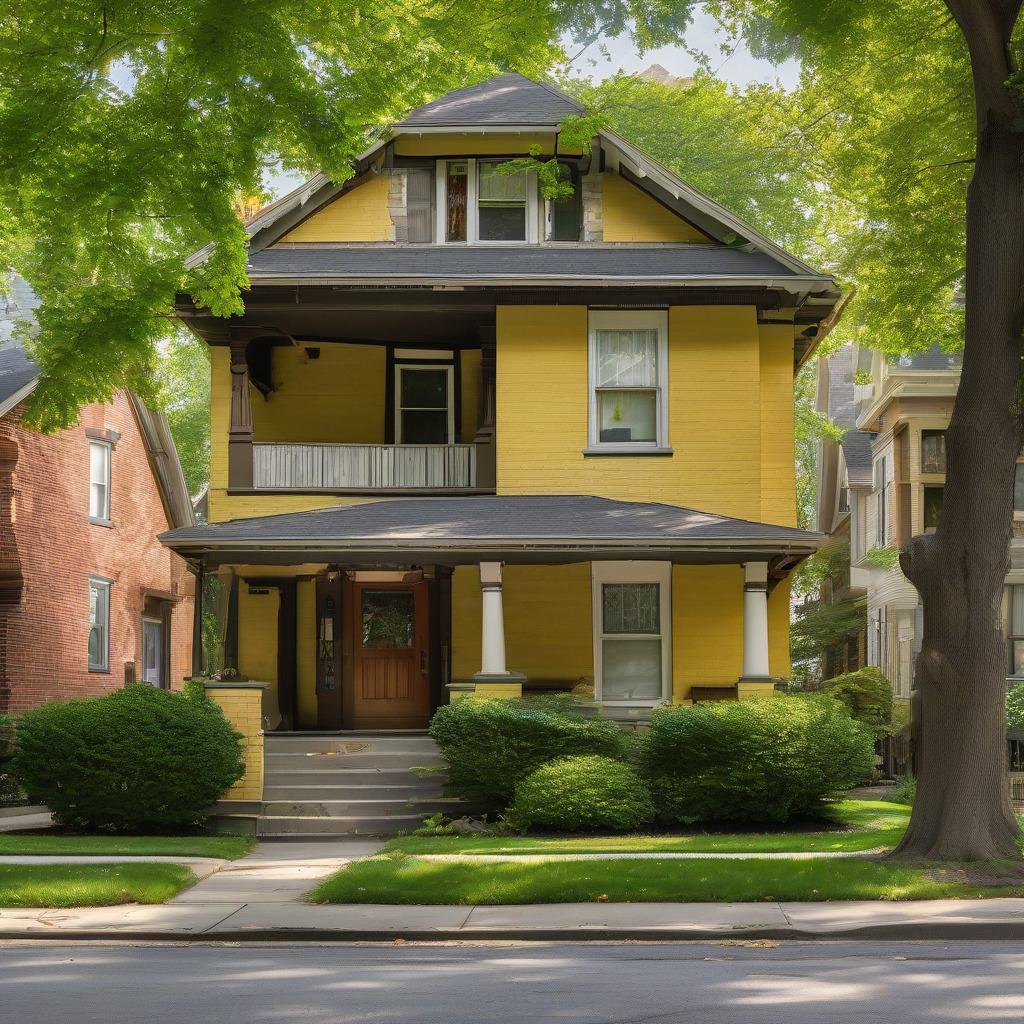
Irvington’s housing stock — Craftsman bungalows and Victorian-era homes lining its tree-canopied grid — reflects decades of continuous building that stopped when the neighborhood was annexed and new construction eventually ceased. The National Register of Historic Places listing, granted in 1987, recognizes that architectural continuity. But the listing that matters most to a buyer is the Indianapolis Historic Preservation Commission’s local overlay district. It carries legal weight the National Register does not.
The IHPC overlay matters at the permit counter. It can issue a stop-work order on a Saturday morning. It shows up as a title complication when you try to sell a house where someone replaced the original windows with vinyl without asking permission first. Buyers who treat Irvington as simply a “historic-feeling neighborhood” tend to discover the overlay’s real authority at inconvenient moments — usually expensive ones.
That authority is also what protects the asset you’re buying. Irvington’s architectural coherence doesn’t persist by accident. The overlay is why the house two doors down can’t be reclad in vinyl board-and-batten while you restore your porch columns. The constraint and the protection are the same thing.
How the Historic Preservation Overlay Actually Works
The Irvington Historic District local overlay covers the core of the original town plat, running roughly from Emerson Avenue on the west to Audubon Road on the east. The northern and southern edges approximate the old Town of Irvington plat, though the exact boundary is parcel-specific. The first thing any serious buyer should do is confirm whether a given property falls inside or outside it. The IHPC’s online boundary map is the authoritative source; agent descriptions are not.
Within the overlay, any exterior change visible from a public right-of-way that alters the character of a structure requires a Certificate of Appropriateness before work begins. This includes:
- Window or door replacement (full or partial)
- Siding replacement or addition of new cladding materials
- Additions or accessory structures
- Demolition of any contributing structure or feature
- Installation of visible mechanical equipment, including HVAC condensers and solar panels
- Removal of historic architectural features like porch columns or decorative trim
- Fence installation and replacement in the front yard
Interior work does not require a COA. Like-for-kind repairs using matching materials don’t either. Replacing a rotted wood window sash with an identical wood sash, or repointing brick with matching mortar, counts as “repair in kind.” This is the correct and legally uncomplicated approach to maintenance, and it preserves more of a home’s value than most people expect.
The COA process runs two tracks. Staff-level review applies to minor projects — most fence permits, accessory structure proposals, small repairs with material substitution questions. These can turn around in days to a few weeks. Full commission review applies to anything that significantly alters the exterior character of a contributing structure: window replacement, additions, new siding. That means appearing before the IHPC at one of its monthly meetings, submitting documentation before the meeting deadline, and waiting a minimum of four to six weeks from application to decision. Sometimes longer if the commission requests revisions.
Skipping the process is not a low-risk gamble. The City of Indianapolis enforces the overlay through its permit inspection system, and unpermitted exterior work discovered during a routine inspection or a neighbor complaint triggers a stop-work order. Those changes become a disclosure and title issue at resale. Buyers’ attorneys increasingly run IHPC permit history checks. A house with vinyl replacement windows installed without a COA is a house with a known defect that the next buyer will price accordingly — or demand remediation of before closing.
COA Process at a Glance
- Pre-application meeting with IHPC staff (optional but strongly recommended for major projects; typically scheduled within one to two weeks of request)
- Application submission with drawings, material samples, and photos. Deadline tied to the monthly commission calendar for full review projects.
- Staff determination on whether the project qualifies for administrative approval or requires full commission hearing
- Commission hearing (if required). Monthly schedule; applicant presents, commission votes.
- COA issued (if approved). Work may begin; COA is tied to the permit record and follows the property.
Minor projects/staff review: days to a few weeks. Major projects/full commission: 4–6 weeks minimum from submission to decision. Contested or complex projects: longer.
What Irvington Homes Are Selling For Right Now
The pricing picture in Irvington requires a little data literacy. The neighborhood’s ZIP code — 46219 — covers a large swath of the eastside that includes non-historic mid-century ranch stock, industrial corridors, and new-construction infill with nothing to do with the historic district. When Zillow or Redfin advertises “Irvington” homes, they’re frequently pulling from the broader 46219 pool. This depresses the apparent median relative to what buyers actually encounter inside the historic core — sometimes significantly.
Based on MIBOR data for the historic district’s primary residential streets, homes inside the IHPC overlay have historically traded at a premium to the broader 46219 ZIP. As of late 2024, the historic core tracked roughly in the $210,000–$280,000 range for a typical three-bedroom Craftsman bungalow in good condition. Renovated examples push $325,000–$375,000 and higher. Verify these figures against current MLS data before making any purchase decision. Price per square foot in the historic core has generally tracked between $130 and $175, depending on condition and recent updates — a spread that reflects how much variation exists in a neighborhood where a rehabbed bungalow and a structurally sound but cosmetically untouched bungalow can sit on the same block, priced $80,000 apart.
Well-priced, move-in-ready properties inside the overlay have moved in under 14 days in active markets. Properties that need significant work, or that are priced as if they don’t, tend to sit 45 to 90 days. That’s actually useful for buyers with renovation capacity and patience. But the renovation budget math in Irvington has to account for the IHPC process on any exterior work, which adds both time and cost that unrestricted neighborhoods don’t have. For a broader picture of what’s moving across the eastside right now, what is actually selling in Fountain Square and who is getting there first offers useful context on how Irvington’s pricing fits into the eastside market.
Ask your agent to filter specifically to the IHPC overlay boundary streets rather than relying on ZIP-code medians.
The Inspection Checklist for Homes Built Between 1895 and 1935
A standard home inspection is a starting point in any transaction. In Irvington, it’s the beginning of a more targeted process. The housing stock is old enough that several categories of defect are common enough to deserve specialist evaluation — not just a generalist’s walk-through. Knowing what Indianapolis home buyers actually need to know before scheduling an inspection will help you structure that process before your first walkthrough.
Knob-and-tube wiring survives in a meaningful percentage of Irvington homes, particularly in attic and wall cavities that were never opened during renovation. It’s not automatically dangerous, but it’s uninsurable with most carriers if it’s active and may be a dealbreaker for buyers using conventional financing. Federal Pacific and Zinsco panels — installed in some mid-century updates — are a separate concern. Electricians consistently flag these as a fire risk. Both require a licensed electrician, not just a home inspector, to evaluate scope and remediation cost.
Cast iron drain lines from this era are reaching the end of their functional life in many properties. Galvanized steel supply lines corrode from the inside out and reduce water pressure and water quality before they visibly fail. Lead service lines from the street to the meter are present throughout much of Indianapolis’s pre-1950 housing stock — Indianapolis Water maintains a service line inventory map, and buyers should verify the status of any property before closing. A plumber with sewer scope equipment is not optional in this neighborhood.
Indianapolis’s heavy clay soil expands and contracts seasonally in ways that are genuinely hard on poured concrete and concrete block foundations. Stair-step cracking in brick foundations, horizontal cracking in block walls, and evidence of seasonal movement in basement floors are common. Not all of it is structurally critical, but none of it should be evaluated only by a general inspector. Get a structural engineer to look at any foundation with visible movement or cracking. Pier-and-beam foundations on older Victorian-era homes can also have settled or rotted sill plates that need a real look.
Balloon framing — the construction method used in most residential construction before roughly 1940 — runs continuous stud bays from the foundation sill to the roof rafters without the fire-blocking that platform framing provides. A fire in the wall cavity can spread vertically without interruption. Insurance underwriters are increasingly aware of this; some carriers won’t write policies on balloon-framed homes without documented fire-blocking upgrades.
Original three-coat plaster is one of Irvington’s genuine architectural assets. Durable, soundproof, handsome. It can also fail at the key, where the plaster separates from the lath behind it. Bulging, hollow-sounding sections, and large cracks at corners signal failing keys. Good plaster repair is expensive. Plaster replaced with drywall loses character and, in some rooms, IHPC relevance.
Nine-inch-by-nine-inch vinyl asbestos floor tiles were ubiquitous in mid-century updates to these homes and frequently appear under carpet or later flooring. Pipe wrap insulation in basements is another common asbestos source. Lead paint is presumed present in any home built before 1978 and is subject to EPA Renovation, Repair and Painting Rule disclosure requirements. An environmental testing firm can scope both issues before closing.
Five Specialists Worth Hiring Before You Close
- Structural engineer: foundation, framing, load paths; written report recommended
- Historic home inspector: experience in pre-1940 construction, plaster, balloon framing, and original mechanical systems
- Licensed electrician: scope of knob-and-tube and panel evaluation, remediation estimate
- Plumber with sewer scope equipment: camera inspection of main drain line, assessment of supply piping
- Environmental testing firm: asbestos bulk sampling, lead paint XRF testing, lead service line verification support
The Windows Problem
Window replacement gets its own section because it’s the single most common point of conflict between new Irvington owners and the IHPC. I’ve watched buyers discover this after signing a purchase agreement. It’s an unpleasant surprise, and the financial stakes are large enough that you should understand it before that happens — not after.
Original single-pane wood windows in Irvington homes are historic fabric. The IHPC treats them accordingly. Vinyl replacement windows — the standard residential upgrade sold by every window contractor in the metro — are routinely denied Certificates of Appropriateness in the Irvington overlay. They alter the profile, reflectance, and character of the window opening in ways that are inconsistent with the commission’s design standards. This is established practice. It is not going to change because your contractor quoted you a good price on double-hung vinyl.
What the IHPC will generally approve: restoration of existing wood windows (reglazed, reweathered, deteriorated components replaced in kind), paired with interior storm windows. Either historically accurate wood interior storms or clear-film insulating systems such as Indow inserts work. A properly restored wood window with a quality interior storm performs comparably to a double-pane vinyl replacement on most energy metrics while preserving the historic character. Most preservation-minded owners who’ve gone through the process will tell you they’re glad they did it — though it takes longer and costs more upfront than calling 1-800-WINDOWS.
Before closing, if the house has original windows in varying states of repair, ask the seller whether any window work has been done and whether COAs were obtained. If the house already has vinyl replacements, find out whether a COA was obtained. If not, that’s an unpermitted exterior change that either the seller resolves before closing or the buyer takes on as a known liability. Don’t assume the IHPC will grandfather existing vinyl windows indefinitely — the commission has required removal and replacement with appropriate materials in enforcement proceedings.
Financial Tools That Can Help
The renovation math in Irvington is real, but there are financial tools that buyers and owners frequently underuse — sometimes because they don’t know they exist, sometimes because the eligibility requirements are narrower than they sound.
Indiana offers a state income tax credit equal to 20% of qualified rehabilitation expenditures on certified historic structures through its Historic Rehabilitation Tax Credit program. Here’s the constraint that trips people up: this credit applies to income-producing properties — rental homes, commercial buildings, mixed-use — not owner-occupied primary residences. A buyer planning to owner-occupy a single-family home in Irvington cannot use this credit directly. A buyer purchasing a duplex and occupying one unit may qualify, depending on how the property is structured. Verify current program status and eligibility with the Indiana Department of Natural Resources’s Division of Historic Preservation and Archaeology before relying on it.
The Indianapolis Neighborhood Housing Partnership has historically offered below-market purchase-and-rehabilitation loan products targeted to eastside neighborhoods, including areas overlapping with the Irvington district. These have included purchase loans with renovation escrow and stand-alone rehab financing for existing owners. They’re income-qualified and subject to periodic program availability. Contact INHP directly before finalizing any financing plan that depends on their products. Program terms change, and the product that existed when you read this may have been modified by the time you apply. That is not a caveat to ignore.
Owner-occupants of their primary residence in Marion County qualify for the standard homestead deduction on property taxes, covered in depth in our home & property coverage for Indianapolis buyers. File with the Marion County Assessor’s office after closing. The Irvington Development Organization has administered façade improvement grant programs for commercial properties on the Washington Street corridor — not directly applicable to residential buyers, but owners of commercial or mixed-use properties near Washington Street should contact the IDO directly for current availability.
What’s Happening on Washington Street
Washington Street is Irvington’s commercial spine, and its condition is a legitimate factor in a purchase decision. Not because it dramatically affects residential values today, but because where that corridor goes over the next decade is part of what you’re buying into on the eastside.
The stretch near Audubon has seen independent businesses move into the historic commercial storefronts in recent years — locally owned restaurants, a few retail spots, services. The Irvington Development Organization tracks investment and vacancy along the corridor and is the best source for a current read on what’s open, what’s not, and what’s in the pipeline.
The Washington Street and Pleasant Run corridor offers direct trail access to Pleasant Run Parkway, which connects eastside neighborhoods to the broader Indianapolis trail network. That’s a real amenity that buyers from other parts of the city consistently undervalue until they’ve lived with it.
What Washington Street is not — and buyers should be clear-eyed about this — is a fully activated commercial corridor in the mode of Fountain Square’s Virginia Avenue or Broad Ripple’s Guilford strip. The kind of commercial activity that drives walkable daily errands and adds a measurable residential premium to nearby blocks is not yet present on Washington Street at anything like that scale. Vacancy persists. Anyone who tells you otherwise hasn’t walked it recently.
Properties within the Pleasant Run creek floodplain carry FEMA flood zone designations that affect insurance costs. Check the current FEMA Flood Insurance Rate Map for any property near the creek before closing. Flood insurance adds meaningfully to carrying costs, and elevation certificates may be needed in affected areas.
The combination of incremental commercial investment, trail access, and protected architectural fabric creates a real argument for early appreciation. Whether Washington Street reaches its potential within your ownership horizon is genuinely uncertain — and anyone who tells you it’s a sure thing is selling something.
Irvington vs. Fountain Square vs. Broad Ripple
These three neighborhoods come up together in buyer conversations because they represent Indianapolis’s most architecturally distinct, walkability-aspirational residential options outside the immediate downtown core. The differences are real and worth being direct about.
Irvington’s historic core consistently offers more square footage per dollar than either Fountain Square or Broad Ripple. Fountain Square (46203) has seen significant appreciation driven by proximity to downtown and the activated Virginia Avenue and Shelby Street corridors. For comparable vintage homes in comparable condition, Fountain Square has generally run $20,000 to $50,000 higher than Irvington — verify that gap against current MLS data, since it may be narrowing. Broad Ripple (46220) sits at the top of the three, with pricing driven by an established commercial village, the Monon Trail, and northside school corridors that buyers with children consistently prioritize.
Stretching to afford Fountain Square buys downtown proximity and a corridor that’s already there. Broad Ripple adds the Monon and a fully established neighborhood premium — you’re paying for something that’s already happened. Irvington offers more interior square footage and lot size per dollar, with the tradeoff of greater distance from downtown and a commercial strip that is still figuring itself out.
All three neighborhoods are effectively car-reliant for most daily needs — whatever the walkability scores suggest. Irvington sits roughly five to seven miles east of downtown via Washington Street or I-70. IndyGo Route 8 provides bus service along the corridor, but headways aren’t frequent enough for car-free commuting for most riders.
Fountain Square’s appreciation is now partly running on its own momentum — buyers are paying for activation that already exists. Broad Ripple is similarly mature. Irvington’s trajectory is more open-ended. The neighborhood has appreciated over the past decade, but it hasn’t reached the premium that its architectural quality and overlay protection arguably justify. That gap is both the risk (Washington Street develops slowly) and the opportunity (a buyer acquiring quality and protection before the market fully prices them in).
The honest case for Irvington: more house per dollar, genuine architectural character that isn’t being replicated anywhere in the metro, and a historic preservation overlay that protects the neighborhood’s coherence in a way no HOA can match. That overlay protects your asset. Which is, ultimately, the whole point.
The Practical Before-You-Close Checklist
Each item here is Irvington-specific.
Confirm overlay status before you make an offer. Look up the property parcel on the IHPC boundary map. Not every address marketed as “Irvington” falls inside the regulated overlay. Know which you’re buying.
Check the city permit portal. The City of Indianapolis’s permit portal shows permits pulled for a given address. Look specifically for exterior work permitted since the last major renovation. If you see window, siding, or addition work in the record, verify that a COA was obtained. If the work appears in photos or in person but not in the permit record, that’s a red flag worth pursuing.
Ask for COA documentation on past exterior work. Any reputable seller’s agent in the historic district should be able to produce COA records for permitted exterior changes. If they can’t, ask why.
Schedule a sewer scope and structural engineer review. Make them conditions of your inspection period, not afterthoughts.
Check the FEMA flood map if the property is near Pleasant Run. The creek corridor carries real exposure. Verify before you price your insurance estimate.
Verify lead service line status with Indianapolis Water. The city has published a service line inventory, but coverage is incomplete. Contact Indianapolis Water with the property address and ask directly.
Contact INHP before finalizing renovation financing. If your purchase budget includes significant rehabilitation work, talk to INHP before committing to a conventional renovation loan structure. Their products, when available, can materially change the cost of a rehab project.
Attend one IHPC meeting before closing. This is the step most buyers skip, and it’s the one that matters most. The commission’s monthly meetings are public. Two hours in that room will tell you more about current enforcement priorities, common approval and denial patterns, and how the commission handles specific project types than anything you can read online — including this article. Meetings are listed on the IHPC’s city website.
Talk to the Irvington Development Organization. The IDO tracks commercial development, available properties, and neighborhood planning activity along the Washington Street corridor. A conversation with their staff will give you a current-state picture that no listing service can match.
Hire a buyer’s agent with documented IHPC transaction experience. Ask how many IHPC-overlay purchases they’ve closed and whether they’ve ever attended a COA hearing on behalf of a client. If they haven’t, keep looking. This is not the transaction to learn Irvington’s regulatory environment on the job.
Irvington is one of the best-preserved residential neighborhoods in Indianapolis — and one of the least understood by buyers who approach it as simply a cheaper alternative to the trendier westside corridors. The historic overlay is not a burden appended to the purchase. It is the mechanism through which the neighborhood remains what it is. Buyers who understand that before closing tend to become Irvington’s most satisfied owners. Those who don’t sometimes become its most vocal critics at commission meetings, arguing for exceptions that the district was specifically designed not to grant.
The specifics here change faster than any published guide can track: current prices, current INHP products, current COA timelines, current Washington Street vacancies. Use this as a map of the questions to ask, then go ask them of the people with live answers.